Want Unity? Tame the Pandemic and I Don't Mean CovidMelanie Sturm | @ThinkAgainUSA Read Comments - 0
Publish Date:
Wed, 03/03/2021
In a joke illuminating our divided times, a husband suspects his wife is deaf and decides to test her hearing. While she’s cooking, he stands afar and asks, “what’s for dinner, dear?” Hearing no response, he moves progressively closer, continuously questioning until he’s behind her. “What’s for dinner, dear?” he repeats, to which his wife testily replies, “for the fifth time, meatloaf!” Often, we think others are deaf when we’re the ones with the hearing problem – a syndrome reaching pandemic proportions in our increasingly polarized culture where “I’m right, you’re wrong” thinking proliferates, catching dissidents-turned-heretics of varying persuasions in a thought-police dragnet. Believe you’re immune to this contagion? Think Again. Humans crave social integration and approval, finding it in social media’s echo chambers where one can turn a “deaf ear” to information disconfirming their bias, and be “all ears” to whatever confirms it. I call this phenomenon “curated tribalism,” and it’s contaminating the greatest continuing experiment in human history – the American Idea that people with differing beliefs, values and ethnicities could together forge a freer and fairer nation. As the contagion spreads, trust in civil society’s indispensable institutions – media, academia, and our justice and electoral systems – is evaporating. So vital is free expression to a healthy, innovative and prosperous society, America’s founders implanted it in the First Amendment and our cultural DNA. Only a few centuries old, this human-rights-assuring ideal produces cultures where differences are settled in the marketplace of ideas — not by thought police. Though not perfect, our system was designed to protect the weakest and most unorthodox voices and to challenge odious speech with better speech that clarifies and informs. Whether this system can withstand today’s cancel culture firing squads and Big Tech’s censorship onslaught remains the question. Considering that “cancel” was the third most-used word of 2020 – behind COVID and pandemic – it’s not surprising that 62 percent of Americans self-censor to avoid reputation and career-ending consequences, according to a Cato Institute survey. That doesn’t include the ongoing multi-platform purge of undesirables from social media, further consolidating the conformity surveillance state. If you’ve been unfairly judged and unable to speak your mind, you know the pressure of percolating frustration. To appreciate the collective powder keg that’s brewing, multiply that by tens of millions of “heretics” whose pent-up resentments have nowhere to vent. So, if “the test of a first-rate intelligence is the ability to hold two opposed ideas in the mind at the same time and still retain the ability to function,” as F. Scott Fitzgerald put it, conformist cancel culture is rendering us deaf and dumb. To break through conformist thinking, let’s apply Fitzgerald’s intelligence test to our era’s most vexing conflicts, going beyond approved narratives to understand the myriad ways people are affected:
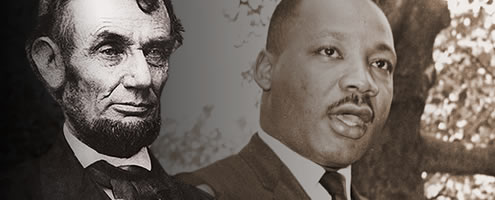
Hashing out our differences in this thoughtful and civil way won’t feed the outrage beast created by the fusion of media, big tech and politicians – they accumulate too much money and power by exploiting divisions – but vast majorities of Americans are not ideologues, believing in the American Idea. During prior divisive times, we’ve had leaders who helped advance this idea by encouraging us to have “charity for all and malice for none” (Abraham Lincoln), and to “learn to live together as brothers or perish together as fools” (Martin Luther King Jr). So, unplug from cable TV, the parrot-like mainstream press, and the social media memes and mobs destroying our moral consensus. Find free and heterodox thinkers to inform and inspire you. Have conversations with people who think differently, always practicing the Golden Rule while questioning, listening and searching for common ground. Think Again – if we listen to understand rather than reply, might we become a wiser and more united country where silence is truly golden, and not deafening? Explaining my absence, and my hopesMelanie Sturm | @ThinkAgainUSA
Read Comments - 2
Publish Date:
Tue, 10/10/2017
Dear Readers, As many have kindly noticed and inquired, I've been absent since January when I announced a temporary leave from my column. Now, I'd like to explain why, and share a bit of good news. The reason has to do with the legal efforts of my Mother's La Jolla, California synagogue – which is the residual beneficiary of her estate – to completely disinherit me and my brother. To our dismay, and despite our continuous efforts to resolve matters amicably in order to avert expensive and emotionally exhausting litigation, the synagogue made good on its threats, filing a lawsuit which claimed the gifts my Mom bequeathed to us, and making grotesque assertions about my character in their legal documents, now public. Consequently, since my Mom’s passing on July 1, 2016, we’ve been locked out of her La Jolla condo (which she gifted to me and my brother), unable to fully process and find closure with her passing. As this torturous legal matter became progressively adversarial, my lawyer advised me to keep a low profile, which I’ve done – until now. Thankfully, the Probate Judge recently rejected the synagogue’s disinheritance efforts, and I’m hopeful that we’re at the beginning of the end of this emotionally exhausting period. Despite all, I recognize that I’m among the luckiest people to have ever walked this earth. That’s why I’m determined to use my resources to assure that institutions in which our civil society must have “faith,” are held accountable for their conduct. I look forward to returning to my column, and to telling this story and its lessons, a saga I pray ends happily -- with a “win” for all, and an apology. Throughout this ordeal, I’ve discovered various coping mechanisms (apart from my amazing husband), including these insights: “this too shall pass,” and “how people treat you is their karma, how you react is yours.“ As I frequently tell my son, life is filled with mountains of goodness and joy, as well as valleys of pain and despair. The secret to happiness, therefore, is learning how to raise your gaze high enough to see the mountains, while averting the valleys. I’m especially grateful to all those -- including many readers -- who’ve helped me focus on my many "mountains" by being sources of support, wisdom and hopefulness. I also appreciate our American justice system, which is working, albeit slower than I'd like! May the moral arc of this matter bend toward justice, realizing the prayers for my Mother to Rest In Peace, and for her memory to be a blessing to all she touched. Personally, I long to sit again in her apartment amid the keepsakes she cherished, and to finally be "comforted among the mourners of Zion," as Jews typically pray for the bereaved. I look forward to writing about the stories and issues that animate this fascinating era, and am always happy to engage with readers through this website. Stay tuned for more Think Again commentary!Melanie Sturm | @ThinkAgainUSA
Read Comments - 1
Publish Date:
Thu, 01/05/2017
2016 was a tumultuous year for me, filled with exhilarating highs -- including my son’s bar mitzvah trip to Israel in June on which we were accompanied by 36 friends and family members -- and some agonizing lows, including the nearly simultaneous decline and passing of my mother.
To cap things off, I closed the year with a bike accident in Panama that, but for my helmet, would have been devastating. I suffered a concussion and am going to be fine, but for the time being, I have to rest my body and mind.
I look forward to returning to my column as soon as I’m able. I believe we’re entering one of the most unusual and potentially consequential eras in American history and I am grateful to have a platform from which to share my observations.
Thanks to all those who’ve written to inquire about me and my health. May 2017 bring us all that we long for! A Solution For the Trump Election FreakoutMelanie Sturm | @ThinkAgainUSA
Read Comments - 10
Publish Date:
Thu, 12/15/2016
You wouldn’t know it from the stock market’s record-breaking tear since Hillary Clinton snatched defeat from the jaws of victory, but the mood among Trump-averse Americans remains bleak.
Blinkered with rage and disbelief because Clinton won more votes than any other presidential candidate in US history (except Obama in 2008), the despondent blame her stunning upset on nefarious reasons such as “whitelash” bigotry, as CNN’s Van Jones fumed on election night, leading many to sever relations with friends and family.
For partisans inhabiting thought silos influenced by social media’s curated tribalism, the election was rigged, if not by hacked voting machines in rustbelt states or by hacked journalism’s “fake news,” then by Russian email hackers who exposed Democrat dirt, including revelations about how Democrat primaries were rigged against Bernie Sanders.
No credible intelligence source maintains Russia tipped the election in Trump’s favor, only that they meddled to sow chaos and discord regarding the election’s integrity and the winner’s legitimacy. With Clinton supporters clamoring to hack the 227-year old Electoral College, demanding its electors Think Again about making Trump president, you can almost hear Vladimir Putin’s evil-maniacal cackling.
The scheming of 2016’s losers negates Clinton’s laudable concession speech, politicizing and muddling serious matters like Russian malfeasance and cyber-security, and sullying the electoral process by which presidential power peacefully transfers under the world’s oldest constitution.
Unfortunately, political elites – including Trump, the master media manipulator – are being played by Putin whose long-term strategy is to discredit American-style democracy and the liberal order we lead. Considering the post-election freak-out, it’s as if the combatants are double agents working for Russia.
All Americans should agree that Russian covert influence in our democracy is an intolerable threat. It’s one reason why Mitt Romney considered Russia our top geopolitical foe, a claim famously mocked by President Obama who scolded, “The 1980’s are calling. They want their foreign policy back.”
That wisecrack followed the Obama-Clinton “reset” with Russia and Obama’s assurance to former-Russian President Medvedev (caught on an open-mic) that he’d have “more flexibility” after the 2012 election – such as disregarding Russia’s annexation of Ukrainian and Georgian territories. Meanwhile, foreign cyber-intruders have repeatedly hacked federal agencies, without much consequence.
Now, despite dismissing Clinton’s Espionage Act violations related to her unsecured email server and her foundation’s international solicitation fraud, and after denouncing as un-American Trump’s assertion that the election might be “rigged,” Dump-Trumpers insist Clinton would be President-elect, but for Russian cyber-rattling.
On his “The Messy Truth” program, CNN’s Jones heard otherwise from two-time Obama voters who switched to Trump, flipping six states. “If she’d spoken to the blue-collar worker, she’d have won,” explained Ohioan Scott Seitz about Clinton, who hardly campaigned behind her “blue wall.”
In the industrial heartland left behind in America’s asymmetric recovery, long-suffering voters believed Trump would address the issues affecting their livelihoods, preferring Trump’s message of “I’m with you,” to Hillary’s “I’m with Her,” as Seitz framed it. Clinton’s elitist sneer about Trump’s “basket of deplorables” didn’t help.
Rather than grapple with their staggering electoral losses since 2010 – Congress, governorships, state legislatures and now the presidency – or their aged and weak leadership bench, Democrats prefer to fundraise off claims that Russian saboteurs stole the election and Trump-voters are stupid or racist.
If the last 18-months have taught us anything, it’s that Trump shouldn’t be underestimated, nor should his outsider appeal. According to his “Art of the Deal” playbook, “controversy sells,” and he’ll manufacture it if necessary, as he showed en route to the White House.
Speaking bluntly and carrying a big Twitter stick, Trump outlasted 16 primary rivals, the well-funded Bush and Clinton dynasties, and an unprecedentedly hostile media, which he trolls to perfection.
Like all reality-TV stars, Trump is a survivor who’ll outlast the current freak-out too, assuming he revives blue-collar jobs. Hopefully his compulsion to trumpet cronyist deals like Carrier will fade as his economic growth plans make America ripe for private-sector deal making again, as the stock market expects, even amid rising interest rates.
Among history’s greatest dealmakers were America’s founders whose constitution was a heavily negotiated compromise designed to assure that unaccountable power couldn’t be centralized. They believed the boundless potential of individuals operating free from government intrusion would make America great, and they were right.
Unfortunately, as ruling elites have circumvented constitutional guardrails, concentrating power in the ever-growing, unaccountable federal bureaucracy, presidential elections have become life-or-death slugfests. Now half the country quakes in fear that the other half will punish them if they gain power.
The solution is not to further erode constitutional guardrails by defacing the Electoral College; it’s to return the role of Congress, the Supreme Court and the president to their original proscribed limits.
Think Again – Wouldn’t it make America great again if we didn’t have to care so much about who won the White House?
Reflections of an Anti-Trump GOP DelegateMelanie Sturm | @ThinkAgainUSA
Read Comments - 22
Publish Date:
Sat, 11/05/2016
It’s been a rough last few months, and I’m not just referring to the alarming presidential contest between the two most egomaniacal, morally-compromised and disliked candidates in electoral history.
Perhaps it’s divine intervention that I’ve been intermittently away from my column to care for, mourn and deal with the affairs of my Mom, who passed away before I attended the Republican National Convention as a Colorado delegate.
A staunch critic of GOP elites, I ran to be a delegate (at my Mom’s urging) because I wanted to help select a presidential nominee who’d unite the “Party of Lincoln” around its bedrock principle – the democratic self-government of a free people.
My pre-convention column argued for allowing delegates to vote their conscience – for Donald Trump or whomever – yielding the strongest nominee to oppose Clinton whose Espionage Act violations and cover-up make her the most brazenly dishonest presidential candidate since Nixon. Her election would advance the banana-republic notion that the powerful are above the law.
The column elicited severe rebukes, the most scolding from Trump supporters. While Clinton backers played the “liar” card, Trumpsters told me to Think Again, grow up and get over my “high falutin ideals.” I was called airhead, globalist and RINO, and my columns were bashed for being “so formulaic they’re almost unreadable.”
In Cleveland, I was among the troublemakers who protested the RNC’s Mao-like suppression of dissent regarding the party rules, which had produced the weakest presidential nominee in modern GOP history. I left dispirited, feeling like a Republican in name only. Now with Election Day nearing, my swing state’s mail-in ballot awaits my vote for president, the most gut wrenching of my life.
As expected, the election has been an ugly slugfest punctuated by predictable surprises – leaks about Trump’s taxes and the 11-year-old video of his grotesque predatory boasting, and WikiLeaks disclosures revealing Clinton Inc. corruption. The biggest shocker is that each party nominated the one candidate the other could beat.
Meanwhile, a real electoral bombshell hit: Obamacare premiums are skyrocketing nationwide as consumers, providers and more insurers desert the law that’s hurting those who can least afford it. It’s a debacle foreseen by critics, though not their media “fact-checkers.”
In steamrolling his signature policy reform, President Obama relied on “the stupidity of the American voter,” as Obamacare architect Jonathan Gruber notoriously boasted, getting away with false claims including: premiums would decline; illegal immigrants wouldn’t get subsidies; not one dime will be added to the deficit; and “if you like your plan, you can keep it.”
In an illuminating New York Times interview, White House aid Ben Rhodes (whose brother is President of CBS News) boasted similarly, describing the manipulative tactics used to sell Obama/Clinton foreign policies, including the unpopular Iran nuclear deal, which guarantees the mullahs will eventually get their nuclear weapons and intercontinental ballistic missiles.
Describing the White House spin machine, Rhodes bragged, “We created an echo chamber” of “prominent Washington reporters and columnists” to “carry our message effectively…saying things that validated what we had given them to say.” Hence, “warmonger” was the smear assigned to Iran deal critics.
Here’s the undemocratic playbook used to short-circuit the honest debate on which national consensus depends: make false claims, spin the media, co-opt the bureaucracy to evade laws/break rules, stonewall investigations, smear adversaries, and label self-inflicted controversies “phony scandals” until the truth becomes any story that sticks.
Consequently, no one’s ever held accountable for the resulting wreckage: unaffordable health insurance, dying vets, terrorist attacks, sanctuary city tragedies, IRS harassment, and murdered U.S. diplomats and border guards. Not surprisingly, only 19 percent of Americans say they trust the government most of the time, down from 73 percent in 1958, according to Pew Research Center.
That’s because Washington is so politicized, even institutions charged with equal enforcement of laws have been sullied. Dueling media accounts of the FBI probes into Clinton’s national security-imperiling violations and the Clinton Foundation’s pay-for-play practices reflect the smoldering rift between disgruntled FBI agents and their higher-ups at the Bureau and Justice Department.
Filmmaker Michael Moore described Trump as a Molotov cocktail thrown at the self-dealing ruling-class system. Clinton, who preaches redistribution of wealth while living like a monarch off her public office, personifies the politically corrupt status quo. Worse then her sense of entitlement and lying is her quarter-century of behaving as if laws are for the little people, not the echo chamber’s aristocracy.
Unfortunately, inside the echo chamber the aristocrats can’t hear the Molotov cocktail-hurling legions outside. Though I shudder at the thought of President Trump, and worry about his authoritarian inclinations, I’m rooting for the little people to burn down the chamber.
Think Again – At the risk of sounding formulaic, might the introduction of an aggressive pathogen like Trump provoke a healthy antibody reaction, helping restore the checks and balances necessary for the democratic self-government of a free people? Sanctifying Life In The Wake Of DeathMelanie Sturm | @ThinkAgainUSA
Read Comments - 12
Publish Date:
Sun, 08/21/2016
August 21st is my Mom’s birthday, and this year, it marked a sad first for me. Without my Mom in my life since July 1st, I didn’t scramble to find her the perfect card and gift, nor could I sing “happy birthday mom,” tell her how much I love her, or hear how friends are feting her.
Nearly every human being has or will suffer this heartbreak. I’m grateful to the big-hearted, insightful souls – including near strangers – who’ve reached out with consolation, grace and guidance, helping me Think Again as I set about to plan a funeral, write my Mom’s eulogy and obituary, and then return to my own life.
In our hyper-judgmental, social media-charged world, opinions are ubiquitous, but wisdom isn’t. When a precious pearl hits you, you know it, like this insight from a new acquaintance who’d walked this path:
”I understand the pain you must be going through…You’ve never been alive without your Mom so never had an Aug. 9 without her. The first year I thought of every day like that… You will never get over the hole in your heart from losing your mother. However, it is what you allow to blossom in that hole that will sanctify her life…”
Now seven weeks into this realization – and having remembered Mom’s birthday without her – I am focused on cultivating a garden of blossoms, and it’s definitely consoling.
Now that I’ve walked this painful path, I have lessons to impart, including a difficult one that’s complicated my grieving and hindered my return to life. I offer my lessons hoping that future “path walkers” benefit from my experience.
First lesson: an obituary is more than a biographical list. It’s a story about how a person navigated and impacted the world, leaving indelible footprints. Distilling the essence of a person is the goal.
That’s how I approached my Mom’s obituary, linked here. Surprisingly, several publications in the cities she’d lived saw her passing as news, printing it with a photo, without charging, and in standard paragraph structure, not just a monotonous block of words.
I also named the non-profits to which people could donate in her honor and have enjoyed beholding how many are giving to the causes she championed. What a wonderful way to make her memory a blessing.
I’ve come to realize that the void created by her loss is the flip side of the love she spread in the world, for which she is beloved – the greater the void, the greater the love.
Second lesson: try to capture memories to make remembering easier, for time immemorial. This was a friend’s advice last August when I first heard about my Mom’s cancer diagnosis. So I bought a 128 GB iPod Touch to record conversations, videos, and photos – even doctors’ appointments, which proved helpful in clarifying treatment options to my Mom.
Since her passing, I’ve been heartened listening to our hours of conversing, chockfull of her lifetime reminiscences, laments about lost opportunities, thoughts about living while dying, and her gratitude and wishes for my family and me.
We lived out the Hunter Thompson quip – “Everyone has two lives. The second one begins when you realize you only have one.” We reconciled long-simmering resentments, apologized, forgave, told jokes and laughed a lot.
Though my pleading for her to eat, drink and take her medicine was an irritant, my Mom – “tough as nails” in the face of cancer – appreciated my concern, knowing that helping her persevere was my way of expressing love.
In approaching her end, she exited this world as she lived her life, daring to be different and to follow her own star. She understood the ultimate question of life is not how great you think you are, but how great you think your purpose is. Ever-present, her star lights my life’s path.
Third lesson: beware of speaking from the grave – even inadvertently – creating needless trauma for grieving loved ones. Get your affairs in order before it’s necessary and while you have the clarity and concentration to assure “i’s are dotted and t’s are crossed.” If trust provisions are incomplete, the interests of grieving family members can be overridden.
Specifically, ensure your legal documents are clear about intentions and final wishes, and make certain those administering your affairs after you’re gone have emotional IQ.
Think Again – We honor those who have passed not by maintaining the void created by their loss, but by filling it with life. Hopefully sharing my lessons publically can help guide the living through similar adversity, sanctifying my Mom’s vibrant and meaningful life.
Happy birthday, Mom. I love you! My Delegate Dilemma: To Be Conscientious, In Good ConscienceMelanie Sturm | @ThinkAgainUSA
Read Comments - 12
Publish Date:
Mon, 07/18/2016
My son brought this telling joke home from camp: "If Hillary Clinton and Donald Trump are in a fatal car accident, who survives? Answer: America."
If this joke resonates, you’re like the 81 percent polled by AP/GfK who are scared by one or both of the presumptive presidential nominees, the two most polarizing, distrusted and unpopular candidates in US history.
Since Clinton and Trump emerged as frontrunners, Americans of varying political persuasions have despaired that the 2016 presidential election comes down to two famously flawed celebrities, candidates who’d wage an unrelenting, insult-filled slugfest, not a clarifying solution-focused debate. Hence the now-popular t-shirt, “I already hate our next president.”
Mid-way through this turbulent summer, with the nation reeling from terrorist attacks and fraying race relations, majorities of dispirited Americans wish the parties would Think Again about their nominees, neither of whom engender trust or confidence in a citizenry craving both.
Like last month’s Brexit vote that reasserted the “consent of the governed” principle, America’s voter revolt reflects the cleavage between elites who profit from the political system and those who feel fleeced by it. It’s also a cry for Washington to address – not exacerbate – pressing problems including immigration, Islamic radicalism, and economic stagnation.
Yet Washington is so politicized and agenda-riddled, even agencies charged with equal enforcement of laws – the IRS, Justice Department, and now the FBI – ride merry-go-rounds of evasion and unaccountability, aided by partisans who defend the law’s unequal application, and a media that’s more lapdog than watchdog.
Consider FBI Director James Comey’s recommendation to not prosecute Clinton despite meticulously detailing her lawlessness and lies. In conceding “individuals engaged in this activity… are often subject to security or administrative sanctions,” Comey advanced the banana republic notion that laws apply differently to the powerful – an injustice our constitution was designed to prevent.
Whether voters in November reassert their pledge of allegiance to “liberty and justice for all” depends on their presidential options, a choice I hoped to influence when I was elected to be a delegate to the Republican National Convention.
An outsider and staunch critic of the Republican Party – as readers of my column know – I wanted a nominee who’d unite the “Party of Lincoln” around its bedrock principle that “government of the people, by the people, for the people, shall not perish from the earth,” as Abraham Lincoln declared at the height of the Civil War.
My campaign platform echoed President Gerald Ford who reassured at his swearing-in: “Our Constitution works. Our great republic is a government of laws and not men. Here, the people rule.” To their credit, Watergate-era Republicans put country and the rule of law before their man Nixon, heeding Thomas Jefferson’s warning: “The greatest danger to American freedom is a government that ignores the Constitution.”
Today however, many frustrated Republicans are willing to discard these American precepts, believing we're now a nation that only one man can fix, so screw the laws since they're not being enforced anyway.
As a delegate, I reject this premise and can’t ignore that Trump rarely speaks of liberty, constitutional guardrails, and the increasing concentration of governmental power, preferring instead to campaign-by-insult and bombast.
Feeling more like a “Republican in name only,” I am discouraged by Trump’s “get behind me or else, you loser” posture toward those who disagree, and the acquiescence of RNC insiders. If the presumptive nominee and his party allies won’t try to win over grassroots Republicans like me, how will they secure additional voters in November?
I respect the democratic process, the “will of the people,” and Trump’s record-setting 13.4 million votes. But I also know that 17 million Republicans voted for other candidates, creating fissures that must be addressed.
That party rules supercharged Trump’s weak 44 percent performance – the smallest share ever won by a modern era GOP nominee – into a 62 percent delegate haul, cutting off debate without majority support, should concern delegates.
Conventions aren’t coronations, and recent court rulings confirm that party delegates aren’t rubber stamps untethered from their consciences and emerging facts. That’s why I support liberating the delegates to debate and ultimately vote their conscience in an open convention, whether voluntarily for Trump or someone else. They should do so in good conscience knowing there is no such thing as coerced unity.
It's not about elevating a personality to lead the party; it's about leading the Republican Party back to the elevated ideals on which it was founded, recuperating the alienated.
Most importantly, it’s about defeating Clinton, the most corrupt and deceitful presidential candidate in modern American history, thereby dismantling the two-tiered justice system before its entrenched.
Think Again – Imagine a car accident in which Clinton, Trump and America all survive, because Americans have restored “liberty and justice for all.” Isn’t this what we owe our children?
Temporary Leave From My ColumnMelanie Sturm | @ThinkAgainUSA
Read Comments - 2
Publish Date:
Wed, 04/13/2016
Thank you for visiting my website. Unfortunately, I am temporarily on leave from my column to assist an ailing family member.
Having recently been elected a Colorado Delegate to the Republican National Convention in Cleveland in July, I’m brimming with thoughts to share, which I look forward to doing as soon as I’m able.
It’s a commentary on the appeal of political outsiders this year that a complete “newbie” and severe critic of the Republican Party could win election as a national delegate. Even more astonishing, I was elected to serve on one of the four RNC committees governing the convention, which promises to be as chaotic as it will be historic.
I’m honored to represent Colorado and look forward to sharing my reflections, so stay tuned! Meanwhile, I hope you'll peruse my commentary, which explains why I decided to work to recover the Republican party's bedrock constitutionalist principles so it can better represent its voters.
Best, Melanie Sturm 2016's 'Gonna Be A Nightmare, Believe MeMelanie Sturm | @ThinkAgainUSA
Read Comments - 6
Publish Date:
Thu, 03/24/2016
“Our long national nightmare is over,” President Gerald Ford declared at his swearing-in, marking the end of the most dangerous constitutional crisis since the Civil War – Watergate.
After becoming the only U.S. president to ever resign, Richard Nixon revealed in an interview his mistaken belief that “When the president does it, that means it isn’t illegal.”
Thankfully, our constitutional system and watchdog media proved Nixon wrong, having investigated, judged and expelled the rogue president for abuses of power and obstruction of justice. Even Nixon’s fellow Republicans didn’t Think Again before putting country and the rule of law before party.
“Our Constitution works,” Ford reassured. “Our great Republic is a government of laws and not men. Here, the people rule.” Unfortunately, absent this consensus, 2016’s menacing clouds forecast another nightmare.
Today’s revolt against Washington signals voters’ belief that the people no longer rule. Worse, many citizens feel betrayed and villianized by a “ruling class” (elected and bureaucratic officials and their corporate and media cronies) that’s presided over the greatest scandal – an explosion of government, an avalanche of debt and the imperiling of our children’s future.
As government has grown, so have its anti-competitive powers, forcing those who “work hard and play by the rules” to subsidize elites who don’t. Incentivized to invest in political influence, not innovation, Big Business reaps trillions in spending, tax and regulatory favors, resulting in a heavily indebted citizenry and a warped and stagnant economy.
Consider these corporate welfare policies, sold to the public as economic saviors: bailouts, farm and energy subsidies, cash-for-clunkers, Export-Import Bank loan guarantees, Dodd-Frank’s “Wall Street reform,” and Obamacare.
Not surprisingly, five of the nation’s seven wealthiest counties surround Washington, D.C. Meanwhile, with the economy growing at half its 100-year historic average and small business failures exceeding starts, working Americans suffer stagnant wages, job uncertainty, rising health-care costs and reduced living standards.
Yet neither party’s front-runner is proposing to dismantle the cronyist system that’s the source of this despair. Both Hillary Clinton and Donald Trump have harvested fortunes from it – she from selling influence, and he from investing in lucrative political favors.
Most worrying, majorities of Americans hold “stubbornly low opinions of the leading figures in the Democratic and Republican Parties,” reported Michael Barbaro in the New York Times.
The first words voters associate with Clinton are “dishonest” and “liar,” while a large plurality of Republicans would consider a third party if Trump is the nominee. Hence, campaign aids predict, “a Clinton-Trump contest would be an ugly and unrelenting slugfest,” Barbaro wrote.
If that isn’t nightmarish, consider the fallout if FBI Chief James Comey recommends Clinton be prosecuted for Espionage Act violations related to her private email server, which he’s reportedly close to doing.
Of Clinton’s Nixon-like lapses, Watergate sleuth Bob Woodward said recently, “It shows that she…feels immune, that she lives in a bubble and no one’s ever going to find this out.”
Is Ford still right, that we’re a nation of laws, not men? If not, is another constitutional crisis looming?
That the presidential frontrunners are famously flawed confirms the advantage of brand ID, and the adage, “any publicity is good publicity.” Do supporters of campaign finance limitations realize they’re helping transform our political system into a reality show in which self-funding honchos and celebrities are the survivors?
Though Trump has “one of the smallest campaign budgets,” the New York Times reported he’s “earned close to $2 billion worth of media attention, about twice the all-in price of the most expensive presidential campaigns in history.” Wall-to-wall Trump coverage “may not be good for America, but it’s damn good for CBS,” confessed CEO Les Moonves.
Despite Trump’s free media bonanza and “believe me” appeals, he’s yet to persuade Republican majorities who share his supporters’ political, cultural and economic anxieties, but not their confidence in Trump.
“Not-Trump” voters – the one’s he’ll ultimately need to win the nomination and unite the party – find Trump incoherent and inconsistent, worry that his “cures” will intensify the disease, and reject his campaign-by-insult tactics.
Yet just as the field winnowed to finally allow substantive discussion between candidates, Trump refuses to debate, suggesting he’s entitled to the nomination, even if he doesn’t attain the delegate majority threshold met by all Republican nominees since 1856.
Consider that, except for this nomination rule, there’d be no President Abraham Lincoln. He won the Republican nomination on the third ballot, despite entering the 1860 convention behind front-runner William Seward.
Foreshadowing a nightmare from a similarly contested convention that enforces the rules, Trump warned, “’cause we’re way ahead of everybody, I don’t think you can say we don’t get it automatically. I think you’d have riots.”
Think Again – to avoid political nightmares and riots, shouldn’t we insist on remaining a nation of laws not men by upholding the principles that brought Nixon to justice and Lincoln to the presidency? Scalia's Lessons For TrumpkinsMelanie Sturm | @ThinkAgainUSA
Read Comments - 16
Publish Date:
Thu, 02/25/2016
Among this election season’s oddities was the dust-up between Pope Francis and Donald Trump. After departing Mexico, the Pontiff appeared to criticize Trump in an interview, suggesting that building walls – not bridges – “is not Christian.”
Calling the comment “disgraceful,” the presidential front-runner and insulter-in-chief compelled the Vatican to Think Again before retreating. Meanwhile, comedians joked that the perceived papal putdown would cause church attendance to fall and Trump’s poll numbers to surge.
Indeed, by crossing swords with the Pontiff, Trump burnished his image as a fearless fighter, a trait his voters prize. Unfazed by his incoherence, lack of policy specifics or controversies, Trump supporters, like columnist Jim Nolte, are tired of losing and want “someone who will do whatever it takes to win.”
Buoying Trump is Americans’ sense of powerlessness and insecurity. Consider these controversial policies, imposed on disapproving majorities using extra-constitutional means: the Iran deal; the irresponsible and never-debated Omnibus budget; Obamacare; trade promotion; and executive actions and sanctuary-city policies that nullify immigration laws.
But for Trumpkins, “Making America Great Again” isn’t about restoring government of, by and for the people. It’s about elevating their own Julius Caesar to make deals with a ruling class that runs government like a spoil system – of special interests, by unelected bureaucrats and for political elites.
Apparently, Trumpkins want a warrior who’ll “bork” political opponents. The angry verb “to bork” means to discredit by whatever methods necessary. It was coined after the character assassination of eminent jurist Robert Bork, killing his 1987 Supreme Court nomination the year after recently deceased Justice Antonin Scalia won a 98-0 Senate confirmation.
Anti-Bork activist Ann Lewis later explained the unprecedented smear campaign: there’d be a “deep and thoughtful discussion about the Constitution, and then we would lose.” Hence, Kennedy’s fabrication that in Bork’s America, “women would be forced into back-alley abortions, blacks would sit at segregated lunch counters.”
Writing 24 years later, New York Times columnist Joe Nocera lamented the nomination battle’s “essential unfairness,” noting “the line from Bork to today’s ugly politics is a straight one.” Whatever one thinks about Bork’s views, Nocera argued, “they cannot be fairly characterized as extreme…. Rarely has a failed nominee had the pedigree – and intellectual firepower – of Bork.”
That Bork was Scalia’s ideological and intellectual equal, but was rejected shortly after Scalia’s unanimous approval, speaks to how politicized the theoretically independent judiciary has become. Consider that it was President Franklin Roosevelt’s fellow Democrats who foiled his plan to pack the Supreme Court.
Thomas Jefferson warned that giving “judges the right to decide what laws are constitutional and what not… would make the Judiciary a despotic branch." Now, having morphed from “the least dangerous branch” into an unelected super-legislature of nine philosopher kings with lifetime appointments, it’s not surprising Supreme Court nominations are hotly contested – and fraught with hypocrisy.
Though waxing indignant over Republican refusals to consider a lame-duck president’s Supreme Court nomination during this election year, Sens. Harry Reid, Chuck Schumer and Joe Biden favored obstructing Republican judicial nominees.
In 1992, Biden, then the chairman of the Senate Judiciary Committee, proclaimed, “action on a Supreme Court nomination must be put off until after the election campaign is over,” insisting the president not nominate anyone. And in 2006, then-Sen. Barack Obama voted to block an up-or-down vote on Justice Samuel Alito’s nomination.
Ironically, an activist and politicized judiciary is what Scalia wanted to roll back, favoring the founders’ original intent: separation of powers, checks, and an independent judiciary with limited authority to resolve legal disputes by applying – not writing – the law. Other issues should be decided democratically – at the ballot box or by representatives accountable to the people.
By short-circuiting the democratic process for resolving emotionally charged issues, Scalia believed the Court was violating “a principle even more fundamental than no taxation without representation: no social transformation without representation.”
Feeling voiceless and powerless in an America that’s migrated away from it’s founding purpose – the democratic self-governance of a free people – many Trumpkins want a strong-arm “borker” to wield power on their behalf. But do they really want a vengeful president using the IRS, NSA, FBI and CIA to target and punish critics?
As Scalia argued while pointing to unfree nations that have charters of rights, “It isn’t the Bill of Rights that produces freedom; it’s the structure of government that prevents anybody from seizing all the power.”
Essentially, the founders used constitutional walls to separate and check power so that diverse people with differing beliefs would be free to build bridges of mutual respect and tolerance, forging an open and decent society. The Supreme Court’s unlikely “best buddies” – rivals Scalia and Ruth Bader Ginsburg – built a remarkable bridge, a lesson for Pope Francis, Trump and Trumpkins.
Think Again – Isn’t the best way to Make America Great Again to elect a president who’ll adhere to America’s great constitution?
The Backstory Behind 2016's HeadlinesMelanie Sturm | @ThinkAgainUSA
Read Comments - 13
Publish Date:
Thu, 02/11/2016
In this topsy-turvy election year, wonders never cease, as Americans Think Again about how to throw the bums out, even unelected bureaucrats.
The willingness to break with long-standing political norms isn’t surprising, considering voter anger, pessimism and spiking anxieties. Recent surveys of Americans show overwhelming majorities believe the country is on the wrong track, the American Dream is unachievable, and our powerful, unaccountable government is America’s biggest threat.
Consequently, political dynasties have been rendered passé, as mega-donor darlings Jeb Bush and Hillary Clinton discovered en route to their coronations. Not even their powerful Super PACs (funded by unlimited individual, corporate and union support) can assure their victories.
The standard trump cards aren’t working either, including the gender card, played recently by former Secretary of State and Hillary-backer Madeleine Albright who admonished, “there’s a special place in hell for women who don’t help each other.”
For Ted Cruz, Marco Rubio and Ben Carson, the normally formidable race card trumps nothing. But a blustering and incoherent Donald Trump trumps everything, thanks to the limitless free airtime the ratings-hungry media grant him. ”I’m winning by a lot,” the self-funder boasts, but “I spent almost nothing.”
Meanwhile, the media leaves unexamined Trump’s assertion that his wealth is a scorecard of his abilities. Some analysts calculate the present value of Trump’s inheritance would approximate his current net worth, if he’d simply invested it in the S&P 500.
Undermining Trump’s inevitability, the self-described winner’s first electoral outing was a loss to Cruz and near-upset by Rubio, as 76 percent of Iowa caucus-goers voted not-Trump. His New Hampshire victory was impressive, capturing all demographic groups, but two-thirds still voted not-Trump.
As under-performing contenders like Chris Christie and Carly Fiorina exit the crowded field, the eventual consolidation – and Trump’s record-breaking unfavorability in the general population – bode poorly for his candidacy.
Nevertheless, the ratings-magnet is well positioned to parlay popularity into a Trump network, like the media platform that made Michael Bloomberg – who’s contemplating his own self-funded presidential campaign – one of the world’s richest.
Another surprising result was Cruz’s defeat of King Corn in Iowa. The anti-Washington agitator won record numbers of votes in a historic GOP turnout while arguing that farmers are hurt by government ethanol mandates – not helped, as powerful agribusiness lobbyists allege.
Most extraordinary is Bernie Sander’s durability. Polls show the septuagenarian-socialist tied with Clinton nationally, after narrowly losing Iowa but routing her in New Hampshire where 93 percent of Democrats prioritizing honesty preferred Sanders.
Are voters drawn to Sanders’ socialism, or is he the beneficiary of a “no more Clintons” mindset, especially after reports the Clintons “earned” $153 million in speaking fees since leaving the White House?
It’s probably both, since Sanders’ support skews young. Thirsty for trustworthy leadership, “Sandernistas” have witnessed government bailouts and rampant cronyism, while suffering through the feeblest economic recovery since the Great Depression.
According to Pew Research, this generation is “the first in the modern era to have higher levels of student loan debt, poverty, and unemployment and lower levels of wealth and personal income.”
No wonder they find political revolution tempting. But they should study the American Revolution before accepting Sanders’ plan to concentrate ever-growing government power in the name of “social justice.”
As founder James Madison explained, “The essence of government is power; and power, lodged as it must be in human hands, will ever be liable to abuse.” Concerned that a government would eventually encroach on rights and liberties, Thomas Jefferson forecast “debt, corruption and rottenness,” absent constitutional guardrails.
That’s why, after overthrowing King George’s arbitrary and unfair rule, America’s founders established a government with limited powers to protect the equal rights of the people, believing the boundless potential of individuals operating in a free society would “make America great” – and they were right.
Yet as government has grown, so have its anti-competitive powers, corrupting our founders’ liberty-preserving system with cronyism that rewards political connections over competitive excellence.
Using massive powers to legislate, tax, spend and regulate, policymakers have rigged the economy and undermined the principles on which freedom, fairness and opportunity rely – equality under the law, property rights and sound money.
Given America’s heritage and Big Government’s dismal track record, it’s stunning that Sanders and Trump -- both advocates of using unprecedented government power to centrally plan and control economic life – could win New Hampshire’s “Live Free or Die” state. Have its freedom-loving voters forgotten the national purpose their state helped found – the democratic self-rule of a free people?
Hopefully, America is in revolt and casting about for outsiders not because they want more government, but because of the failures of our hyper-politicized, unaccountable government: contaminated water, terrorist attacks, dying vets, IRS harassment, illegal immigration, health care chaos, and murdered U.S. diplomats and border guards.
Think Again – in this anti-conventional wisdom year, may our founders’ wisdom about the dangers of Big Government ultimately prevail. Trump, Sanders and Our Rorschach ElectionsMelanie Sturm | @ThinkAgainUSA
Read Comments - 17
Publish Date:
Thu, 01/28/2016
“All the great inspiring leaders and organizations…think, act and communicate the exact same way… opposite to everyone else,” Simon Sinek revealed in his famous TED talk. They “start with why they do what they do.”
Consider how these transformational Whys moved masses to Think Again: “All men are created equal,” declared America’s founders; “I have a dream” – not a five-point plan – proclaimed Martin Luther King; “Think different” and “Just do it” urged Apple and Nike en route to brand domination.
In 2008, Barack Obama’s “Hope and Change” mantra quenched a thirst to challenge the status quo, helping him become the political equivalent of an iPad whose novelty rendered Hillary Clinton a vintage desktop.
As Obama predicted in his autobiography “Audacity of Hope,” he became a human Rorschach test, serving ”as a blank screen on which people of vastly different political stripes project their own views."
Chanting “yes we can” while staring at Obama’s inkblot, supporters agreed with him that his nomination was “the moment when we began to provide care for the sick and good jobs to the jobless… when the rise of the oceans began to slow and our planet began to heal… when we ended a war, secured our nation and restored our image.”
Obama’s inkblot sent a “thrill up my leg” for MSNBC’s Chris Matthews and convinced conservative David Brooks he’d be “a great president.” Newsweek compared the new president to Abraham Lincoln, and 65 percent of voters believed they’d be better off in four years.
Reflecting on the media’s role in creating the Obama phenomenon, CBS’s Bob Schieffer recently acknowledged, “Maybe we were not skeptical enough.” The same is true of the soaring candidacies of anti-Washington insurgents Donald Trump and Bernie Sanders. In their inkblots, supporters see trustworthy leaders whose Whys resonate. To voters hurt by our cronyist political system, and revolted by self-dealing politicians and their special interests, Trump’s “Make America Great Again” and Sanders’ “A Political Revolution Is Coming” are the “Hope and Change” of 2016.
Hard-working Americans play by the rules and resent politicians who don’t. They’ve watched Wall Street and Washington boom while enduring stagnant wages, job insecurity, rising health-care costs and reduced living standards.
Now, with the economy growing at half its 100-year historic average, small businesses failures exceeding starts, U.S. debt approaching Greek proportions, and national security threats looming, many fear we’re bequeathing our children a less secure and prosperous America. But on what rational basis do Trump and Sanders merit such unbridled loyalty? Even Trump is amazed, joking recently, “I could stand in the middle of 5th Avenue and shoot somebody and wouldn't lose any voters.”
History shows that when politicians are elevated before winning in the marketplace of ideas, they stop answering questions and being held accountable, and then everybody gets trumped.
Case in point: Trump. The reality-TV star now refuses to appear at the last pre-primary debate, drawing plaudits from minions who celebrate his bullying and bombast. Meanwhile, inquiring minds want him to persuade his way to victory.
How would the self-described insider-dealer dismantle the cronyist system that rewards political connections over competitive excellence? If he’s free of special interests, why not end corporate welfare, such as ethanol subsidies favored in Iowa?
How does Trump reconcile his penchant for unilateral action with the constitution’s separation of powers, never mind America’s founding purpose – democratic self-governance of a free people?
How can Trump defend religious liberty while proposing a blanket ban on Muslims entering the US? How does he justify “eminent domain” whereby government can seize an individual’s property, even for private use, such as a casino parking lot?
Sanders is similarly vague. At CNN’s town hall, he described democratic socialism as “an economy that works for all,” a benign vision -- especially for younger voters -- considering its devastating track record. Socialism is a discredited idea because, Time’s Joe Klein wrote, “it dampens incentives, which dampens creativity, which leads to poverty.”
That’s why the Scandinavian social-democracies Sanders touts reformed their economies, reducing taxes and regulations. Doesn’t Sanders worry that his ideas will disincentive the very entrepreneurialism that transformed America from an agrarian backwater into history’s greatest economic wonder?
Sanders argues “the 1%” will pay for trillions in new government spending, though they rarely do. Instead, they pay lobbyists and lawyers to avoid taxes, and often stop working or move overseas. These are luxuries unavailable to the middle class and debt-saddled future generations who invariably pay when government grows.
America’s founders understood what Sanders doesn’t. Poverty is humanity’s natural state, and free enterprise is the best system for moving people toward productive and prosperous lives. What government-planner can design “an economy that works for all” that's better than the free market, where endless autonomous decisions are made efficiently, creatively and cooperatively?
Think Again – Sanders is right. A few rich people shouldn’t run America. Hopefully, voters willing to look beyond 2016’s inkblots will insist that a handful of politicians shouldn’t run the country either.
The Trump Tower That Obama BuiltMelanie Sturm | @ThinkAgainUSA
Read Comments - 9
Publish Date:
Thu, 01/14/2016
Ancient Talmudic wisdom teaches that whoever destroys a soul, destroys an entire world. So it’s understandable that in unveiling heightened gun control measures last week before an audience of shooting victims’ relatives, President Obama shed tears.
Inspired by the San Bernardino massacre to take unilateral action he admits “will save few lives” (nor would they have prevented any recent mass shooting), the president urged Americans to Think Again about “common-sense” gun reforms.
Obama’s executive actions bypass bipartisan congressional majorities, and 58 percent of voters who say “the government should only do what the president and Congress agree on,” according to last week’s Rasmussen poll.
“We are the only advanced country on Earth that sees this kind of mass violence,” Obama frequently laments, a claim judged false by Politifact and the Washington Post who called his language “slippery.”
In fact, the US ranks 11th in per capita fatalities from mass public shootings – behind European countries with stricter gun control laws such as France, Switzerland, Norway and Belgium – according to a Crime Prevention Research Center analysis of the period 2009 through 2015. Meanwhile, total U.S. homicides are at historic lows.
Turns out, Obama is a better salesman for guns than gun control, the New York Times noted. During Obama’s tenure, gun ownership has nearly doubled, with women and concealed-carry owners representing the fastest-growing segments. Even as the stock market suffered its worst yearly start ever, shares of firearm manufacturers soared.
At his CNN town hall meeting, Obama faced gun rights defenders, including rape victim Kimberly Corban. “I have been unspeakably victimized once already and I refuse to let that happen again,” Corban explained in asking Obama to understand that restrictions make it harder for her to possess a gun, “making my kids and I less safe.”
While Obama was repeating his “if you like your guns you can keep them” mantra, presidential frontrunner Donald Trump drew deafening applause in Vermont after saying, “You know what a gun-free zone is to a sicko? That’s bait!”
Even in Bernie Sanders country, people wonder why after a shooting spree lawmakers reflexively seek to limit the gun rights of law-abiding citizens, making them vulnerable to criminals who account for the vast majority of gun violence.
America’s killing fields aren’t in suburbia; they’re urban centers blighted by societal decay, gang warfare and beleaguered law enforcement. The perpetrators aren’t mentally ill loners; they’re mostly criminals killing criminals.
If addressing gun violence is such an urgent priority, why have weapons convictions declined six percent since last year and 35 percent since peaking in 2006? Why is Obama releasing dangerous gun felons and hardcore Guantanamo Bay jihadists? Why insist on resettling Syrian refugees whom the FBI says it can’t vet and Islamic radicals intend to infiltrate?
Why does Obama sanction “sanctuary city” policies that ignore immigration laws by releasing criminal illegal immigrants into unsuspecting populaces? Between 2010 and 2014, 121 released illegals proceeded to commit murder – that’s two souls lost per month.
Obama’s gun fiats came amid an ominous 2016 debut: escalating Middle Eastern conflict; a resurgent Taliban in Afghanistan; mass sexual assaults by Arab refugees in Germany; a hydrogen bomb test in North Korea; sanctions-violating ballistic missile facilities in Iran; captured footage exposing ISIS’s “jihadi university”; and an ISIS-inspired terrorist ambushing a Philadelphia policeman with a stolen gun.
Seemingly indifferent to these life-imperiling events, Obama intends to override the will of the people – as with his 2014 executive order to grant amnesty to 5 million illegals, and the Iran deal, granting them $150 billion to fund terrorism and build ballistic missiles – setting dangerous precedents for our constitutional system.
Testifying before Congress about accumulating separation of powers violations – over-reaches for which the Supreme Court unanimously rebuked the White House 12 times – constitutional law professor and Obama-voter Jonathan Turley said Obama is “becoming the very danger the Constitution was designed to avoid -- the concentration of power in any single branch.” Turley insists the President “can’t say the solution to gridlock is you simply have to resolve it on my terms.”
By forcing his agenda on Americans, Obama is building a Trump Tower of insecurity and distrust, an edifice Trump unapologetically promises to destroy to “make America great again.” He’s tapping into Americans’ “dissatisfaction with government,” which tops Gallup’s latest list of voter concerns, with gun control barely rating.
That such an unlikely and flawed candidate is contending for the presidency speaks to America’s state of disunion. It’s tear inducing considering Obama ascended to the White House with this plea for national unity:
“There’s not a liberal America and a conservative America…There’s not a black America and white America and Latino America and Asian America; there’s the United State of America.”
Think Again – Since elections are designed to punish failures and reward success, may 2016 reveal a statesman capable of delivering the legitimate government Americans deserve.
Kindergarchy and Our Clash of CivilizationsMelanie Sturm | @ThinkAgainUSA
Read Comments - 12
Publish Date:
Thu, 12/03/2015
With the civilized world reeling from the Islamic State’s “no-lives-matter” terrorism, it’s worth recalling how General George Patton inspired college-age G.I.’s to vacate their safe spaces for D-Day’s virtual suicide mission. Rallying them to Think Again about their lives’ purpose, Patton’s micro-aggression-laced appeal established, “Americans play to win.”
Could college students cocooned on today’s morally confused campuses appreciate such stridency in defense of liberty, or would they banish Patton as they have other unfashionable voices, including former Secretary of State Condoleeza Rice?
“We’ll win this war,” Patton proclaimed, “by fighting and showing the Germans that we’ve got more guts than they have…. We’re not going to just shoot the bastards,” he clarified, “we’re going to rip out their living goddamned guts and use them to grease the treads of our tanks.”
Responding more fearlessly than today’s campus “crybullies” could fathom, Patton’s troops helped crush Nazism while others extinguished Imperial Japan, ending tyrannical threats to “life, liberty and the pursuit of happiness.”
Seven decades after winning World War II, the greatest threat to individual rights is not Islamic radicalism, but a fading commitment to bedrock democratic values – free expression, equality under the law, and pluralism.
As Abraham Lincoln understood, "America will never be destroyed from the outside. If we falter and lose our freedoms,” he predicted, “it will be because we destroyed ourselves."
To appreciate the freedoms we’re in jeopardy of losing – and the medievalism to which jihadists want to return – recall humanity’s condition before our rights-assuring ideals civilized the world. As 17th-century philosopher Thomas Hobbes described, life was “solitary, poor, nasty, brutish and short.” Oscar Wilde once observed how America’s youth, “are always ready to give to those who are older than themselves the full benefits of their inexperience.” Proving Wilde’s point, 40 percent of millenials support government restrictions on offensive speech, according to a recent Pew poll, compared to 12 percent of seniors.
That America’s youth disproportionately favor speech suppression explains headline-grabbing campus meltdowns – and refusals by Chris Rock and Jerry Seinfeld to perform for students too sensitive to take a joke.
Most distressing is how adults charged with teaching the young to thrive in a world of potential offenses are ceding control to children who are ill-equipped to govern themselves never mind society, creating what essayist Joseph Epstein calls “Kindergarchy.”
Instead of learning how to cope with divergent ideas, values, and speech, many young adults in our Kindergarchy invert the Golden Rule, doing unto others what they wouldn’t want done to them. Increasingly, they’re disrespectful – even hostile – to those with different viewpoints.
Consider these campus absurdities: Mount Holyoke canceled “The Vagina Monologues” for lack of “transgender inclusivity”; Wesleyan’s student government cut funding for a newspaper that published an “offensive” op-ed; Columbia students claimed Greek mythology “marginalizes student identities,” requiring trigger warnings; Brown created a secret group for discussing controversial topics freely; Amherst activists demanded banning free speech posters. Under pressure to promote the toxic concept of “microaggression” (subconscious bigotry), University of California campuses discourage phrases deemed offensive, including “America is the land of opportunity,” and “There’s only one race, the human race.”
Missouri’s recent protests over alleged racism devolved into demands for the now former university president to write a handwritten resignation letter apologizing for “white, male privilege.”
Yale’s debate over potentially insensitive Halloween costumes morphed into outrage after a faculty member suggested, “free speech and the ability to tolerate offence are the hallmarks of a free and open society.” Is there room, she wondered, to be “obnoxious,” “inappropriate,” or offensive” on campuses that are increasingly “places of censure and prohibition?” In response, a student whined, “I don’t want to debate. I want to talk about my pain.”
In their widely-discussed Atlantic essay, “The Coddling of the American Mind,” co-authors Jonathan Haidt and Greg Lukianoff argue “teaching students that their emotions can be used effectively as weapons…may be training students in thinking styles that will damage their careers and friendships, along with their mental health.”
Herein lies the problem with the “victimhood culture” that permeates our Kindergarchy – it disempowers and hurts people. Wouldn’t young adults “be better prepared to flourish,” Haidt and Lukianoff ask, “if we taught them to question their own emotional reactions, and to give people the benefit of the doubt?”
Ultimately, coerced silence kills democracy for as Edmund Burke noted, “the only thing necessary for evil to triumph is for good men to do nothing.” Americans have always been a people willing to do something about evil, but as Patton understood, defeating evil is a choice, not a destiny.
To secure the open and vibrant society from which America’s creativity, prosperity and decency spring, we must continuously defend our democratic values, at home and abroad.
Think Again – without America as a bulwark of liberty, how will the Islamic world ever embrace freedom and modernity?
Draining Washington's Swamp, Fred Thompson-StyleMelanie Sturm | @ThinkAgainUSA
Read Comments - 10
Publish Date:
Thu, 11/12/2015
“I often long for the realism and sincerity of Hollywood,” joked Sen. Fred Thompson, the “Law & Order” star who died recently. A real-life prosecutor and Watergate counsel, Thompson formulated the famous question that hastened Richard Nixon’s downfall: “What did the president know, and when did he know it?”
If you believe this question still delivers political accountability, Think Again. Alas, the Watergate era’s bipartisan commitment to equal and impartial justice has been rendered obsolete by lawmakers who often operate lawlessly. Capturing the hypocrisy, comedian Bill Murray tweeted “So, if we lie to the government, it’s a felony. But if they lie to us its politics…”
Bernie Sanders is right. A few rich people shouldn’t run the country. But neither should entitled politicians, as America’s founders understood. That’s because “even good people do bad things,” Thompson lamented, observing, “Some of our folks went to Washington to drain the swamp and made partnership with the alligators instead.”
Designed to limit and restrain power-hungry alligators, our liberty-preserving system reflected our founders’ insight that “men are ambitious, vindictive, and rapacious,” as Alexander Hamilton put it. “Let no more be heard of confidence in man,” Thomas Jefferson argued, “but bind him down from mischief by the chains of the Constitution.”
Yet so politicized is Washington, even institutions charged with equal enforcement of laws (the Justice Department and the IRS) ride a merry-go-round of evasion and unaccountability, abetted by politicians who defend the indefensible, and a political media whose untrustworthiness rivals that of Congress.
Not surprisingly, Americans are searching for “anti-politicians” and rejecting the herd-like media’s monopoly. Witness Ben Carson’s recent $4-million fundraising haul from small donors. Viewing the media as more interested in discrediting than investigating, the concern isn’t media scrutiny but its unequal application.
Comparing the IRS and Benghazi scandals to Watergate, journalistic sleuths Bob Woodward and Carl Bernstein have criticized the media for abandoning its role to safeguard the people from the government, appearing instead to protect government officials from Americans.
Unlike Watergate, both controversies were dismissed as political witch-hunts. Virtually unnoticed was last month’s Justice Department decision to drop charges against IRS officials – notably Lois Lerner – for abuses of power. Will the FBI criminal investigation into Hillary Clinton’s classified information violations also be whitewashed, unlike the cases of two former CIA directors who were held accountable for similar violations?
Also headed for history’s dustbin is the Benghazi tragedy that resulted in four American deaths. After Clinton testified before the House Select Committee on Benghazi last month, reporters marveled at her lawyerly obfuscations, calling her testimony a “political victory.”
Though the hearings established what Clinton knew and when she knew it, reporters noted instead her calm demeanor under questioning. Imagine Woodward and Bernstein covering Nixon’s burglars as if they were Broadway performers.
Her never-before-seen emails confirmed that she intentionally lied when she publicly blamed an anti-Muslim video for what she simultaneously told her family was a premeditated al-Qaeda-like attack on our consulate.
But as Clinton once asked, “What difference at this point does it make?” Do the incompetence, avoidable deaths, lied-to victims’ families, stonewalling, covert server, and unaccountability really not matter?
National Journal pundit Ron Fournier, a longtime Clinton-fan, thinks “it makes all the difference” to an electorate that’s lost trust in government and politics. About Clinton – whose honesty rating in the Quinnipiac poll is the lowest among presidential candidates – Fournier wrote, “Only the most blindly loyal and partisan voters will accept her word and ignore the serial deception.”
Voters also feel deceived by Congress, especially after former House Speaker John Boehner’s last official act – the secretly negotiated, accounting gimmick-laden budget bill that passed in the dead of night, without review or debate.
Suspending the debt ceiling and painstakingly negotiated spending caps, this deal means that by 2017, Congress will have authorized an additional $15 trillion in debt since George W. Bush’s 2001 inauguration. That’s three times more debt in 16 years than was accumulated the prior 200 years.
Touted as bipartisan, the irresponsible budget deal confirms retired Sen. Tom Coburn’s insight: the problem isn’t that politicians can’t agree, it’s that they’ve agreed for decades “to borrow and spend far beyond our means” and the Constitution’s boundaries. It’s “the very problem our founders sought to avoid – a deeply indebted government that’s threatening the survival of our republic.”
Absent Constitutional guardrails, a shared belief that no one is above the law, and a watchdog media that enforces accountability, Nixon-like alligators now rule Washington. Thompson was onto the solution when he joked that should scientists ever learn to resurrect extinct species, we “might want to start with the Founding Fathers.”
Think Again – while we can’t bring back our Founders, we can restrain Washington’s alligators by being informed and engaged citizens, and by heeding Jefferson’s warning: “The greatest danger to American freedom is a government that ignores the Constitution.” Social Media: Supercharged Truth or Consequences?Melanie Sturm | @ThinkAgainUSA
Read Comments - 3
Publish Date:
Thu, 10/22/2015
As a giant marketplace of ideas, Facebook is an astonishing opinion barometer, for better or worse. Its force multiplying “likes” and “shares” can direct masses toward aspirational “Arab Spring”-type movements, or incite mobs with false grievances, like the “Hands up, don’t shoot” mythology that plagued Ferguson.
Whether people of goodwill are swept toward virtue or delusion and chaos depends on their willingness to Think Again about unexamined facts and “likes” – “to follow truth wherever it may lead,” as Thomas Jefferson urged.
Martin Luther King inspired a national self-examination that touched Americans’ conscience. Motivated by the self-evident truth that all men are created equal, Americans flocked to King’s moral crusade – a movement Facebook would have turbocharged. Conversely, social media-fueled lies about Jerusalem’s Temple Mount have incited cascading barbarism against Jews and ancient holy sites.
Last fall, I noticed a New York friend’s wildly liked Facebook post about massive student demonstrations in the Denver suburbs of Jefferson County. What injustice – real or perceived, I wondered – had sparked such passion and national attention?
Turns out, the school board was considering a proposal to review the College Board’s recently revised Advanced Placement U.S. History curriculum. They’d also passed a merit-pay plan opposed by the education establishment.
Hell broke lose as teacher sickouts roused aggrieved teens to protest, citing “censorship” of their education. “JeffCo wants to remove slavery from the history curriculum,” they cried, bemoaning the elimination of the civilly disobedient King.
“We don’t believe our education should be filtered by those who might not have the same values we do,” one agitator clarified. Another candidly linked the protests to disgruntled teachers, “I think it’s because they’re all mainly upset because they’re not getting enough raises…that’s what I was told by my history teacher.”
Using the hashtag #standup4kids, social media supporters likened the protestors to MLK, and compared their school board “oppressors” to Nazi book-burners and communists.
For perspective, fast-forward to this summer when dozens of distinguished academics published a scathing letter about the College Board, criticizing its power over local policymakers and its “notable biases” and “misleading account of American history” – as if rebutting the #standup4kids narrative. Acknowledging errors, the College Board issued a “clearer and more balanced” curriculum, satisfying most critics.
Today, despite this vindication, the 3-member JeffCo board majority is the target of a November 3rd recall election, after decisively winning in 2013 on a platform to reform Colorado’s second-largest and underachieving school district (serving 85,000 students), and to better govern its billion dollar annual budget and 5,000 professionals.
JeffCo’s math and science scores lag national norms, flat since the 1970s despite an inflation-adjusted tripling of K-12 education spending. For years, fewer than one-in-two JeffCo students have rated “college and career ready” on the all-important ACT test; one-in-five don’t graduate in four years; and of graduates, one-in-four require educational remediation.
Yet since the new board assumed office, the education establishment and #standup4kids allies have fiercely opposed the reformers’ ideas to bolster student achievement, especially pay-for-performance and per-pupil funding equalization for charter schools.
At the start of the board’s tenure, Colorado Education Association President Kerrie Dallman labeled it “hostile,” promising to “make the educator voice strong and loud.” Consequently, board meetings – streamed live – are like the Hatfields and McCoys, filled with conflict, acrimony, and audience catcalls.
Nevertheless, the board has passed reforms to encourage innovation and school choice; devolve decision-making authority and accountability to principals and teachers; and boost compensation 7.5 percent. Recognizing that while change is difficult, not changing can be fatal, board reformers are buoyed by already-improved student achievement and graduation rates.
The Denver Post editorial board has repeatedly lauded these accomplishments, noting the critics’ “ongoing beef with the board often was over policies that actually made sense and most parents might well support.” Blasting “falsehoods” in the “alleged indictment,” the Post argues recallers are “out of line” for “misusing a process that should be reserved mainly for malfeasance and corruption, or when the official can’t do the job.”
Garnering national attention again, JeffCo’s recall election is “ground zero” in the battle to improve K-12 education. Whether every student has a shot at realizing their unique talents, and competing in our hyper-competitive globalized economy, depends on modernizing the entrenched system stymying them.
Most importantly, it requires leaders who accept the insight of Martin Luther King, one of America’s most consequential change agents. “Human progress is neither automatic nor inevitable,” he said, for “every step toward the goal of justice requires sacrifice, suffering, and struggle.”
The truth is, it’s a struggle to reason someone out of a position they’ve unreasonably taken, whether white supremacists, knife-wielding terrorists, “hands up, don’t shoot” myth-promoters, or #standup4kids campaigners.
Think Again – before joining social media crusades to express solidarity or outrage, recall social critic Aldous Huxley’s truism: “facts do not cease to exist because they are ignored.”
The Pope and Bernie Sanders: Misguided Economic MissionariesMelanie Sturm | @ThinkAgainUSA
Read Comments - 17
Publish Date:
Thu, 10/08/2015
If only Pope Francis were in my Buenos Aires taxi last Christmas.
I could have used his moral authority (and Argentine-accented Spanish) in negotiating with a driver who’d forgotten the “Golden Rule.” And in witnessing my struggle, the self-described “very allergic to economics” pontiff might have gleaned a moral lesson, helping him Think Again about the free enterprise system he’s criticized.
Perhaps he’d grasp why the life-enhancing innovations that America continuously exports – cars, vaccinations, refrigerators, iPhones, 3-D printers, and the cheap and reliable taxi-alternative Uber, for which I longed – don’t happen in Argentina.
Nor do they spring from other Latin American countries, like Venezuela where a protest sign encapsulated people’s contempt for the social-justice espousing frauds who run many Latin nations: “These Castro-Chavistas speak like Marx, govern like Stalin, and live like Rockefeller, while the people suffer.”
Would His Holiness recognize how Argentina’s corporatism – the unholy alliance between government and conglomerates – corrodes social trust, rendering his countrymen voiceless and crucifying their wellbeing and dignity?
After successive governments eroded the rule of law, property rights, and sound money, replacing free enterprise with central planning and a debt-financed welfare state, Argentina slid toward the bottom of the Fraser Institute’s Economic Freedom of the World Index.
Once the world’s breadbasket and fourth-richest nation per-capita – hence the saying “rich as an Argentine” – the Pope’s native land is now a basket case with economic wellbeing (GDP per-capita) only one-third America’s.
If the Holy Father had heard our cabdriver despair over widespread deprivation, corruption and distrust of everyone except the pontiff, might he agree with fellow rock-star Bono about how to lift up the masses? “In dealing with poverty,” Bono stresses, “welfare and foreign aid are a Band-Aid. Free enterprise is a cure.”
The patient is mending, the World Bank reported: For the first time in history, extreme poverty afflicts less than 10 percent of world population. Meanwhile, people in economically freer countries enjoy higher living standards, cleaner environments, longer lives, and better-protected civil rights. They also have less corruption, child labor and unemployment.
In his new book, “The Conservative Heart,” American Enterprise Institute President Arthur Brooks calls the free enterprise system “America’s gift to the world,” enabling more people to pursue their happiness through earned success derived from work.
“It was the free enterprise system that not only attracted millions of the world’s poor to our shores and gave them lives of dignity, but also empowered billions more worldwide to pull themselves out of poverty,” Brooks asserts.
At home, however, America’s asymmetric recovery “has cleaved the country into winners and losers like never before,” he writes. Consequently, Americans fear our free society’s trademarks – opportunity and social mobility – are disappearing, imperiling our children’s security and prosperity.
We may be better off than Argentines, but with median income down 6.5 percent since 2007, record numbers out of the workforce, poverty and government dependency rates at all-time highs, and deaths of small businesses (job creation’s primary engine) exceeding starts for the first time on record, it feels like we’re slouching toward Argentina.
While Wall Street and Silicon Valley have boomed, the richest and most generous nation on earth contains pockets of destitution and immiseration – like Baltimore – where millions are deprived of the dignity and fulfillment of work.
Brooks’ snapshot of the last seven years is “deja-vu all over again,” Argentine-style: “People see corporate cronies getting rich because of their cozy relationship with the government. They see bailouts for huge banks but small businesses going bust. They see government loan guarantees for big companies with friends in high places, but hear ‘No loans for you’ from their local bank.”
Ranked among the world’s most economically free nations for decades, America has fallen to 16 in Fraser’s Index, due to these unfair government policies. Consequently, US annual growth is projected to be half its 3 percent historic average.
That His Holiness is unaware of the relationship between economic freedom and human flourishing is a sin, though not original. After all, presidential candidate Bernie Sanders sins similarly, arguing for greater government control of our lives, even at the expense of economic growth.
“You don’t necessarily need a choice of 23 underarm spray deodorants,” Sanders declared, “when children are hungry in this country” – as if narrowing deodorant choice could decrease hunger.
The truth is, poverty is humanity’s natural state, and free enterprise is the most merciful economic system yet designed for moving people toward productive and dignified lives. No central planner exists who’s capable of improving on the endless autonomous decisions made efficiently, creatively and cooperatively in the free market, as if divinely guided.
Think Again – as long as we enjoy the blessings of economic freedom, we have the choice not to attend the Pope Francis & Bernie Sanders School of Economics where the tuition is free, but extraordinarily costly, as my Argentine cabbie would confirm.
The Real Debate: Are Americans Getting TrumpedMelanie Sturm | @ThinkAgainUSA
Read Comments - 6
Publish Date:
Thu, 09/24/2015
“There’s no trick to being a humorist when you have the entire government working for you,” Will Rogers quipped, capturing his era’s zeitgeist, and explaining the popularity of our moment’s outsider presidential candidates.
It’s good to be a non-politician when 75 percent of Americans say government corruption is widespread, up from 66 percent in 2009, and half say government is an immediate threat to lives and freedoms, according to Gallup.
It’s bad to be the debate-shy “candidate of destiny,” Hillary Clinton, when the first three words voters associate with her are “liar,” “dishonest,” and “untrustworthy,” according to a Quinnipiac poll.
Even early GOP front-runner and heroic “outsider” Scott Walker succumbed to skepticism, exiting the race after getting trumped by voters who won’t Think Again about his policy reversals.
With median incomes down 6.5 percent since 2007, U.S. debt surging to perilous heights, and the world melting down, voters resist limiting their choice to donor favorites – Clinton 2.0 or Bush 3.0.
If there’s a “Rosetta Stone” deciphering Americans’ malaise, it’s the unprecedented and often extra-constitutional way lawmakers make consequential decisions, in defiance of public opinion.
Fans of self-proclaimed socialist Bernie Sanders and conservative Ted Cruz meet at the intersection of their contempt for a government that gives sweetheart deals to well-connected cronies.
The newly-elected may arrive in Washington convinced it’s a cesspool, but after harnessing governmental power and dispensing billions, they discover it’s an inviting Jacuzzi, where big government and big special interests collude to enrich the few, trumping the interests of the many.
Consider Obamacare, which passed on a party-line vote using political payoffs and parliamentary trickeries never before deployed for such far-reaching legislation. As consumers suffer choice and affordability frustrations, the health industry’s largest stakeholders – drug, hospital and insurance companies – profit, at taxpayers’ expense.
Now it’s the high-stakes Iran nuclear deal – perhaps history’s most consequential – that’s advancing without congressional review, never mind Senate ratification, trumping Americans who overwhelmingly agree with George Washington, “Truth will ultimately prevail where there is pains to bring it to light.”
Our government’s Iran deal Kabuki Theater, featuring protagonists from both parties, renders obsolete Will Rogers’ famous jest: “The only difference between death and taxes is that death doesn't get worse every time Congress meets.”
The Iranian theocracy’s aim – “Death to America” and the destruction of Western civilization – is, after all, the ultimate trumping of the American people. Hence, our long-standing bi-partisan policy to deny the world’s most dangerous regime the planet’s most lethal weapons.
The Iran deal’s break with consensus prompted me to join a Colorado delegation to meet with our senator Michael Bennet on September 9th. Despite “deep concerns about what the shape of Iran’s nuclear program could look like,” Bennet had broken with a bipartisan majority of 58 senators who opposed the pact and the secret side deals involving Iranian self-inspection.
Our goal was to confirm that Bennet wouldn’t filibuster the Iran deal, voting instead with at least 60 senators to allow the agreement’s merits to be considered by the people’s representatives, an expectation Bennet set by co-sponsoring the Iran Nuclear Agreement Review Act, which passed 98-1 in May.
Disappointingly, Bennet didn’t show. But his cowering staffers assured us he wouldn’t filibuster, just as the anti-Iran deal rally at the Capitol with headliner Trump was starting. The next day Bennet proved his partisan chops by voting to filibuster, trumping the will of the American people.
President John F. Kennedy said, “A nation that is afraid to let its people judge the truth and falsehood in an open market is a nation that is afraid of its people.” Eager to restore our sovereignty, Americans are searching for an independent leader, one they believe will “make America great again.”
In his New York Magazine commentary, Frank Rich argues Trump is saving our democracy by “exposing, however crudely and at times inadvertently, the posturings of both the Republicans and the Democrats and the foolishness and obsolescence of much of the political culture they share.”
Perhaps so, but the truth is, when politicians are elevated before winning in the free marketplace of ideas, they stop answering questions and being held accountable, and then everybody gets trumped.
Americans want candidates who are serious, knowledgeable and responsive, which explains why Sanders’s crowds trump Clinton’s, and why idea-filled debate performances by Carly Fiorina and Marco Rubio turbocharged their campaigns. It’s why Democrats are starving for their own debates.
For the American people to trump Washington’s agenda, we mustn’t allow cults of personality to cocoon candidates, or divide ourselves into “virtuous” and “dishonorable” camps. Most importantly, we must demand accountability.
Think Again – As Will Rogers eventually conceded: “This country has gotten where it is in spite of politics, not by the aid of it. That we have carried as much political bunk as we have and still survived shows we are a super nation." How Do You Measure A Life?Melanie Sturm | @ThinkAgainUSA
Read Comments - 10
Publish Date:
Thu, 09/10/2015
Thank God for dirty jokes, especially the two my mom insisted I tell anyone willing to listen as I motored her through a storm of diagnosis and decision-making last month.
Distracting us from the stress of uncertainty and fear, my jokes were just what doctors would order. More important, the memories and reappraisals of moments past -- both bitter and sweet -- that ran like movie reels through our minds were just what the rabbi would have ordered to prepare us for the spiritual Think Again of the Jewish High Holidays.
“Everyone has two lives,” Hunter Thompson famously said. “The second one begins when you realize you only have one.” That’s why mortality is life’s greatest gift, for facing death reawakens the vitality, urgency and aspiration that slumber under blankets of complacency.
The tolling of mortality is the essence of this holy season of reflection, repentance, forgiveness and renewal. The piercing sound of the shofar – the ram’s horn blown on Rosh Hashanah (the Jewish New Year) and Yom Kippur (the Day of Atonement) -- is the alarm clock for every soul praying to be inscribed for another year in the book of life, as I will do soon at my mom’s side.
It’s no joke, but a realization forged from life experience, that the only perfectly happy families are ones you don’t know well. The truth is, there are no perfect families because there are no perfect lives. But there are imperfect people who, despite their difficulties navigating life’s tumultuous waters, strive to perfect the world by living lives of goodness – like my mom.
Known for her outgoing and commanding personality, a delightful sense of humor, and her beauty, my mom has spent her life sprinkling kindness and love on a world thirsty for both, enriching the lives of people who’ve encountered her, and the causes lucky enough to claim her devotion. Fashion-forward and magnetic, she’s been a leading light, challenging people’s better angels to follow her generous example.
Though my mom and I are profiles in contrasts, I realize how much I am her daughter. The arc of my life has been shaped and guided by her repeated encouragement – “You can do anything you want and overcome any obstacle” – a confidence that’s sustained me through life’s trials.
Like the boy in the children’s book “The Giving Tree,” I know I’ve been nourished by maternal love and sacrifice. Through the prism of my child’s mind’s eye, I recall my mom’s unwavering support as she encouraged me to surmount my youth’s biggest hurdle, the ugly back-brace I wore for scoliosis. And when diagnosed with breast cancer two years ago, as my mom had been 30 years earlier, I followed her resolute example.
After bringing into focus so many unexpected memories, it’s clear how our mothers are our first and often best teachers. In learning from those who preceded, and then passing on that legacy to those who follow, parents bestow their greatest gift, an inheritance that keeps on giving, from generation to generation.
“It warms the hearts of parents to see their children’s connection to family and to know that the values and traditions you have tried to impart to the next generation have actually been caught,” writes spiritual author Ron Wolfson in his new memoir, “The Best Boy in the United States of America -- Of Blessings and Kisses.”
The great challenge of life is to sustain and even grow one’s legacy. As the rabbinic sage Maimonides taught, we should think of our deeds as perfectly balanced so that our next act will tip the scales toward the good. Every day in seemingly insignificant ways, we can promote grace, beauty and goodness, helping improve the world. Even amid backsliding, we can wear our souls brightly, returning them a little better when the time comes.
As I strive in this holy season to recommit to being the person my mom believes I can be, I’m reminded of the moving theme song from the musical “Rent.” It asks this question: In the “525,600 minutes of a year, how do you measure the life of a woman or a man?”
“Measure your life in love,” it answers, “seasons of love.”
Being reawakened to life’s fragility is a blessing, for it inspires us to live our minutes with greater intensity and goodness, to continuously love, dream and create. It motivates us to take a minute when appropriate to say, “I love you,” “Thank you,” and “I’m sorry,” or to ask “ is there anything I can do to help?” It may even mean telling a joke when you’re not really up to it.
While we still have time, “Remember the love, share love, spread love,” as “Rent” exhorts, knowing we’re neither the first nor last to love, just the lucky ones to do so now.
Think Again – May the memories of cherished others, which guide our actions, inspire us to lead lives worthy of remembrance.
Trump, Obama and Evidence-free PoliticsMelanie Sturm | @ThinkAgainUSA
Read Comments - 3
Publish Date:
Thu, 08/13/2015
Last week during the most-watched primary debate in history, a U.S. senator fired a cogently argued objection at his party’s leader, drawing a contemptuous and insulting personal attack.
No, it wasn’t Sen. Rand Paul who chastised Donald Trump for being “on every side of every issue,” criticism for which Trump poked Paul for “having a bad night.”
It was Sen. Chuck Schumer who, after taking a month to Think Again about the Iranian nuclear agreement, announced his carefully considered rationale for opposing President Obama’s controversial foreign policy objective – an accord that reverses America’s long-standing policy to prevent an Iranian nuclear weapon and the proliferation it would spawn.
Schumer judged the deal not on “whether the agreement is ideal, but whether we are better with or without it.” He concluded we’d be worse off and less able to thwart the world’s foremost sponsor of terrorism after giving Iran’s “brutal, theocratic” regime $50-150 billion in unfrozen assets to “pursue nefarious goals,” and allowing them to become a nuclear-threshold state.
Schumer’s conclusion reflects the opinion of experts who’ve appeared before Congress, including Amb. Robert Joseph, chief U.S. negotiator of the 2003 Libya deal that dismantled the country’s nuclear program.
Calling the Iran deal a “bad agreement” with “fatal flaws,” Joseph testified “the threat to the U.S. homeland and to our NATO allies of an Iran armed with nuclear-tipped ballistic missiles will increase, not decrease, under the anticipated agreement.”
Schumer cited the ayatollahs’ long track record of deceit and deception, and their "tight and undiminished grip on Iran," in deciding it’s “better to keep U.S. sanctions in place, strengthen them, enforce secondary sanctions on other nations, and pursue the hard-trodden path of diplomacy once more, difficult as it may be.”
Unwilling to tolerate principled opposition, deal supporters launched a vicious smear campaign, branding Schumer “Warmonger Chuck,” even though Americans by a two-to-one margin oppose the Iran deal and believe it will make the world less safe, according to a recent Quinnipiac poll.
About the presumptive next Senate Minority Leader, White House Spokesman Josh Earnest suggested Democrats should “consider the voting record of those who want to lead the caucus,” proving Voltaire’s observation: “it’s dangerous to be right in matters where established men are wrong.”
Schumer’s lambasting followed Obama’s speech at American University, the stage from which President Kennedy made his case for the 1963 Nuclear Test Ban Treaty. “Let us not be blind to our differences,” Kennedy encouraged, “but let us also direct attention to our common interests and to the means by which those differences can be resolved.” The Senate voted 80-19 to ratify the treaty.
Standing in Kennedy’s place, Obama dismissed critics who are concerned the Iran accord doesn’t reflect pre-negotiation promises, saying it’s not a “tough call” to support the deal. After insisting the only alternative is “another war in the Middle East,” Obama denounced opponents’ “knee-jerk partisanship,” “stridency” and “lobbyists” demanding war.
“It's those hardliners chanting ‘Death to America’ who have been most opposed to the deal. They're making common cause with the Republican Caucus,” Obama charged, as if America’s duly-elected representatives are the moral equivalents of unelected theocrats who stone women, hang gays, and shoot peaceful protestors.
Supreme Leader Ali Khameni has already violated the deal, most significantly by having his top aid declare, “entry into our military sites is absolutely forbidden.” Yet Obama maintained the deal “permanently prohibits Iran from obtaining a nuclear weapon,” one of many evidence-free assertions that underscore Kennedy’s key insight: "no treaty ... can provide absolute security against the risks of deception and evasion."
Equally practiced in the art of evidence-free political rhetoric, Trump is a word salad-spewing colossus atop an untidy Republican presidential field. The ultimate anti-politician to disaffected voters enraged by ruling elites and political correctness, Trump wins plaudits for disparaging “stupid people” and those who “don’t treat me nice” – not for persuasive abilities.
All style and no substance, even on issues that make supporters swoon – illegal immigration, trade deals, Planned Parenthood – Trump is imprecise, incoherent, and inconsistent, though it matters not to his champions. Asked about Iran in last week’s debate, Trump mustered “I would be so different from what you have right now. Like, the polar opposite.”
Our democratic system relies on leaders who say what they mean and then get elected to go do what they said. More than celebrity, Trump’s surge derives from a smoldering frustration with politicians who don’t respect their contract with the people.
On the high-stakes Iran deal, Obama is poised to override the will of the people, and an overwhelming bi-partisan majority in Congress, unless Americans insist otherwise. Kennedy was right, “Let us not seek the Republican answer or the Democratic answer, but the right answer.”
Think Again – May the right answer on the Iran deal emerge from an open, informed and respectful debate in Congress next month.
Search For Truth Amid the PropagandaMelanie Sturm | @ThinkAgainUSA
Read Comments - 13
Publish Date:
Thu, 07/30/2015
At a recent 11,000-strong Netroots Nation conference, irate activists booed off the stage presidential candidate Martin O’Malley for proclaiming “black lives matter, white lives matter, all lives matter.”
That O’Malley was jeered for his echo of “all men are created equal” – the self-evident truth that fueled America’s civil rights movement – reflects a disturbing phenomenon, one social critic Aldous Huxley called the propagandist’s purpose: “to make one set of people forget that certain other sets of people are human.”
By emphasizing differences and distorting reality, propagandists incite mistrust and hostility, compelling followers to line up dutifully behind partisan agendas, never to Think Again.
Yet as Adolf Hitler understood – and history proves – blind partisanship is dangerous. “What good fortune for governments that the people do not think,” observed modern history’s greatest propagandist and destroyer of humanity.
A 2013 experiment conducted by pollster Mark Mellman for the Bipartisan Policy Center confirmed Hitler’s insight, revealing how partisanship often overrides informed policy preferences, blinding people to the consequences of their choices.
Two groups of respondents were asked to select between Republican and Democrat education plans, with the labels on each plan reversed in each group. Rather than choose a plan based on policy preferences, Republicans and Democrats in each group overwhelmingly opted for their party’s plan.
“The evidence suggests that parties have considerable latitude to alter their positions without losing voters,” Melman concluded, “driving voters further apart on the issues if they choose.”
Consider how the Obama Administration is severing the long-standing bipartisan consensus to use all elements of American foreign policy -- diplomatic, economic, and military -- to prevent Iran’s theocratic regime, and the world’s most lethal terrorist state, from acquiring nuclear weapons.
On the most consequential life and death issue facing Americans, administration officials have reversed their pledges to prevent an Iranian bomb while ridiculing those who won’t renege, branding them the equivalent of warmongers.
Meanwhile, the Iran deal would convey a jackpot of sanctions-relief, conventional arms and intercontinental ballistic missiles, enabling the world’s worst warmongers – the tyrannical ayatollahs whose declared goal is to establish a global caliphate and “raise the banner of Islam over the White House.”
Unfortunately, by prematurely sidelining diplomatic and economic leverage, the deal leaves America with few peaceful ways to counter Iran, or secure our hostages’ release.
Normally, far-reaching international agreements – particularly nuclear-related treaties – require a two-thirds Senate majority to assure domestic support. Fearful of constitutionally mandated scrutiny, the administration framed the deal as an executive agreement requiring no congressional approval. To reassert its treaty authority, Congress agreed that disapproval requires an unprecedented two-thirds majority in both houses.
Most worrisome, the administration has circumvented voters, the Constitution and American sovereignty by obtaining UN approval of the Iran accord – including secret side deals – before Congress’s review. Should Congress reject the deal, administration officials argue America would be violating international law.
Whose lives will matter most: Those of pressured lawmakers, or Americans whose lives, and way of life, are imperiled by the agreement?
The same question can be asked of policymakers who put the lives of criminal aliens ahead of law-abiding innocents by allowing immigration laws to go unenforced.
This month, an illegal immigrant with seven convictions, five deportations and multiple returns to San Francisco’s “sanctuary city,” shot and killed 32-year old Kate Steinle while she was strolling with her Dad.
Like San Francisco, more than 300 sanctuary jurisdictions routinely ignore immigration laws, as tens of thousands of criminal aliens have been released into unsuspecting populaces. Between 2010 and 2014, 121 released illegals proceeded to commit murder – that’s two preventable tragedies per month. Yet propagandists obscuring these facts call opponents of sanctuary policies racist.
Similarly, it’s a “war on women” to be critical of Planned Parenthood, even after secretly recorded videos exposed the human cost – and price – of saleable baby parts, harvested from late-term abortions at their clinics.
In two videos that went viral, Planned Parenthood officials explain why their “less crunchy” techniques make them “very good at getting heart, lung, liver.” They crush above and below to “get it all intact.” A third video shows doctors discussing how to maximize fetal tissue revenue.
It’s hard to reconcile a belief that “all lives matter” with the routine and lawful crushing of emerging human life. Yet a mother’s life and right to control her body also matter. Acknowledging these conflicting truisms is a mark of a healthy society, one capable of breaking through the propaganda to consider the question: at what point does the mother’s right to control her life stop trumping a baby’s right to life?
George Orwell said, “the further a society drifts from the truth, the more it will hate those that speak it,” which is why O’Malley was booed for saying “all lives matter.” Reversing society’s drift requires citizens willing to risk vilification to search for the truth, people who’ll resist reality-distorting partisans.
Think Again – by reversing Hitler’s insight, imagine the good fortune for society when the people do think. The Iran Deal: Normalizing a Mortal ThreatMelanie Sturm | @ThinkAgainUSA
Read Comments - 5
Publish Date:
Thu, 07/16/2015
As capitulations to Iran’s theocracy dragged on, numbing Americans to the civilization-imperiling consequences of the planet’s most lethal terrorist state possessing nuclear weapons capability, a political sideshow emerged.
Two blunt iconoclasts, billionaire Donald Trump and self-described socialist Sen. Bernie Sanders, are encouraging Americans to Think Again about policies that undercut our interests, drawing surprisingly large crowds, breathless media attention, and lofty poll numbers.
Causing the collective eyes of the political class to roll, Trump and Sanders resonate with a pablum-fed electorate starving for authentic debate, policies aligned with citizens’ concerns, and leaders who say what they mean and mean what they say.
Witness the deceptions being used to normalize the mortal threat posed by Tuesday’s nuclear deal with Iran’s genocidal Ayatollahs. They’ve sponsored a slow-motion jihad against America ever since revolutionaries seized our embassy and hostages in 1979, asserting their constitution’s commitment to “universal holy government and the downfall of all others.”
Do politicians mean what they’ve consistently said about dismantling the nuclear program of the “Death to America”-dedicated Iranian theocracy? Will they claim the accord prevents an Iranian bomb when it merely delays it? Are they intentionally confusing us about what “verifiable” means, insisting the accord’s Iranian-approved “access where necessary, when necessary” meets the original “go anywhere-anytime” inspection standard?
It’s déjà vu considering Britain’s Neville Chamberlain hailed the Munich Agreement with Hitler for delivering “peace with honor,” and President Clinton called the North Korea nuclear deal – which relied on verification – “the first step on the road to a nuclear-free Korean Peninsula.”
Will lawmakers reject the concession-laden deal criticized by five former Obama Administration national security advisors for falling “short of meeting the administration’s own standard of a ‘good agreement’?” Their assessment supports Henry Kissinger and George Shultz’s conclusion: “Negotiations …to prevent an Iranian capability to develop a nuclear arsenal are ending with an agreement that concedes this very capability.”
Regarding bi-partisan dissension, Yale University foreign policy scholar Walter Russell Meade commented, “This is not what diplomatic success usually looks like. In fact, it’s hard to think of another moment in American diplomatic history in which so many warning lights from so many places have flashed so brightly.”
That’s because the agreement grants the Supreme Leader’s core demands: preserving Iran’s entire nuclear infrastructure, allowing near-zero breakout time to a bomb if it cheats, a decade if it doesn’t; gradual sanctions relief unlocking an estimated $150 billion; limiting intrusive inspections; and jettisoning the conventional weapons embargo and international legal regime branding Iran a rogue state – without requiring Iran to renounce terrorism or release American prisoners.
Are lawmakers listening to voters of whom 76 percent rated terrorism their top priority in a January Pew poll while 52 percent now believe America is a more dangerous place than it was before 9/11, according to Rasmussen’s July survey?
Senators were right to vote 99-0 in 2010 for painstakingly conceived coercive sanctions – relaxed when Iran negotiations began – to force the self-described deceivers to dismantle their nuclear program, as six UN resolutions ordered. Are Senators now willing to bet American lives on rebooting sanctions if Iran continues its murderous ways?
Declaring an Iranian bomb “would be a game-changer,” presidential candidate Barack Obama re-iterated pledges to prevent it. “The deal we’ll accept is – they end their nuclear program. It’s very straightforward.” He also promised to “take no options off the table… including all elements of American power: A political effort aimed at isolating Iran; a diplomatic effort to … ensure the Iranian program is monitored; an economic effort that imposes crippling sanctions; and, yes, a military effort."
The truth is, every president since Carter has failed to deploy these powers to oppose Iranian hostility, allowing committed revolutionaries and skilled diplomats to out-flank and out-negotiate the mightiest nation on earth.
Iran doesn’t control all terrorists, but it’s the head of an Islamic supremacist snake seeking to subjugate humanity and destroy freedom. Responsible for killing and maiming thousands of Americans, and posing threats we’ve neither anticipated nor mitigated, their unanswered aggression has stimulated more aggression.
We’ve failed to retaliate after successive attacks; conflated our “national interest” with democracy promotion, “nation-building” and détente with avowed enemies; and enunciated “redlines” we haven’t backed up. With U.S. credibility diluted, we’re harmless as an enemy, treacherous as a friend and weaker guardians of American security.
The Iranian nuclear deal reflects our self-crippling foreign policy. But as Winston Churchill noted, “you can always count on Americans to do the right thing – after they’ve tried everything else.” Having led efforts to extinguish Nazi, Imperial Japan and Soviet threats, America can do the same against aggressors with far less economic and military strength.
Think Again – The Berlin Wall turned to rubble twenty-nine months after President Reagan told Soviet leader Gorbachev, “if you seek peace, if you seek prosperity …tear down this wall!” Why can't the same be said of Iran’s nuclear installations? Then they can rejoin the civilized world.
Are Americans Still In Charge Of Our Lives?Melanie Sturm | @ThinkAgainUSA
Read Comments - 13
Publish Date:
Thu, 07/02/2015
Amid unending political horserace punditry – who’s up, who’s down in the wake of Supreme Court rulings, Congress’ Trade Promotion votes, Iranian nuclear negotiations, and the racist Charleston massacre – let’s Think Again about the most important concern: are the American people winning or losing?
Are “life, liberty and the pursuit of happiness” – the national promise Americans celebrate on July 4th – secure in this year of the Magna Carta’s 800th anniversary? That watershed moment in the annals of human liberty curbed a tyrannical monarch, like the American founding it helped inspire.
Initially an agrarian backwater in a socially stratified world, America unleashed boundless creativity and industriousness by asserting human equality, becoming history’s greatest economic wonder. While Great Britain’s well-being (real GDP per capita) increased 14-fold between 1800 and 2007, America’s grew 32-fold.
Today, as Wall Street, Silicon Valley and Washington aristocracies prosper, Americans are suffering crisis levels of job insecurity, economic stagnation and poverty. Will immigrants who’ve left societies where one’s start pre-determined one’s end discover that social mobility isn’t much better here?
With the Congressional Budget Office projecting Greek-proportions of U.S. debt within 25 years, and a nuclearized Iranian terrorist state looming, are we bequeathing our children lower living standards and a weaker and vulnerable America?
The author of our Declaration of Independence, Thomas Jefferson, captured the dilemma: “The issue today is the same as it has been throughout all history. Whether man shall be allowed to govern himself or be ruled by a small elite.”
Echoing Jefferson in his recent Time commentary, former presidential candidate and Colorado senator Gary Hart lamented the erosion of America’s founding purpose – the democratic self-governance of a free people.
“Our European ancestors came to these shores to escape social and political systems that were corrosive and corrupt. Two and a quarter centuries later, we are returning to those European practices,” Hart argued, concluding, “We are in danger of becoming a different kind of nation, one our founders would not recognize and would deplore.”
Considering the unaccountability of Washington’s increasingly powerful and unelected ruling elite – from nine Supreme Court justices with lifetime appointments to the colossal administrative state – is government’s power still citizen-driven? Are Americans as free to control how we live, what we believe, and where we dedicate our labor and its fruits, or must we slavishly defer to elites wielding uninhibited power?
Given calls to abolish the tax-exempt status of religious institutions whose definition of marriage now diverges from the Supreme Court’s, will individual dissidents be similarly hounded, jeopardizing their careers and reputations?
If a female photographer can discriminate, choosing not to photo-shoot a bachelor party featuring a female stripper, can a Christian photographer decline to shoot a same-sex wedding?
Saved twice by the Supreme Court’s judicial rewriting, will Obamacare deliver the affordable, patient-centered health care its supporters promised, or will skyrocketing costs and narrowing provider networks impede access, disproportionally hurting sick Americans?
Though an Obamacare and same-sex marriage supporter, Georgetown University law professor Jonathan Turley argued “there are valid concerns when the Court steps into an issue with such great political, social and religious divisions.”
Moreover, in ignoring its constitutional duty to implement laws – writing them instead – the Court circumvents the political process our constitution’s separation of powers was designed to facilitate, undermining the people’s consent upon which government legitimacy depends.
Unlike the blindfolded Lady Justice on whose objectivity and impartiality our free society relies, the Court jeopardizes its integrity and imperils civil society when it operates more like a political institution than a legal one, concerned less with the rule of law and constitutional adherence than winning agendas.
Thankfully, in South Carolina – the state that moved first to secede from the Union in 1860 because it denied “all men are created equal” – we’re witnessing the ordered liberty our founding ethic was expected to foster.
They’re showing the world how to “combat hate-filled actions with love-filled actions,” as Alana Simmons, the granddaughter of the murdered reverend Daniel Lee Simmons Sr. put it. In Charleston’s diverse melting pot, prejudices are dissolving through exposure to disparate voices and moral suasion, as freedom of expression is respected.
Inspired by the magnanimity of grieving Emanuel AME Church families, Gov. Nikki Haley proclaimed “a moment of unity in our state, without ill will.” Declaring no winner or loser in respecting those who wish to display the confederate battle flag on private property, Haley announced, “it’s time to move the flag from the Capitol grounds.”
The people of South Carolina are winning as they prove a righteous and thoughtful citizenry dedicated to society’s safety and happiness, can indeed self-govern.
Think Again – as Americans look beyond fireworks this July 4th, may we see more than political horseraces, perceiving our nation’s enduring notion that free and virtuous citizens – not ruling elites – are our fate’s best masters.
Graduation Advice For Troubled TimesMelanie Sturm | @ThinkAgainUSA
Read Comments - 7
Publish Date:
Thu, 06/04/2015
It’s not a Mad Max world into which students are graduating, but it’s a Mad, Mad one, fraught with genocidal fanaticism, proliferating scandals, and morally deficient leadership.
As terrorists claimed swaths of Iraq and Syria for the Islamic State, and “death to America”-seeking Iran crept closer to nuclear weapons capability, recent headlines featured indictments of international soccer officials at FIFA and former Speaker of the House Dennis Hastert. Distrust of civil institutions pervades society.
Meanwhile, the conflicts of interest surrounding Hillary Clinton prompted CNN’s John King to note “you can’t go 20 minutes...without some story…. that gives you a little bit of the creeps.” Will Americans ignore behavior in a presidential candidate that they’d normally deem reprehensible?
The question before graduates is whether they’ll “party on” – accepting a world of imperiled liberties and moral retreat – or whether they’ll Think Again and try to improve it.
Can a generation more informed about Bruce Jenner’s transformation than the Constitution adhere to a founding principle of our democracy, that “only a virtuous people are capable of freedom,” as Benjamin Franklin insisted?
Will iPhone-era Americans raised in the freest, richest and most decent society the world has ever known demand the civic trust, honesty, and accountability on which America’s extraordinariness has depended?
Unfortunately, for over half a century, many institutions charged with cultivating civic virtue – family, faith and education – have failed to transmit the moral values vital to healthy societies. Skyrocketing numbers of single households, a struggling middle class and a crisis in higher education have combined to deprive us of citizens with the requisite moral character for self-government.
Author J.D. Salinger captured education’s problem in his 1961 book “Franny and Zooey:” His heroine grumbles, “You never even hear any hints dropped on a campus that wisdom is supposed to be the goal of knowledge. You hardly ever even hear the word ‘wisdom’ mentioned!”
Professor Allan Bloom of the University of Chicago had a more scholarly take in his 1987 bestseller, “The Closing of the American Mind: How Higher Education Has Failed Democracy and Impoverished the Souls of Today’s Student.”
Bemoaning the demotion of the humanities’ “great books” and academia’s “openness” trend, Bloom argued that because education was no longer a quest for wisdom and “truth,” it was eroding the intellectual foundations of liberty and morality. After all, 18-22 years olds don’t just self-actualize morally.
“Openness used to be the virtue that permitted us to seek the good by using reason,” Bloom contended, lamenting, “It now means accepting everything and denying reason’s power” to distinguish good from evil, right from wrong, and justice from injustice.
Safe from reflective thought, potential insult or conflicting ideas, and without the ennobling insights and discipline gleaned from studying Aristotle, Shakespeare or Twain, is it surprising that our “best and brightest” converted housing finance into a high-stakes casino, rendered our foreign policy incoherent, and encumbered generations of American taxpayers with more debt than the world has ever known?
Campus horribles reached a zenith with the lauding of Columbia University undergraduate Emma Sulkowicz – aka “Mattress Girl” – who accused a friend of brutally raping her. Though the University and district attorney cleared him, Sulkowicz continued to tote a mattress -- the scene of the alleged crime -- on her back, garnering media plaudits, an invitation from Sen. Kirsten Gillibrand to the State of the Union address, and a celebratory shout-out at commencement.
To Sulkowicz’s champions, it doesn’t matter that the truth interfered with their popular narrative about "campus rape culture," or that their irresponsible statements increase the scrutiny given to rape victims and irreparably damage the reputations of the truly innocent. Those things are a trifle compared to their political agenda.
As if addressing Sulkowicz, actor Matthew McConaughey told University of Houston graduates “Life’s not fair. It never was, isn’t now and won’t ever be. Do not fall into the entitled trap of feeling like you’re a victim. You’re not.” McConaughey echoed Franklin’s maxim: “The Constitution only guarantees you the right to pursue happiness. You have to catch it yourself.”
Last year, Admiral William McRaven, who commanded the Osama bin Laden operation, mined his Navy SEAL training to offer University of Texas graduates tips on how to change “ourselves and the world around us.”
In his widely admired address, he counseled, “Start each day with a task completed. Find someone to help you through life. Respect everyone…You will fail often, but if you take some risks, step up when times are toughest, face down bullies, lift up the downtrodden and never, ever give up,” then subsequent generations will live in a better world.
In truth, our Mad, Mad world isn’t a safe place and our era’s existential and moral challenges aren’t unprecedented. If graduates haven’t yet grappled with mind-bending questions – what’s a good person, how to make ethical judgments, what are civic duties – they will. As they struggle, may humanity’s wisdom guide them.
Think Again – “The only thing more expensive than education is ignorance,” Franklin said. To recall why, consider Adolf Hitler’s observation: “lucky for governments that people don’t think.” Baltimore and Our New Civil Rights StruggleMelanie Sturm | @ThinkAgainUSA
Read Comments - 10
Publish Date:
Thu, 05/07/2015
“If the glove doesn’t fit, you must acquit,” is perhaps the most famous closing argument in American criminal justice history. Decisive in rendering a not-guilty verdict for OJ Simpson, it also summarizes our free society’s reliance on “due process” and “proof beyond a reasonable doubt.”
So that no innocent defendant is wrongly convicted, a guilty defendant may occasionally go free – like Simpson, who was later found liable by a civil jury applying a lower standard of proof.
Reflecting on the criminal trial’s not-guilty verdict, several jurors conceded that though they thought Simpson was guilty, the prosecution failed to prove its case beyond a reasonable doubt, hampered by suspicions that police tampered with evidence. To African-Americans, the Simpson verdict leveled the justice system’s playing field; to others, it was a miscarriage of justice.
Two decades later, despite pervasive African-American political power throughout society and into the White House, race relations are tense and perceptions of justice diverge. Fueled by the tragic deaths of young black males after run-ins with law enforcement, protestors proclaim “no justice, no peace” while demanding authorities Think Again about upholding due process.
Like Ferguson, Baltimore raged after last month’s mysterious death of Freddie Gray while in police custody -- not without justification. Baltimore’s corruption and incompetence-plagued police department appears to have denied Gray the presumption of innocence and due process.
Now under the spotlight, a once-vibrant and safe Baltimore has become a synonym for mismanagement, catastrophic institutional failure and societal collapse, like much of big-city America. Neither afforded due process or their just due, many residents languish in cesspools of poverty and despair, despite per-pupil educational expenditures and a social safety net that far exceed national averages.
After decades of ever-increasing taxes and spending -- and a cronyist system that rewards the politically connected while blocking public-sector reforms, though claiming to protect the poor -- Baltimore is a tale of two cities where the privileged few are enriched at the expense of the disenfranchised many.
In America’s fifth-most-deadly city, the unemployment rate exceeds the national average by 50 percent and one-in-four Baltimoreans live in poverty -- a rate 250 percent higher than in 1960, before the $20 trillion “War on Poverty.” Gray’s blighted neighborhood suffers even greater poverty, fatherlessness, school dropouts, unemployment, crime, and dependency.
It’s a miscarriage of justice -- and the civil rights struggle of our time -- that the wealthiest and most generous country on earth contains pockets of destitution and immiseration where millions are deprived of the dignity and fulfillment of work.
Sparked by Gray’s death, legitimate frustration morphed into lawless rage, as looters and arsonists became the threat officials are elected to thwart. Yet, rather than uphold her duty to safeguard the equal rights and property of all citizens, Mayor Stephanie Rawlings-Blake asked the police to “give those who wished to destroy, space to do that.”
Unfortunately, when rioters believe they can misbehave without consequence, order is lost and job-creating businesses – many black-owned -- flee. To curb the mayhem last week, Chief Prosecutor Marilyn Mosby announced the arrest of six police officers, including three for manslaughter and one for second-degree murder. “To the youth of this city,” Mosby proclaimed, “I will seek justice on your behalf.”
Famed civil rights lawyer Alan Dershowitz called the indictments “crowd control,” not justice. “Under our constitution,” he explained, “the only people entitled to justice are the defendants,” not the victim or community. Given the abandonment of procedural justice, Dershowitz predicts acquittals -- and more rioting.
However satisfying, OJ-type verdicts won’t solve urban America’s plight, nor will pouring more money into failed government institutions. But kids can overcome the real source of their angst – opportunity and values deficits – by following a three-step plan: graduate high school; get a full-time job; and wait until 21 to marry and have children.
“Our research shows that of American adults who followed these three simple rules, only about 2 percent are in poverty and nearly 75 percent have joined the middle class,” the Brookings Institution’s Ron Haskins wrote. They’re also less likely to require due process in criminal court, though there’s no guarantee, considering OJ.
To steer fatherless children toward opportunity’s 3-step Holy Grail will take a village of mentors, and a phalanx of moms – not police. Toya Graham became a national hero after retrieving her rampaging son so he wouldn’t “become another Freddie Gray.”
Graham’s plea is every mother’s hope, one that can’t be realized by government power, but rather through a government that empowers. Politicians could begin by not condemning children to failed schools, and by reforming the unfair system that enslaves innocents so guilty gatekeepers of union and other public-sector privileges reign freely.
Think Again – Human history is proof beyond a reasonable doubt that without equality under the law and due process, there can be no liberty and justice for all. Our Era of Reputational BeheadingsMelanie Sturm | @ThinkAgainUSA
Read Comments - 4
Publish Date:
Thu, 04/23/2015
Fleeing East Africa for Italy in a rickety rescue boat, 15 Christian asylum seekers were thrown to their deaths last week by fellow refugees because they weren’t praying to Allah.
We’re shocked by reports of innocents murdered for their beliefs, and orange-jump-suited victims marching to their deaths because, as Americans, we’re safe from such persecution.
Our freedoms evolved in part from an infamous, hysteria-induced episode in 17-century Puritan Massachusetts where anyone suspected of witchcraft was persecuted. The Salem witch trials became a cautionary tale about the dangers of false accusations and contempt for due process, and an allegory for the anti-Communist “witch-hunts” led by Sen. Joseph McCarthy in the early 1950s.
While heads don’t literally roll in America, the reputations of those refusing to Think Again often do, the result of character assassinations that corrode our civil society.
Witness the defamatory antics of Sen. Harry Reid while Senate majority leader. Like McCarthy, Reid regularly hurled false accusations at adversaries, including his 2012 election-year claim that Mitt Romney “hasn’t paid taxes for ten years.” Asked recently if he regretted his charge, the man entrusted with leading the world’s greatest deliberative body crowed, “Romney didn’t win, did he?”
Accused of having “no sense of decency,” McCarthy’s recklessness was eventually halted and the Senate later censured him. However, Reid was not censured. Neither was Sen. Edward Kennedy, who notoriously smothered in its crib the 1987 Supreme Court nomination of eminent jurist Robert Bork – called highly qualified by Sen. Joe Biden before he joined Kennedy in reputationally beheading the judge.
Explaining later why Bork needed to be cast as the devil, anti-Bork activist Ann Lewis acknowledged that an open debate “would have deep and thoughtful discussions about the Constitution, and then we would lose.” Hence, Kennedy’s outrageous claim that in Bork’s America, “women would be forced into back-alley abortions, blacks would sit at segregated lunch counters.”
New York Times columnist Joe Nocera wrote, “the line from Bork to today’s ugly politics is a straight one.” Toxic political discourse is now standard, as dissenters are isolated, scorned and even silenced. To paraphrase George Orwell’s “Animal Farm,” these days it’s hard to tell man from pig.
For example, those who believed Police Officer Darren Wilson didn’t kill Ferguson teenager Michael Brown while Brown had his hands up -- a myth discredited by the Justice Department – were labeled racists.
Israeli Prime Minister Benjamin Netanyahu appears less esteemed by the Obama administration than Iran’s “Death to America”-spewing Ayatollah -- and is persona non grata at the White House for doubting the emerging Iranian nuclear deal.
To oppose the coerced participation of service providers in same-sex weddings is deemed anti-gay, the label attached to former Mozilla CEO Brendan Eich who lost his job last year for believing that marriage is between a man and a woman.
Righteously indignant at the purging of dissidents, gay-marriage advocate Andrew Sullivan said, "If we are about intimidating the free speech of others, we are no better than the anti-gay bullies who came before us."
With dissident scientists in their crosshairs, environmental bullies Rep. Raul Grijalva and Sen. Edward Markey are also threating free speech -- and academic freedom and scientific inquiry. Their witch-hunt has already bagged Professor Roger Pielke Jr. of the University of Colorado.
Despite supporting policies to combat climate change, Pielke’s offense was finding no increase in extreme weather due to global warming, a conclusion endorsed by the UN’s International Panel on Climate Change. “The incessant attacks and smears are effective, no doubt,” he said after deciding to abandon climate research.
As a columnist, I’m a target for vilification that attempts to escort contrarians from polite society. I’ve been branded a bigot for applying Abraham Lincoln’s “absence of malice” vision to our culture’s civil wars; an extremist and warmonger for asking, “Why coexist with a mortal Iranian threat?” and an elitist leech for decrying our economy’s uneven playing field, warped by cronyism. For breaking with “settled science” orthodoxy, pitchforked prosecutors urged my editors to censor me.
Though I crave more reasoned debate that illuminates, even unifies, I recognize that my detractors’ right to unconstructive criticism is the flip side of my right to free expression. Individual liberty is the reason my persecuted grandparents came to America in a wave of huddled masses, not unlike those crossing dangerous seas today.
Though jeopardized, the open, diverse and vibrant society we’ve become is the source of America’s creativity, prosperity, generosity… and decency. We’re still the greatest continuing experiment in human history, founded on the unique idea that people from different places with differing backgrounds and values could forge a civilized and free nation. It’s an idea that all Americans have a responsibility to sustain. Think Again - to preserve our decency and vitality, people don’t need to change their minds, just open them. Applying Lincoln To Our Culture’s Civil WarsMelanie Sturm | @ThinkAgainUSA
Read Comments - 16
Publish Date:
Wed, 04/08/2015
Last week, as radical Islamists slaughtered 148 Christian students at a Kenyan university, America’s faithful celebrated Easter and Passover in tranquility, demonstrating why religious liberty is not the eccentric uncle in the human-rights family -- it’s the matriarch.
Yet with demonic evil spanning the globe, and religion a life and death matter, punishment for defending one’s faith is now acceptable in America. Our “live-and-let-live” ethic is increasingly imperiled. Witness the firestorm after Indiana became the 20th state to enact its version of the 1993 Religious Freedom Restoration Act.
In our morally upside-down world, we accommodate the nuclear ambitions of Iran’s “Death to America”-shouting ayatollahs, but not our citizens eager to preserve our bedrock values. They’re told to Think Again about their inherent right to religious liberty, the principle that created America.
Founded by righteous people fleeing religious persecution, and inspired by patriots proclaiming, “Give me liberty or give me death,” America became an unrivaled beacon of hope, tolerance, and prosperity. This was “not a result of accident,” Abraham Lincoln reasoned, but the product of our founders’ “wise and noble understanding of the justice of the Creator to His creatures.”
Embedded in the Declaration of Independence, one of history’s most consequential documents, is “the principle of liberty to all,” which Lincoln believed “clears the path for all – gives hope to all – and, by consequence, enterprise and industry to all.”
So indispensable is religious liberty and the virtuous citizenry it encourages, America’s founders implanted it in our spiritual DNA and the Constitution’s First Amendment, making it government’s duty to protect. Where governments have crushed religious liberty, as in Nazi Germany, it’s those practicing the “Golden Rule” who’ve refused to follow tyrannical mobs.
Lincoln believed our liberty-preserving system would inspire future generations to counter the “tendency of prosperity to breed tyrants,” a confidence increasingly imperiled by a new credo -- “give me your religious liberty or lose your livelihood.”
Consider the boycott threats based on alleged anti-gay bigotry raining on Indiana after it adopted the kind of religious freedom law that protects long-standing traditions of all faiths, from Native Americans to Zoroastrians.
Like the Ted Kennedy-sponsored federal law -- passed nearly unanimously and signed by President Clinton -- and the 1998 Obama-backed Illinois law, Indiana’s Religious Freedom Restoration Act bars the government from substantially burdening someone’s religious beliefs without a compelling state interest, and only in the least-intrusive manner.
Anyone claiming a religious-right violation can seek redress in court, though in the few cases involving marriage rituals, religious liberty defenses haven’t prevailed. A New Mexico photographer, a Washington-state florist, and a Colorado baker, all Christians with gay clientele – but resisting government-coerced participation in same-sex weddings – have lost in court.
Nevertheless, outraged Indiana-boycotters included Connecticut Gov. Dannel Malloy, whose state’s Religious Freedom Restoration Act predates the federal law and is stronger than Indiana’s. Will Malloy advocate boycotting his own state? Decrying discrimination, Apple CEO Tim Cook jumped on the boycott bandwagon, but will he stop operating in countries – such as Iran -- that brutalize women and hang gays?
Last week, a small-town-Indiana pizzeria was hounded into closure after its Christian owners – who’d served all-comers -- told a reporter they wouldn’t cater a hypothetical same-sex wedding.
Would tolerance-enforcers harass a lesbian photographer for declining the business of the notoriously anti-gay Westboro Baptist Church, a Jewish baker for refusing to make a “Happy Birthday, Hitler” cake, or a Muslim printer who wouldn’t create an anti-Muhammad poster? Must a Catholic OB-GYN perform abortions? Each of these conscientious objectors has moral justification, but no religious doctrine sanctions a refusal to serve African-Americans, which is bigotry.
In truth, the list of unconscionable hypotheticals is endless, but actual disputes are rare. That’s a tribute to America’s unusually tolerant society where prejudices dissolve through exposure to moral suasion, and where everyone’s dignity and beliefs – even the objectionable -- can be respected.
To preserve harmony and avert unnecessary civil wars, can’t we agree that good-faith people shouldn’t be coerced into performing services they deem morally objectionable? One hundred fifty years ago -- mere weeks before the Confederacy’s April 9 surrender and Lincoln’s April 14 assassination -- a solemn president delivered his Second Inaugural Address to a crowd anxious for an account of the war. Instead, they heard Lincoln’s most profound reflections, only 701 words, on the war’s meaning: the preservation of the divinely inspired liberties on which America was founded. Speaking humbly to an audience that included slavery supporters, Lincoln counseled “malice toward none, with charity for all” in pursuit of a “just and a lasting peace,” prompting former-slave and abolitionist-orator Frederick Douglass to brand the speech “a sacred effort.” Think Again – to preserve America as one nation under God, indivisible, with liberty and justice for all, shouldn’t we strive to emulate Lincoln’s unifying absence of malice, and show respect for those with sincere religious conviction? I Witnessed a Speech That May Change HistoryMelanie Sturm | @ThinkAgainUSA
Read Comments - 10
Publish Date:
Thu, 03/12/2015
“All the world’s a stage,” Shakespeare penned, and last week I was fortunate to behold a performance for the ages, one that moved its standing-room only audience.
Sitting in the gallery above a joint session of Congress, and feeling history’s weight at our civilization’s fateful crossroads, I watched Israeli Prime Minister Benjamin Netanyahu enter the House chamber to thunderous bipartisan applause before delivering a gracious, credible, and consequential speech.
Defending our common heritage and interests, Netanyahu received 43 ovations from ideologically diverse lawmakers, reflecting our countries’ durable bond – for which he expressed fervent gratitude – and our mutual desire for lasting peace and security.
In an era starving for leadership, moral clarity and courage, Netanyahu served a feast. With the Iranian nuclear negotiation deadline looming, he implored us to Think Again about the reported concession-laden deal that would make a nuclear-armed power out of the planet’s most lethal terrorist state -- the one jailing journalists, hanging gays, stoning women, dominating sovereign nations, and inciting violence responsible for American deaths in Iraq and Afghanistan.
Speaking before legislators entrusted with upholding America’s founding ethic, Netanyahu contrasted it with the Iranian theocracy’s principles – “death, tyranny and the pursuit of jihad” – disputing the notion that the “Death to America” regime could become a responsible power among nations.
Despite promising repeatedly to prevent Iran’s radical regime from ever obtaining nuclear weapons, the Obama administration is reportedly near an agreement that would allow just that. The administration also aims to skirt Senate ratification, extraordinary given the far-reaching international security implications.
In addition to accepting Iran’s massive nuclear infrastructure and the region’s largest ballistic-missile inventory, it ratifies what even the UN wouldn’t – Iran’s uranium enrichment rights. Most worrisome, the proposed deal lifts restrictions after only 10 years, allowing Iran’s unconditional development of nuclear weapons and undoubtedly sparking a nuclear arms race in a great tinderbox.
Rather than averting war, the deal advances it. Immunized from internal revolution and external challenges, would Iran “fund less terrorism when it has mountains of cash,” Netanyahu asked, or “change for the better when it can enjoy the best of both worlds: aggression abroad, prosperity at home?"
Herein lies Netanyahu’s essential truth: The free world isn’t stuck with only two choices, this deal or war, as some argue. A better deal can be negotiated with Iran’s vulnerable regime, a deal that protects the world’s security interests by denying Iran an easy path to the bomb, and with which Israel and its Arab neighbors “could live, literally,” as Netanyahu put it.
“If Iran wants to be treated like a normal country,” Netanyahu proclaimed, “let it act like a normal country.” Until it stops inciting regional violence, supporting global terrorism and threatening Israel’s annihilation, he argued, it must remain isolated.
Obama’s former Iran advisor, Dennis Ross, wrote in USA Today that Netanyahu “made a strong case” about why the potential agreement with Iran “is a very bad deal,” calling on his ex-boss to answer Netanyahu’s concerns. Disagreeing with Obama, Ross contended Netanyahu did offer “the alternative of insisting on better terms and increasing the pressure on the Iranians until a more credible agreement is reached.”
To Mideast allies scrambling to counter radical Islam, America’s perceived indifference to their security interests amid our engagement with Iran’s expansionist theocracy prompts this frightening concern: does America respect its enemies more than its friends?
Rarely have we diverged so dramatically from America’s bipartisan peace-through-strength tradition, best articulated by President Kennedy: “Let every nation know, whether it wishes us well or ill, that we shall pay any price, bear any burden, meet any hardship, support any friend, oppose any foe to assure the survival and the success of liberty.”
That’s what struck me as I stood to applaud Netanyahu’s pledge, “Even if Israel has to stand alone, Israel will stand.”
Upon leaving, I noticed with hope the marble relief of Maimonides, the Jewish philosopher who said, “You must accept the truth from whatever source it comes.” Maimonides’ profile is one of 22 sages adorning the gallery wall whose ideas underpin our democracy. Each looks toward the relief of Moses who faces the podium, above which is etched “IN GOD WE TRUST.”
Think Again – may the truths reverberating around our leaders inspire in them Moses-like determination to deliver us to the land they promised, one free of Iranian nukes. The Jew-hatred Behind the World's ProblemsMelanie Sturm | @ThinkAgainUSA
Read Comments - 21
Publish Date:
Thu, 02/26/2015
There’s an old political saying that if your opponent is committing suicide, get out of the way. Yet Professor Sean Elias requires a response, so hateful was his odious retort in the Aspen Times to my column, ”Why coexist with a mortal Iranian threat?”
Evidence that society’s oldest prejudice endures after a post-Nazi dormancy, Elias’s letter-to-the-editor reflects the bigotry that’s inciting lethal anti-Jewishness in Europe, and existential threats to Israel, the only nation-state of the Jewish people and the sole democracy in the Mideast’s radicalized swamp.
No other nation is surrounded by as much hostility or is targeted for destruction by governmental and terrorist groups. Yet Vermont-sized Israel, nine miles wide at its narrowest point, suffers unreasonable scrutiny, despite comprising only 0.3 percent of the region’s territory and 1.6 percent of its population.
Peddling prejudices as obvious truths, Elias employs familiar stereotypes to convince you to Think Again about Jews, Israel and its leaders, hoping to incite hatred for a people who’ve suffered 2,500 years of unrelenting oppression while inspiring more free and decent societies.
Before the Jews, the pagan world resembled today’s Islamic State, devoid of freedom and dignity. It was “the Jews,” American founder John Adams noted, who “contributed more to civilized man than any other nation. They have given religion to three-quarters of the globe and have influenced the affairs of mankind more than any other nation, ancient or modern.”
Unfortunately, “things change, anti-Semitism remains,” observed Auschwitz-survivor and Nobel Peace Prize-winner Elie Wiesel. Because words have power, he insists, “we can bring hope, or despair -- it’s always in our hands.”
Elias chooses despair, scolding “Jewish fanatics;” “Jewish misbehavior;” “Jewish jingoism;” a rhetorically “handicapped rabbi;” “radicalized Jews who would have the US sacrifice its citizens to defend an Israeli state;” and “Judeocentrism” at the Aspen Times, invoking the classic canard, Jewish control of the media.
Calling my column a “fanatical Zionist propagandist piece,” Elias argues, “Extremist Jews like Sturm will welcome the blood-tainted, saber-rattling, opportunistic prime minister of Israel…. Benjamin Netanyahu (who’ll)…soon slither into the halls of Congress.”
The professor represents a growing anti-Jew movement -- thriving on campuses and in international organizations – aimed at delegitimizing and ultimately denying Jewish self-determination in the Jews’ ancestral homeland. Activists don’t care about depriving the world of Israeli innovations -- medical, technological, renewable-energy, water-conservation -- only destroying Israel.
Though Israel’s Arab citizens – one-fifth of its population – are freer than all citizens living in 22 Arab nations, and despite the country’s free press, independent judiciary and regular elections, anti-Jewish activists brand Israel a “racist, apartheid state,” an insult to those who’ve suffered real apartheid.
Last week, Stanford’s student government joined a growing list of organizations favoring divestment from Israel, citing “human rights abuses.” In a world of human rights violators, Israel is demonized as a pariah – not China, North Korea, or Iran.
Since Israel is a liberal, free, immigrant-friendly, multiethnic oasis in a cesspool of political, religious and sexual persecution, what else besides Jew-hatred explains the doubled standard applied to the world’s only sovereign Jewish community, and it’s singling out for isolation and strangulation?
Reflecting on his five-years as an AP reporter in Israel, Matti Friedman blasted the media’s “groupthink,” arguing it has “moved away from careful explanation and toward a kind of political character assassination on behalf of the side it identified as being right.”
New “settlement” houses are newsworthy, not new rockets smuggled into Gaza or Hamas’s placement of military installations near schools and hospitals. Deaths and injuries from Israel's defensive military operations are stories, not Hamas's war crimes, generating civilian casualties on both sides.
When journalists “portray the Jews of Israel as the party obviously in the wrong, when they omit all possible justifications for the Jews’ actions and obscure the true face of their enemies, what they are saying to their readers…. is that Jews are the worst people on earth,” Friedman concluded.
Should anti-Israel activists succeed, Friedman believes democracy and modernity will be replaced by ruthless extremism, as in Iraq, Syria, Libya, and Yemen, “ending the only safe progressive space in the Middle East, the only secure minority refuge in the Middle East, and the only Jewish country on Earth.”
On the frontlines of the battle to preserve freedom, Israel is the canary struggling to survive the noxious coalmine, not the cause of the deadly fumes. Hatred that targets Jews never ends with Jews. Eventually it reaches Christians, women, gays, and liberals, as evident throughout the Mideast today.
This will be Netanyahu’s message to Congress. Representing a people whose contributions include the ethical tenets underpinning civilization -- equality before the law, sanctity of life, freedom, social responsibility, peace as a commandment -- his goal is to join with America, history’s greatest champion of these values, to preserve them.
Think Again – As Wiesel urges, by bringing hope, not despair, to public discourse, we can help the forces of tolerance, freedom and peace repair the world.
Why Coexist With a Mortal Iranian Threat?Melanie Sturm | @ThinkAgainUSA
Read Comments - 15
Publish Date:
Thu, 02/12/2015
Imagine catching a lethal, fast-growing yet operable cancer in a child before it’s spread. The doctors assure a high survival rate, assuming traditional protocols. Meanwhile, a third opinion proposes no treatment believing the child can co-exist normally with cancer.
Entrusted with the awesome responsibility of ensuring the child’s healthy future, how long would you Think Again before opting to remove the cancerous “Sword of Damocles” – and fear – hanging over precious life?
Alas, too often leaders charged with safeguarding life have sacrificed it on the altar of “normalization,” preferring inaction to threat-mitigating albeit difficult operations.
Regretful that Western powers didn’t avert World War II by restraining Hitler, Winston Churchill lamented “There never was in all history a war easier to prevent by timely action than the one which has just desolated such great areas of the globe.” Craving Hitler’s partnership in a stable Europe, and trusting he’d abide by international treaties, European powers negotiated the Munich Agreement without Czech participation, permitting Germany to annex Czechoslovakia’s “Sudetenland.”
Today, a confrontation-wary world faces another genocidal, fanatical, and global threat – radical Islam and its various savage and infidel-hating manifestations. Like the Nazis who pursued a “master race” through ethnic cleansing, Islamic radicals seek a sharia-compliant “master faith” – though disagreeing on the master -- to crush other faiths, including Islamic ones.
Increasingly brazen, headline-grabbing terrorist organizations include ISIS, Al-Qaeda, Boko-Haram, the Taliban, Hezbollah, Hamas, and Yemen’s Houthi’s. ISIS’ propagandistic snuff videos of executions by beheading, live burial and burning attract recruits willing to commit atrocities, even in Western capitals.
If ISIS is radical Islam’s “JV” team, as President Obama called them, Iran is its Olympic team. Long recognized by the U.S. government as the world’s leading sponsor of terrorism, Iran is the planet’s “most dangerous regime,” the title of Ted Koppel’s documentary about the anti-Western theocracy. Required by Allah to wage global jihad until their Messiah’s return, apocalyptic mullahs uphold their constitution’s commitment to “a universal holy government and the downfall of all others.”
Since its 1979 Islamic revolution, Iran has sought Middle East dominance. As American leadership and involvement receded, to our allies’ dismay, Iran’s influence and terrorist activities -- financing, weapon provisioning, intelligence, safe harbor and logistical support -- expanded.
As enemies of freedom, peace, human rights, and international law, militants target the beating hearts of these bedrock values – America (Great Satan) and our most reliable ally Israel (Little Satan). Though denying the Holocaust, Islamic militants and their Iranian overlord want to trigger a second one by obliterating Israel, as Hamas’ charter promises.
“If they (Jews) all gather in Israel, it will save us the trouble of going after them worldwide,” Hezbollah’s leader boasted. As French Jews stream into Israel following the anti-Semitic attack at a Paris kosher butcher, it simplifies the fulfillment of their “Judenrein” ambitions, especially with Israel’s neighbors – Syria, Lebanon and Iraq -- now firmly within Iran’s grip.
Fearing nuclear-backed Islamic extremism and proliferation, successive US presidents and Congresses have affirmed America’s peace-through-strength strategy, insisting “all options are on the table” to derail Iran’s nuclear ambitions -- even Obama. “I don’t have a policy of containment,” he declared in a 2012 speech, promising “to prevent Iran from obtaining a nuclear weapon,” with military force if necessary.
Unfortunately, if you like Obama’s election-year pledges, you can’t keep them. In November 2013, just as ratcheted-up sanctions were forcing Iran to choose between economic collapse and dismantling its nuclear program, the administration announced its pivot to Iran engagement. In return for “freezing” it’s nuclear program, Iran could become “a very successful regional power,” the President said.
Amid echoes of Churchill’s laments, America’s premier nuclear arms negotiator, Henry Kissinger, testified before the Senate about the agreement administration officials want to sign, potentially by March 24th. Having negotiated without the involvement of fretful Mid-east allies, the administration aims to skirt Senate ratification, extraordinary given the far-reaching international security implications.
According to Kissinger, what “began as an international effort… to deny Iran the capability to develop a military nuclear option” has morphed into a “bilateral negotiation over the scope of that capability.” The impact ”will be to transform the negotiations from preventing proliferation to managing it,” he said, predicting, “We will live in a proliferated world in which everybody – even if that agreement is maintained – will be very close to the trigger point.”
The truth is we can’t coexist with a metastasizing cancer like a nuclearized Iranian terrorist state. That’s why in 2010 the Senate voted 99-0 – against Obama’s wishes -- for intensified sanctions, since relaxed, and why there’s overwhelming bi-partisan support to restore their negotiation-strengthening effect. Entrusted with safeguarding civilization’s future, shouldn’t our leaders act while the cancer is operable?
Think Again – To avert the tragic fate of the Jordanian fighter pilot, we mustn’t let the Iranians cage us, leaving us vulnerable to their nuclearized Sword of Damocles. The Real Deflate-gate: The Depressed State of Our UnionMelanie Sturm | @ThinkAgainUSA
Read Comments - 14
Publish Date:
Thu, 01/29/2015
Aired-out uproariously on Saturday Night Live, “Deflate-gate” has been a national fixation since word broke that the New England Patriots used under-inflated footballs in their Super bowl birth-clinching victory over Indianapolis. The alleged cheating controversy has even pumped up the lovability of the oft-despised Seattle Seahawks.
However, Think Again if you believe Deflate-gate is merely hot air. Though overblown, Americans’ disquiet reflects our fairness instinct and commitment to equality of opportunity – the ideal that all competitors in the race of life, no matter their status, can succeed on a level playing field.
Sensing a slanted NFL field, Seahawk Richard Sherman questioned the close relationship between NFL commissioner Roger Goodell and Patriot owner Robert Kraft, calling it a “conflict of interest.”
Sherman’s unease resonates in an America increasingly distrustful of society’s umpires. President Obama spoke to this anxiety in last week’s State of the Union address. “This country does best when everyone gets their fair shot, everyone does their fair share, and everyone plays by the same set of rules,” he declared, labeling this “middle-class economics.”
Yet the story of our five-year-old recovery is how poorly working Americans have fared. With workforce participation at forty-year lows, “America’s wealth gap between middle-income and upper-income families is the widest on record,” Pew Research recently reported. From 2010 to 2013, household incomes fell for all except the most affluent 10 percent, a 2014 Federal Reserve survey revealed, with the bottom 40 percent suffering disproportionately.
So while Wall Street, Silicon Valley and Washington boom, the rest of America suffers crisis levels of job insecurity, economic immobility and government dependency, with a record 50 million living in poverty.
That’s because our economy’s playing field is askew, warped by a cronyist system -- long in the making -- that is neither “middle-class economics” nor Thomas Jefferson’s ideal: “a wise and frugal government, which shall restrain men from injuring one another, which shall leave them otherwise free to regulate their own pursuits of industry and improvement.”
Free to pursue their individual life objectives, American entrepreneurs -- and immigrants fleeing societies where one’s start pre-determined one’s end -- transformed an agrarian backwater into human history’s greatest economic wonder. Between 1800 and 2007, economic well-being (real GDP per-capita) increased 32-fold in America compared to 14-times in Great Britain and 5-times in India.
It’s not a miracle; it’s the free market where rivals meet in open competition, generating a continuous stream of innovation, choice and value. In return for pleasing customers and being good corporate citizens, entrepreneurs earn profits.
As government has grown, so have its anti-competitive powers, corrupting the free market with corporate cronyism -- the incestuous relationship between Big Government and Big Business that rewards political connections over competitive excellence.
Our tax code is a cronyist masterpiece, allowing well-connected individuals and big companies like GE to lobby for, win and exploit tax breaks, rendering their tax bills negligible and affording lawmakers unending contributions.
Equally distortive are corporate welfare programs sold as economic saviors -- the 2009 stimulus, cash-for-clunkers, farm bill, bailouts, Export-Import Bank loan guarantees and Dodd-Frank “Wall Street reform.” Each benefits well-connected private companies, forcing Americans who “work hard and play by the rules” to subsidize elites who don’t.
Then there’s cronyism’s granddaddy, Obamacare, “the product of an orgy of lobbying and backroom deals,” according to Steven Brill, whose new book “America’s Bitter Pill” details how the $3-trillion-a-year health industry’s largest stakeholders – drug and medical device companies, hospitals, insurers – profited, at taxpayers’ expense.
When profits accrue to those with the most to invest in politics -- and the most to lose in the free market -- wealth and opportunity shift from ordinary people to the government and its friends. That’s why Americans struggling to maintain living standards must contend with ever-increasing prices in government-controlled sectors -- housing, health, and education.
Most worrisome, the small business sector, which generates two-thirds of new jobs, is languishing. Unable to grow in a market that protects large corporations from competition, and disproportionately burdened by an explosion of regulatory red tape, small business deaths now exceed business births for the first time in the Brookings Institution’s thirty-plus-year history of data collection.
So who are the greedy Gordon Gekko’s? Those who prudently risk hard-earned money to continuously deliver life-enhancing benefits – iPhones, 3-D printers, medicines, refrigerators – or cronies who relegate competitors, consumers, employees, and investors to the sidelines of a rigged game?
To protect our freedom and broadly share prosperity, shouldn’t we disperse power away from economic leeches, returning it to economic producers whose raison d'être is the fulfillment of needs and desires?
Think Again – It’s human nature to want competitive advantages -- whether tax breaks or deflated footballs. That’s why a free society needs referees with only enough power to assure fair competition, not so much that they become self-interested players in the game.
The Joke Must Remain On Radical IslamMelanie Sturm | @ThinkAgainUSA
Read Comments - 10
Publish Date:
Thu, 01/15/2015
So a priest, an imam and a rabbi walk into a bar. The bartender says, “What’s this? A joke?”
Yes, and it’s funny, so accustomed are we to religious humor and wit that pokes fun at humanity and the powerful who govern it.
Though humor is in the eye of the beholder, its historic purpose is to induce us to Think Again. Truth-telling with laughter pushes conformist societies’ boundaries, whether by medieval court jesters; cartoonists; humorists like Mark Twain; Charlie Chaplin impersonating Hitler “The Great Dictator;” comedy troupes like Monty Python; or sitcoms like Archie Bunker.
Today, enlightened Westerners living in human history’s freest society know that free speech doesn’t end where offense begins (except on college campuses, alas), no matter how insensitive or provocative. Even lowbrow, cringe-inducing satire is stomached, like “The Interview,” Sony’s controversial North Korea spoof. It’s a trivial price to pay for liberty’s luxuries.
What’s blasphemous to some is social commentary to others, like South Park creators’ Tony-award winning lampoon “The Book of Mormon,” or religious icon-desecrating art like Andres Serrano’s “Piss Christ” (a crucifix submerged in urine) or Chris Ofili’s elephant dung-smeared “Holy Virgin Mary.”
Though justifiably offended, Mormons and Christians turned their collective cheeks, recognizing that while each is free to practice a chosen faith, others are free to critique it. Freedom to mock is the flip side of religious liberty.
So indispensable to a healthy, innovative and prosperous society are free expression and individual rights, America’s founders implanted these bedrock principles in our cultural DNA and the Constitution’s First Amendment, making it government’s duty to protect freedom of speech, press and religion.
Only a few centuries old, these human rights-assuring ideals have produced civil societies where differences are settled in the marketplace of ideas -- not by thought police -- rendering obsolete 17th-century philosopher Thomas Hobbes’ depiction of man’s life as “solitary, poor, nasty, brutish and short.”
Yet it’s back to Hobbes’ world we go if the ever-growing radical Islam movement achieves its aim -- more important than taking innocent life is taking our way of life, as they’ve demonstrated since 9/11.
In a constant state-of-war with non-believers, militants invoke Islamic law to justify waves of barbarity against those, including Muslim majorities, who don’t submit to their fanatical creed. Even in the West, disaffected and unassimilated Muslims living in Balkanized “no-go zones” -- often where sharia law supersedes domestic laws -- are lured, radicalized and trained to terrorize.
We’ve witnessed the Islamic State’s mass beheadings, including journalists and aid workers; the Pakistani Taliban’s shooting of 132 school children; and Boko Haram’s raping, forced conversion and enslavement of Nigerian girls. Crescendo-ing last week, the Paris massacres -- 12 at Charlie Hebdo, the satirical magazine famous for publishing Muhammad cartoons, and four Jewish hostages at a kosher market – by “Allahu Akbar”-hollering jihadists overshadowed al-Qaeda’s other attack in Yemen, killing 37, and Boko Haram’s deadliest massacre yet of Nigerian women, children and elderly.
Writing in USA Today, British-born Muslim cleric Anjem Choudaryin defended the repressive sharia creed being practiced worldwide, arguing “Islam doesn’t mean peace,” but “submission to the commands of Allah alone. Therefore, Muslims do not believe in the concept of freedom of expression.” Choudaryin’s threat is clear: forfeit your liberty or face “the potential consequences of insulting the Messenger Muhammad.”
Eager to reclaim Islam from radicals like Choudaryin who’ve made “the entire Islamic world…a source of anxiety, danger, killing and destruction,” Egyptian President Abdel Fattah al-Sisi recently addressed Muslim clerics and scholars, imploring them to “revolutionize our religion.”
Concerned “the Islamic nation is being torn apart and destroyed,” Al-Sisi argued “texts and ideas that we have sacralized over the years, to the point that departing from them has become almost impossible, is antagonizing the entire world.” Underscoring tolerance in the Arab world’s most populous Muslim nation, he became Egypt’s first president to attend a Coptic-Christian mass.
Similarly courageous, Rotterdam’s Muslim mayor Ahmed Aboutaleb championed assimilation as a means to sustain the civil societies to which “well-meaning Muslim” immigrants like him are drawn. “If you can’t stomach freedom [or] humorists who created a newspaper,” he proclaimed, “pack your bags and leave!”
Aboutaleb’s unapologetic defense of freedom reveals the truth about radical Islam – without any rational political objectives, it can’t prevail in a post-Hobbesian world that protects liberty and individual rights.
Free expression – not self-censorship or accommodation – is not only morally superior, it’s the water that will extinguish the Wicked Witches of Islam, enabling the Muslim world to embrace the freedom and modernity its innocents and we Westerners crave. It will also safeguard our free society, generating more of the cultural riches we cherish – books, films, plays, art exhibitions and satirical cartoons.
Think Again – imagine a priest, an imam and a rabbi attending an irreverent Broadway show together… and it’s not a joke! The Stupidity of Gruberism and Executive AmnestyMelanie Sturm | @ThinkAgainUSA
Read Comments - 7
Publish Date:
Thu, 12/04/2014
In an ironic twist, the long-awaited sequel to the cult-classic “Dumb and Dumber” opened as Americans discovered that in the eyes of our Political Class, we’re like the film’s low-IQ duo – “stupid voters.”
Caught dropping truth bombs in a series of videos, MIT professor and Obamacare co-architect Jonathan Gruber describes how policymakers hid the Affordable Care Act’s true nature. “Call it the stupidity of the American voter,” Gruber chortled, since “that was really, really critical to getting the thing to pass.”
But who’s the dunce considering Gruber is now persona non grata in capitals where he’s earned millions of taxpayer dollars for his wizardry?
Prior to Obamacare’s enactment, Americans overwhelmingly approved their health insurance plans -- 86 percent, according to Time Magazine’s July 2009 poll. Fearing their health system-upending plan wouldn’t survive public scrutiny, Gruberites launched an operation to obfuscate and deceive.
Without a vote to spare, there wasn’t time to Think Again about Obamacare’s numerous taxes, employment disincentives and cross-subsidies from healthy to sick (including those with unhealthy behaviors) and young to old.
"We have to pass the bill so that you can find out what's in it," Nancy Pelosi insisted, demonstrating how raw political ambition trumped the consent of the governed in passing modern history’s most consequential law.
In our era of secretly negotiated lawmaking, “comprehensive” legislation (Obamacare, Dodd-Frank’s “Wall Street reform” and the Senate’s Immigration bill) means complex enough to hide the special interest-laden truth.
“Lack of transparency is a huge political advantage,” Gruber explained, which is why the 2,409-page “bill was written in a tortured way” to game the arcane Congressional Budget Office’s system for measuring legislation impacts. “If CBO scored the [insurance] mandate as taxes, the bill dies,” Gruber admitted.
Armed with CBO’s contorted conclusions, politicians and their media minions wielded them like weapons, including at the Supreme Court, which upheld Obamacare’s constitutionality by deeming the mandate a tax.
To achieve other politically treacherous measures, like limiting tax deductions on employer-provided health benefits, Gruberites designed the “Cadillac Tax” on expensive plans. “Mislabeling it, calling it a tax on insurance plans rather than a tax on people,” was possible, Gruber contends, because “the American people are too stupid to understand the difference.”
In revealing Obamacare’s deceptions, “Grubergate” upsets Thomas Jefferson’s self-government truism -- “whenever the people are well-informed they can be trusted with their own government.” By conspiring to misinform and manipulate, Gruberites have engendered distrust of the institutions they’re empowered to run.
More interested in advancing partisan agendas than assuring government’s legitimacy and durability, Gruberites endanger the constitutional stability that’s enabled America to become the freest and most productive society on earth, deviating from history’s norm – tyranny, instability and stifled human potential.
Unfortunately, by circumventing the debate and consensus on which pluralistic democracies depend, Gruberites prove Jefferson’s observation that “even under the best forms of government those entrusted with power have, in time, and by slow operations, perverted it into tyranny.”
As America’s constitutional framers understood, process matters to orderly self-government. To constrain Gruberites, the founders designed a liberty-preserving system founded on popular consent, limited government, and equality under the law. To check abuse, they separated political powers among co-equal branches, pitting “ambition against ambition.”
That’s why President Nixon was wrong to tell interviewer David Frost, “When the President does it, that means it isn’t illegal.” Similarly, President Obama is wrong to claim authority for sweeping legal changes – like amnesty-by-fiat for 5 million illegals -- if Congress doesn’t pass laws he likes. Presidents are entitled to discretion in executing, not vacating, the law.
According to Jonathan Turley, constitutional scholar and Obama policy-supporter, the President’s unprecedented separation-of-powers violations render him “the very danger the Constitution was designed to avoid -- the concentration of power in any single branch.” If Presidents can enact consequential changes in defiance of Congress, the law and public will, what can’t they do?
Unilaterally legalizing millions of low-wage workers – a magnet for millions more -- to compete with America’s economically distressed working class mirrors the imperial and unfair rule we overthrew in 1776. Absent rapid job growth, it’s also a recipe for poverty and dependency, straining the society to which immigrants are drawn. Americans aren’t stupid or heartless to insist on the right to control whom we admit and in what numbers, no matter what Gruberites say.
Saturday Night Live mocked Obama’s King George-like views and his “go big or go home” immigration overhaul in its Schoolhouse Rock parody: “How a Bill Becomes Law.” First it passes Congress; then the President signs it. Even lame-duck Presidents must operate within constitutional bounds, using the bully pulpit and the legislative process -- not imperial edicts -- to advance policy goals.
Think Again – Ambitious Gruberites are an enduring threat to government of, by and for the people. Wouldn’t it be dumb not to deploy all available checks and balances to curtail them?
Midterm Message: Respect, don't dis, the PeopleMelanie Sturm | @ThinkAgainUSA
Read Comments - 3
Publish Date:
Thu, 11/06/2014
“The people have spoken…. and they must be punished,” former New York City mayor Ed Koch famously vented in defeat. In sweeping away waves of Democrats in Tuesday’s midterm election – even in blue states like Maryland, Illinois and Massachusetts – a punished and disrespected American people have vented, silencing the politicians whose agenda and tactics they soundly rejected. In this collective Think Again election, Harry Reid was demoted for allowing hyper-partisanship to trump the constitutional integrity of the Senate, known as the “world’s most deliberative body” -- except under Reid’s leadership. Though Louisiana Sen. Mary Landrieu’s fate awaits a December run-off, she typified the political class’ disdain for constituents, attributing electoral woes to their sexism and racism. “The South hasn’t always been the friendliest place for African Americans,” she told NBC correspondent Chuck Todd during her campaign’s frantic homestretch, nor “a good place for women to present ourselves.” But with the American Dream slipping beyond reach for ordinary citizens, and amid unease over America’s increasingly weak standing in the world, how is dissing one’s constituents a winning message? Apparently, that’s shrewd politics, even in a state that thrice elected Landrieu and just re-elected its Indian governor, according to the New Republic’s Brian Beutler who applauded “Landrieu’s candor [because it] came in the service of her political interest.” Herein lies America’s gravest problem, one that Tuesday’s midterm tsunami should help mitigate: Rather than do the right thing even when no one is looking – the definition of integrity – today’s self-serving leaders routinely do the wrong yet politically advantageous thing, even when everybody’s looking. Whether in the Rose Garden, TV interviews, before Congress, or on the campaign trail, political elites have promised the unattainable, spun the news cycle with false narratives, stonewalled investigations, and smeared adversaries. Absent honest disagreement and accountability, the “truth” becomes any story that sticks, allowing them to coast on benevolent intentions, above their policies’ wreckage. Labeling successive controversies “phony scandals” -- Obamacare chaos, dying veterans, murdered U.S. diplomats in Benghazi, IRS harassment, NSA snooping, Syria’s red-line erasure – they’ve managed to stay atop the responsibility-evading tight rope. Despite overwhelming foreign and domestic concerns, most campaigns refused to discuss Americans real preoccupations, paying dearly. For too long politicians have played the identity politics trump card to win political advantage at the expense of the public good. Actively fomenting social unrest, they’ve cynically divided Americans into warring camps while short-circuiting the deliberation and debate on which national consensus in a pluralistic democracy depends.
Doubling down on the War on Women shtick, campaigns courted female voters like the Neanderthals they claimed their opponents to be. Consider the menacing Colorado ad about condom shortages because “Cory Gardner banned birth control,” or the contention that “A vote for Tom Cotton is a vote against Arkansas women.” Ironically, even Joni Ernst – now Iowa’s first female senator and a combat veteran -- was accused of waging a war on women.
Of Republicans, Congressman Charlie Rangel declared, they “believe that slavery isn’t over and that they won the Civil War!” Actually, Republicans – the Party of Lincoln -- did win the Civil War and passed the 13th, 14th and 15th Amendments abolishing slavery and granting voting and due process rights to former slaves, though Democrats work hard to convince otherwise.
Reporting on these race-baiting efforts, the New York Times noted “how overtly they play on fears of intimidation and repression... -- invoking Trayvon Martin’s death, the unrest in Ferguson, Mo., and Jim Crow-era segregation -- to jolt African-Americas into voting.”
The Times was surprised that “the effort is being led by national Democrats and their state party organizations.” In North Carolina, Harry Reid’s “super PAC” ran a radio ad linking senate candidate Thom Tillis to the 2012 death of Trayvon Martin in Florida, garnering four Pinocchios from the Washington Post. Additionally, incendiary leaflets distributed at black churches featured “a grainy image of a lynching,” foreshadowing a reversion to a pre-civil rights era if Sen. Kay Hagan lost.
To counter the cynical race baiting, Louisiana state senator Elbert Guillory and his Free At Last PAC ran ads across the south noting that while senators Landrieu, Hagan and Mark Pryor promised to be champions of the black community, the white-black gap grew in virtually every socio-economic category -- fatherless homes, high school dropouts, incomes, poverty, incarceration, and joblessness.
Ultimately, Guillory’s message – not Landrieu’s -- resonated. Even deeply red South Carolina re-elected a female Indian governor and a black US senator proving that southern voters judge on character and competence, not skin color or gender. Making America’s promise accessible to every demographic requires honest leaders who hew to their constituents’ concerns, not their own.
Think Again – in Koch’s ironic wisecrack was the insight that American voters punish failing leaders, not vice versa. May this be the lesson our new crop of leaders draw from their victory. What's Scarier Than Ebola? A Brain-dead PolityMelanie Sturm | @ThinkAgainUSA
Read Comments - 3
Publish Date:
Thu, 10/23/2014
It’s been an October of surprises. As U.S. health officials’ mistake-riddled handling of the deadly Ebola virus topped newscasts, the Denver Post editorial board captured headlines for its denunciation of Sen. Mark Udall’s campaign tactics, helping subdue the fevered politics that’s plagued us.
Insisting Udall -- dubbed “Mark Uterus” -- Think Again about his fixation on gynecological issues while “a great deal is at stake,” the Post’s endorsement of challenger Cory Gardner injected truth serum into a poisonously dishonest election season.
Noting Udall’s lack of leadership in Washington and his “obnoxious one-issue campaign” in Colorado, the Post contends “Udall is trying to frighten voters rather than inspire them with a hopeful vision.” As if inoculating himself from scrutiny, the Post notes Udall has spent a “shocking amount of energy and money…to convince voters that Gardner seeks to outlaw birth control despite the congressman's call for over-the-counter sales of contraceptives.”
The Post’s rebuke may not be a cure-all for mindless and dispiriting “War on Women” sloganeering, but it’s healthy if it incentivizes politicians like Udall to address constituents’ real preoccupations and priorities.
In addition to war with the Islamic State and Ebola, Americans face serious economic mobility concerns described last week by Federal Reserve Chairwomen Janet Yellen as significant “gains for those at the very top and stagnant living standards for the majority.”
Unfortunately neither striking an independent pose nor debating and shaping such great issues are allowed in Harry Reid’s Senate, contrary to the two-century history of the world’s most deliberative body.
With the Senate now less open and more partisan, unanimous Democrat votes set an all time high for either chamber, according to a recent study by Congressional Quarterly, with the average Senate Democrat voting the party line 94 percent of the time in 2013.
To maintain this governing conformity, Reid has denied votes on over 350 House-passed measures, many with large bi-partisan majorities, and used parliamentary trickeries to pass controversial measures on narrow party-line votes. Last December he activated the “nuclear option” eliminating the Senate’s two-century-old filibuster tradition (the 60-vote threshold requiring consultation with the minority) on most presidential nominees.
Smash-mouth politics has served the governing elites -- many of whom, like Reid, have parlayed influence into family fortunes -- but not Americans who feel ill served by the institutions they oversee.
Not surprisingly, two-thirds of Americans believe the country is on the wrong track, a recent WSJ/NBC poll reveals. Furthermore, the two most respected federal agencies in a 2013 Pew poll – the Veterans Administration and Center for Disease Control -- are reeling from reports of veterans consigned to death by waiting list and Ebola-infected nurses. Considering presidential security lapses, even the Secret Service is suspect.
The merry-go-round of evasion and unaccountability is well known. First never-ending investigations are launched promising to hold people accountable. Then governing elites blame budget hawks -- even amid increasing budgets -- not misplaced priorities and misspent taxpayer money. Finally, to protect the governing agenda, appointed mouthpieces run interference, rambling incoherently at oversight hearings to run out the clock.
More worrisome than the cavernous competence gap is the politicization of every bureaucracy, even institutions charged with equal enforcement of laws, like the Justice Department and IRS.
Aided and abetted by elected officials who defend the indefensible, the Administration diverts our attention with false assurances: you can keep your health insurance and your doctors; there’s not a smidgeon of corruption at the IRS; al Qaeda is on the run; the border is secure; and a US Ebola outbreak is extremely unlikely.
Unsettled by Ebola’s transmissibility and skeptical the government can track and contain the lethal virus, Americans want travel restrictions from affected African countries. Yet President Obama resists, claiming a ban could lead to more Ebola cases.
Willing to defy public opinion before an election, imagine what controversial policies Obama will pursue afterward. An Iranian nuclear deal that sidesteps Congress and legalization of illegal immigrants are reported, though political allies like Udall studiously avoid these issues.
In a television interview this week, Udall admitted to being “brain-dead,” which isn’t surprising given how dumbed down and non-deliberative the Senate has become. Had Udall and Reid succeeded last month in passing their constitutional amendment to refashion the First Amendment (under the guise of campaign-finance reform), there’d be even less need for politicians to defend themselves in the marketplace of ideas.
Calling the senators’ amendatory efforts “exceedingly dangerous to the democratic processes,” the American Civil Liberties Union warned the amendment “would lead directly to government censorship of political speech… fundamentally break the Constitution and endanger civil rights and civil liberties for generations” -- a contagion our society couldn’t endure.
Think Again – with sunlight being the best disinfectant, Coloradans could have a senator who’ll represent our interests in Washington, not a servant of Washington’s agenda back home.
The Archie Bunkers of Settled ScienceMelanie Sturm | @ThinkAgainUSA
Read Comments - 18
Publish Date:
Thu, 10/09/2014
As if on cue, settled-science believer Auden Schendler delivered a punishing retort in the Aspen Times to my recent column, “Inconvenient Truths Denied By Climate Faithful.”
Archie Bunker-like in frustration, Schendler wants me to stifle myself. If I don’t “dummy up” like Archie’s wife Edith, he suggests Aspen Times editors Think Again before publishing my commentary without peer-reviews -- or risk “being complicit in promoting falsehoods.”
Schendler calls this “ground-truthing of scientific claims,” noting the Los Angeles Times doesn’t publish pieces that “deny established climate science.” Like Robert Kennedy Jr. who recently called for jailing treasonous nonconformists who break with “settled-science” orthodoxy, Schendler insists it’s not censorship when there’s no argument.
My crime – tantamount to “yelling ‘fire’ in a movie theater” – is considering climate change “a naturally reoccurring phenomenon to which mankind has always adapted, and still can.” Apparently, I can’t acknowledge earth’s warming and ice-age cycles without embracing political agendas that require living standard cuts -- lifestyle sacrifices activists won’t acknowledge and elites like Kennedy, Al Gore and Leonardo DiCaprio won’t obey.
Resisting cataclysmic theorizers and their “starve the peasants to save the pheasants” thinking, I criticized alarmists who “invoke the moral equivalent of Holocaust denial to reject those deeming climate change less dangerous than other threats.” I did so believing an economically robust and energy-secure America is the ultimate threat-deterrent.
Today I’d add to my threat list the failure of public institutions to protect and serve Americans, considering recent incompetence, corruption and unaccountability in government agencies – those Schendler wants to grant unprecedented powers to centrally plan and control economic life.
Though denounced by climate “groupthinkers,” dissidents like me are troubled by “the stunning failure of…doomsday-predicting models to forecast warming’s nearly 18-year pause (confirmed by the UN’s Intergovernmental Panel on Climate Change) or Al Gore’s 2007 prediction that polar bears’ Arctic habitat would be ice-free by 2013.”
These irrefutable observations riled Schendler. Accusing me of “cherry-picking data,” he contends I’m “willfully blind or statistically illiterate to claim warming has stopped.” Citing a Politifact article to support his contention, he apparently overlooked the fact-checker’s concession that “over roughly the past 15 years, global surface temperatures have plateaued.”
So who’s the “meathead,” considering widespread acceptance of unexpected global temperature stability, and the existence of more Arctic ice than in 2007 – never mind record Antarctic ice levels?
As if answering this question, President Obama’s former Undersecretary of Energy Steve Koonin wrote a consensus-disrupting op-ed -- “Climate science is not settled.” Lamenting how the settled-science claim “demeans and chills the scientific enterprise” and distorts “policy debates on issues related to energy, greenhouse-gas emissions and the environment,” Koonin argues “we are very far from the knowledge needed to make good climate policy.”
Noting warming’s pause amid rising CO2 emissions, Koonin posits, “natural influences and variability are powerful enough to counteract the present warming influence exerted by human activity.” Despite “different explanations for this [prediction] failure … the whole episode,” he concludes, “continues to highlight the limits of our modeling.”
IPCC lead author Kevin Trenberth admitted this in one of the embarrassing emails leaked in the “Climategate” scandal of 2009. “The fact is,” he wrote, “we can’t account for the lack of warming at the moment and it is a travesty.”
Probing the disconnect between observed temperatures and predictions, the Economist asked, “Who pressed the pause button?” in a March 2014 global warming article. Because “the models embody the state of climate knowledge,” they concluded, “if they are wrong, the knowledge is probably faulty, too.”
Even the LA Times broke with the climate consensus, reporting last month “naturally occurring changes in winds, not human-caused climate change, are responsible for most of the warming on land and in the sea along the West Coast of North America over the last century.”
Meanwhile, amid calls to stifle climate debates, technological breakthroughs have made America the world’s most energy-endowed nation, possessing more oil than Saudi Arabia and more natural gas than Russia.
In substituting lower-carbon resources for coal, we’ve hit the energy jackpot: cheaper energy (a rebate for the poor and an offset of foreign manufacturers’ cheap labor advantages); cleaner air; new jobs; increased governmental revenues; greater energy independence; and CO2 emissions at a 20-year low, outpacing Europe whose expensive renewable-energy strategies have failed.
Despite these advantages, activists refusing to moderate their climate conclusions – no matter the evidence -- rally to curb the development of our cheapest energy resources, denying citizens who can’t afford Whole Foods environmentalism the benefits of our energy bounty.
Unfortunately, except for the rich, Americans are suffering crisis levels of income stagnation, underemployment, economic immobility and poverty. These truths -- not doomsday predictions -- preoccupy Americans.
Think Again – Climate-mongers intent on squashing free inquiry and expression insist dissenters are “dead from the neck up,” Archie Bunker-style. But being “meatheads” is not our destiny, if we refuse to stifle ourselves.
Joan Rivers' Life Lessons -- Can We Talk?Melanie Sturm | @ThinkAgainUSA
Read Comments - 7
Publish Date:
Thu, 09/25/2014
God knows Joan Rivers had much to atone for every Yom Kippur, considering her trenchant wit, off-color jokes, and celebrity takedowns—though sidesplitting. Never deferential to fame and status, Rivers claimed, “I succeeded by saying what everyone else is thinking.” Hence, Liz Taylor was “so fat, she puts mayonnaise on aspirin” and “hamburgers on hotdogs,” and HBO-star Lena Dunham’s ever-present breasts “look like Michael J. Fox drew them and Stevie Wonder filled them in.” Alas, the trailblazing performer can’t Think Again and repent this year. Known for resilience and career rebirths springing from fearlessness, a legendary work ethic and her “this-too-shall-pass” philosophy, Rivers has now passed. Yet in continuously reversing nosedives, Rivers’ life story – struggle, growth and renewal—is High Holiday sermon-worthy. Rivers didn’t go to the woods like Henry David Thoreau to “live deliberately, to front only the essential facts of life,” preferring her palatial apartment. But like Thoreau, she did “learn what [life] had to teach” and didn’t “practice resignation,” discovering when she came to die that she’d truly lived. “I’m so, so lucky,” she proclaimed in her last interview. “I’m relevant. I’m funny. And I look OK.” We lament Rivers’ premature exit from life’s stage. After all, refusing to be “Joan of AARP,” she’d just commanded a comedy stage before undergoing vocal chord surgery to repair her act’s instrument, causing the only setback her determination couldn’t overcome. Rivers realized her death wish, dying peacefully in her sleep like Grandpa—not screaming like the others in his car—as she joked. At 81-years-old, the tireless comedian who claimed her body was falling so fast her gynecologist wore a hard hat, predicted nobody would say “how young!” upon her passing. “They’re going to say,” ‘She had A GREAT RIDE!’” Indeed, a roller coaster ride with dramatic downturns, breathtaking heights, and a trajectory that careened past indignities and disappointments toward accomplishment and fulfillment. “Comedy only comes from a place of tragedy or anger or being hurt,” Rivers believed, rendering her woes comedic fodder—husband Edgar Rosenberg’s suicide, daughter Melissa’s estrangement, discrimination, career failures, mentor Johnny Carson’s rejection, indebtedness, suicidal thoughts, and cosmetic-surgery scorn. Nothing was off-limits and self-ridicule was her specialty. After Edgar’s suicide, she joked that his will requested daily visits. “So I had him cremated and scattered his ashes in Neiman Marcus. I never missed a day.” Making herself the punch line – “I’ve had more reconstruction than Baghdad” – she would’ve cracked cardiac arrest jokes, if alive. More than wit and courage, Rivers had wisdom and self-awareness. She knew her life’s spark was inducing laughter, and in a novelty-manic era, she refashioned herself to sustain freshness and relevance. At the epicenter of popular culture—stand-up comedy, late-night then daytime television, hawking jewelry on QVC, critiquing red-carpet fashion—her comedic commentary cheered the world. “To everything there is a season,” the Byrds sang (and the Bible posits) -- a time to get, lose, love, hate, laugh, cry, be born, die – because life is a journey, not a destination. Rivers journeyed “through any door that opened,” she boasted, confident “something terrific will come no matter how dark the present.” Though my treasured friend recently succumbed to cancer, I know as a survivor that amid darkness and despair, there is light and hope, inspiring a more vigorous return to life. Long winters render summer more glorious because profound joy derives from knowing nothing lasts forever. That we’re never done experiencing, learning and growing – more from disappointments than successes—is a call-to-action. In answering life’s calls, and making the most of herself – albeit with considerable plastic coating—Rivers wore her soul brightly, finally relinquishing it better and more burnished. Joan cried a river after each setback, but then she built a showboat to float to happier times, cracking us up en route. Her life was a blessing for blessing us with her wit, and wisdom. Still standing til the end—though with some osteoporosis, she quipped—Rivers embodied this ancient Talmudic advice: “Get the most from each hour, each day and each age of your life. Then you can look forward with confidence and back without regret. Be yourself, but be your best self. Dare to be different, to follow your own star. Enjoy what is beautiful. Believe that those you love, love you. Forget what you’ve done for your friends, and remember what they’ve done for you. Disregard what the world owes you; concentrate on what you owe the world. When faced with a decision, make it as wisely as possible, then forget it. The moment of absolute certainty never arrives. Blessed is the generation in which the old listen to the young; double-blessed is the generation in which the young listen to the old.” Think Again—May every soul searcher’s life follow this path.
Inconvenient Truths Denied By Climate FaithfulMelanie Sturm | @ThinkAgainUSA
Read Comments - 18
Publish Date:
Thu, 09/11/2014
At the tumultuous summer’s close, when throat-slashing, genocidal jihadists and economic malaise dominated headlines and our psyches, Hillary Clinton announced her preoccupation.
"Climate change is the most consequential, urgent, sweeping collection of challenges we face," she proclaimed, adding, “no matter what the deniers try to assert” -- thus dismissing from polite society those inclined to Think Again about America’s greatest concerns.
Like Clinton, members of the “Church of Settled Science” invoke the moral equivalent of Holocaust denial to reject those deeming climate change less dangerous than other threats, like the Islamic State, a nuclear Iran, a debt-laden stagnant economy, or record levels of poverty.
Their Church gospel considers it “anti-science” to believe climate change is a naturally reoccurring phenomenon to which mankind has always adapted, and still can. After all, as Greenpeace co-founder Patrick Moore said before congress, because “frost and ice are the enemies of life…. a warmer temperature than today’s would be far better than a cooler one.”
Nevertheless, it’s an excommunicable sin to oppose tax and regulatory policies that would barely limit global emissions but would increase economy-wide prices, retard economies, and reduce standards of living -- disproportionately among the poor.
According to their dogma, it’s blasphemous to oppose giving unaccountable bureaucrats (in the EPA or internationally) unprecedented power to centrally plan and control economic life, without even a vote of Congress.
That’s because the faithful overlook the stunning failure of their doomsday-predicting models to forecast warming’s nearly 18-year pause (confirmed by the UN’s Intergovernmental Panel on Climate Change), or Al Gore’s 2007 prediction that polar bears’ Arctic habitat would be ice-free by 2013.
Thankfully for children fearing polar bear extinction, current satellite readings by the US National Snow and Ice Data Center reveal Arctic ice larger than when Gore accepted the Nobel Peace Prize for his global warming activism -- an Alaska-sized expansion since 2012.
Clearly scientists don’t yet understand the relationship between rising CO2 levels and global warming -- now conveniently called climate change, rendering all planetary events explainable by a theory whose falsification is impossible.
Unfortunately, the skepticism required for scientific discovery is now punished, as MIT professor of atmospheric physics Richard Lindzen described. “Scientists who dissent from the alarmism have seen their grant funds disappear, their work derided, and themselves libeled as industry stooges, scientific hacks or worse,” he wrote. “Consequently, lies about climate change gain credence even when they fly in the face of the science that supposedly is their basis.”
Today, skepticism is synonymous with greed and immorality to Church adherents who bask in the influence and profits they derive from sermonizing and policy advocacy. Yet, they ignore the “inconvenient truth” that their policies adversely impact the lifestyles of the budget conscience.
So, who are the heretics?
Are they alarmists intent on circumventing scientific inquiry and the free and open debate on which national consensus in a pluralistic democracy depends, or skeptics “not afraid to follow truth wherever it may lead,” as Thomas Jefferson encouraged?
“It is error alone which needs the support of government,” Jefferson believed, because “truth can stand by itself.”
In his Farewell Address noteworthy for military-industrial-complex warnings, President Eisenhower articulated the modern version of Jefferson’s concern. “A government contract becomes virtually a substitute for intellectual curiosity,” he said, and “the prospect of domination of the nation's scholars by Federal employment, project allocations, and the power of money is ever present – and is gravely to be regarded.”
The modern era is awash in government–abetted tragedies precipitated by theories claiming to advance the human condition but which, in fact, involved anti-poor and anti-progress policies. Thomas Malthus’ theory that population would always outstrip resources justified 19th-century British tax and regulatory policies to constrain human aspirations. The result was poverty-induced famine in Ireland and India, and 20 million victims.
Ensuing in the 20th-century were even more deadly policies – derived from Malthusian-based eugenics and resource depletion theories -- proving Jefferson’s observation that “even under the best forms of government those entrusted with power have, in time, and by slow operations, perverted it into tyranny.”
Malthus’ theories are as wrong as they are immoral. Since his time, world population grew seven-fold as well-being (world GDP per capita) grew 50-fold, thanks to human ingenuity and economic freedom.
Today, life-enhancing devices unimaginable to Malthus – refrigerators, phones, air-conditioning, cars, and televisions -- are commonplace, except among the poorest. Why decrease their affordability by increasing the cost of the energy required to make, distribute and run them?
The truth is, affordable energy and the economic growth and well-being it enables are the keys to addressing our greatest concerns, including the environment, joblessness, poverty, and indebtedness – even terrorism.
Think Again – To pass a secure, prosperous and clean world to future generations, shouldn’t we encourage – not constrain -- the scientific inquiry that informs and unleashes boundless human creativity?
Countering Evil in Gaza -- If Not Now, When?Melanie Sturm | @ThinkAgainUSA
Read Comments - 15
Publish Date:
Thu, 07/31/2014
Asked by a convert to distill the Torah’s essence, Rabbi Hillel -- Judaism’s great sage -- taught, “What is hateful unto you, do not do unto your neighbor.”
Like the Golden Rule that roots most ethical traditions, Hillel’s first-century precept aimed at inspiring a better society, one that brought order, dignity and peace to an otherwise cruel and warring world.
That too much of the world still inhabits a darker moral universe – refusing to Think Again about its preference for violence, hate and death -- is perhaps humanity’s greatest challenge.
As Nazi refugee Albert Einstein understood, defending our collective values is the humane response. “The world is a dangerous place to live in,” he said, “not because of the people who are evil, but because of the people who don’t do anything about it.”
Today, the world’s spotlight is on Israel, which is trying to do something about the evil emanating from the Gaza strip, the territory controlled by Hamas, a murderous terrorist organization.
As the only democracy in a swamp of Middle East extremism -- and the world’s only Jewish state -- Israel confronts a Nazi-like neighbor whose slogan is “we love death more than Jews love life,” and who pumps hate into its society’s bloodstream. Besides killing Jews, Hamas aims to bait Israel into self-defense actions it abhors, causing Palestinian deaths that elicit international scorn.
Hamas’ charter foretold this story. Calling for the destruction of Israel and Jews everywhere, it declares, “leaving the circle of conflict with Israel is a major act of treason.” After years of terror attacks killing nearly 1,300 innocent Israelis, witness Hamas’ relentless rocket assaults and tunnel invasions.
Imagine the devastation that could have resulted from Hamas’ massive plot – planned for the Jewish New Year and foiled last week -- to inject terrorists into Israel via its newly discovered tunnel network.
Despite the existential threats, Israel tried to facilitate Gazan peace and prosperity. Having assumed control over Gaza in 1967 -- after defeating the Arab armies that launched the 6-Day War -- Israel withdrew in 2005 to enable Palestinian self-determination. To bolster Gaza’s economy, Israel expanded border crossings and gave the Palestinians 3,000 fruit and flower greenhouses. Even amid rocket fire, Israel transfers 100,000 tons of humanitarian goods monthly.
Alas, though the world’s largest per-capita recipient of foreign aid, Gaza didn’t become Canada-on-the-Mediterranean. After destroying the greenhouses and violently overthrowing the Palestinian Authority government, Hamas diverted resources and exploited ceasefires to build a vast military infrastructure -- amid civilians and even UN facilities – from which to terrorize Israelis.
Hamas knows its most lethal weapon is retaliation-caused devastation, which is why its “dead baby strategy” works. But critics accusing Israel of committing genocide in Gaza are not only libelous, they ignore Hamas’ disproportionate immorality reflected in its eagerness to kill its own citizens, never mind authentic genocides, like Syria and Darfur’s.
Consider these moral inequities: Israel uses missile defenses to protect civilians while Hamas uses civilians to protect missiles; war is Israel’s last resort though Hamas’ first; and Israel undertakes unprecedented efforts to forewarn innocents in attack zones, while Hamas urges (often compels) innocents to become propaganda-aiding victims.
Not surprisingly, many Gazans “have a dream, to work or live in Israel,” reported Palestinian journalist Khaled Abu Toameh.
Israel also has a dream -- sustainable peace and security for Israelis and Palestinians – and a lament that former Prime Minister Golda Meir best articulated. “We can forgive the Arabs for killing our children,” she said, “ but we can never forgive them for forcing us to kill theirs.”
Responding to terrorism as America has since 9/11, though with greater self-restraint, Israel aims to degrade Hamas’ threat by destroying rockets and collapsing tunnels – demilitarization goals shared by Israel’s neighbors Egypt, Jordan and Fatah, the Palestinian Authority’s West Bank administrator.
Israel couldn’t agree to U.S. Secretary of State John Kerry’s ceasefire proposal because it adopted Hamas’ demands while ignoring Israel’s, awarding legitimacy, concessions and rearmament opportunities to a group designated a terror organization by Kerry’s State Department.
Reflecting Israelis’ frustration, Ari Shavit, columnist for Israel’s left-wing Haaretz wrote, “The Obama administration proved once again that it is the best friend of its enemies, and the biggest enemy of its friends.”
Hillel’s other famous lesson -- “If I am not for myself, who will be for me? If I am only for myself, what am I? If not now, when?” – is instructive. Alone and isolated, Israel’s fate is in its own hands, yet as goes Israel, so goes our civilized world.
To preserve our values and send an unequivocal message to terrorists everywhere, we must stand by our ally Israel as it finally, reluctantly confronts this evil.
Think Again -- If Israel laid down its arms, it would cease to exist; and if Hamas demilitarized, there would be peace in Gaza. The Era of Intended Adverse ConsequencesMelanie Sturm | @ThinkAgainUSA
Read Comments - 12
Publish Date:
Thu, 07/17/2014
“Too often…we enjoy the comfort of opinion without the discomfort of thought,” President Kennedy famously asserted before Yale’s class of 1962.
Denouncing political debates that “bear little or no relation to the actual problems the United States faces,” Kennedy urged policymakers to Think Again before engaging in “false dialogues” that “distract our attention and divide our efforts.”
“The very future of freedom depends,” he believed, “upon the sensible and clearheaded management of the domestic affairs of the United States” and a “vigorous economy” -- quaint concerns 52-years hence.
Because today’s political discourse is so dishonest and domestic affairs so muddled, we’re living in an era of manufactured social strife. Creating policy impasses, politicians pick unnecessary fights over our constitutional system’s commitment to individual liberty and the rule of law, transforming dissenters into black-hearted villains with sinister agendas.
Faux-hysteria and fear mongering – especially in an election year -- are potent tools for squeezing money and outrage from voting blocs whose “rights,” they’re told, are under assault.
Witness the feverish backlash to the Supreme Court’s recent Hobby Lobby decision. The ruling grants the company a religious exemption from the Health & Human Services regulation -- imposed during the 2012 election year without congressional input -- forcing employers to provide 20 types of contraception, including four abortion-inducing methods.
Facing crippling IRS-enforced penalties, the company’s devoutly Christian owners refused to provide the four abortifacients -- all cheap and ubiquitous -- though their gold-plated health plan covers the other 16 contraceptives cost-free.
Now closely held for-profit companies like Hobby Lobby (where five or fewer shareholders own at least half the corporation) needn’t defy their owners’ religious conscious, shocking national leaders including Nancy Pelosi and Hillary Clinton. Based only on their reactions, Americans could fairly assume the court had banned contraception and imposed an employer-led theocracy.
Forgetting an all-male majority decided Roe v. Wade, Pelosi opinioned, “We should be afraid of this Court, that five guys should start determining what contraceptions are legal or not” – rated “false” by Politifact.
Clinton suggested that in denying women “access to contraception,” the decision makes the U.S. akin to extremist and theocratic nations where women are “deprived of their rights….” and “control over their bodies.”
In fact, because the government has alternative ways to assure cost-free contraception, the court crafted a narrow holding that respects religious liberty without interfering with employees’ rights. Women enjoy the same access to contraception they’ve always had, and all forms are legal.
Speaking to his MSNBC choir, constitutional scholar Laurence Tribe explained the case hinged on the 1993 Religious Freedom Restoration Act. Co-sponsored by Pelosi, passed nearly unanimously and signed by President Clinton, the law says, “corporations, along with people and… unions, should be able to argue that something needlessly burdens their religion,” clarified Tribe, concluding, “That’s not [a] radical decision.”
Tribe won’t be quoted this election year. Absent an improving American standard of living, politicians need the faux “war on women” narrative to woo female voters, as they do the Latino vote-winning claim that proponents of immigration law enforcement are racist xenophobes.
Like the Hobby Lobby case, the escalating humanitarian crisis on the southern border was avoidable if the government merely followed the law. After all, what distinguishes America is our healthy respect for the law. Instead, pro-amnesty appeals and the Obama Administration’s de facto “open border” policies created powerful magnets for migrating multitudes.
Though the administration insists the border is secure and unlawful crossers will be deported, the migratory surge proves otherwise. So does a leaked Border Patrol memo saying only 3 percent of detainees are repatriated. The illegals and their countrymen know from experience that indefinite U.S. residency is virtually guaranteed, incentivizing them to make the life-endangering trek.
The influx of under-age migration, up 5-fold since 2012, began shortly after Obama’s election-year order effectively legalizing 550,000 alien youths. They’re coming predominately from countries not contiguous to the U.S. because of a 2008 anti-trafficking law granting repatriation leniency to non-Mexicans, which must be corrected.
If our leaders were as clear-headed as Kennedy, they’d realize that a national consensus on immigration won’t happen without crisis-ending steps including: building fences in insecure border sectors, like California’s; eliminating deportation leniency; conditioning foreign aid on exodus-ending measures; and enforcing U.S. immigration laws.
Since none of these fixes are in Obama’s $3.7 billion funding request to provide migrants housing, food, transportation and lawyers, the explosive issue remains.
Sadly, the wave of humanity stretching across America is stressing services -- from trash collection to education to healthcare -- imposing ever-growing economic and social costs that weaken the society to which huddled masses are drawn.
Think Again – Kennedy was right. We need more leaders mindful of the national interest who are willing to “separate false problems from real ones.” It's Right Versus Wrong, Not Left Versus RightMelanie Sturm | @ThinkAgainUSA
Read Comments - 14
Publish Date:
Thu, 07/03/2014
Imagine a 4th of July tradition like Hollywood’s where each year the Oscars pay homage to fallen stars. Liberty-loving Americans would fete public servants who’ve honored Thomas Jefferson’s rule to “leave no authority existing not responsible to the people.”
Might celebrating trustworthy stewards inspire Americans to Think Again about our founders’ insights, ingraining a culture that prizes democratic accountability and lawful government, the one that transformed our risky political experiment into history’s freest and most prosperous society?
We’d be celebrating two recently passed stalwarts who put country and constitutional order before party: Senator Howard Baker, the Senate Watergate Committee’s ranking Republican who famously asked “what did the President know and when did he know it,” and Johnnie Walters, President Nixon’s IRS commissioner, who refused to target his “enemies list.”
Like our Founders, Baker and Walters understood that where equality under the law goes, so goes freedom. Therefore, the greatest threat to civil society and human potential is a powerful, deceitful and unaccountable government where the few rule the many.
That’s why the Founders designed a liberty-preserving system that fragmented and checked government power among equal, competing branches, conferring ultimate authority upon the people -- not our representatives.
Respectful of Jefferson’s rule, unlike many in today’s “Ruling Elite,” it’s doubtful Baker or Walters would stomach the IRS targeting Americans for their political beliefs, or the evaporation of email evidence critical to congress’ investigation -- called “a conspiracy theory” by the White House.
Journalistic sleuths Woodward and Bernstein know that government accountability derives from an active media and an informed citizenry. In comparing the IRS and Benghazi scandals to Watergate, they criticized the media for abandoning its constitutionally protected watchdog role, appearing instead to protect the government from Americans.
Public servants may arrive eager to drain Washington’s cesspool, but after harnessing governmental power and dispensing money and favors, they discover it’s a hot tub made inviting by politicians, bureaucrats, public-sector unions, lobbyists, donors, and the media.
Our greatest challenge -- and the biggest threat to the world’s oldest (and shortest) constitution -- isn’t a left versus right tug-of-war, but a struggle to wrest power away from those who collude at the citizens’ expense.
Incentivized to invest in influence instead of innovation, Big Business (currently enjoying record profits) can buy access to trillions in spending, tax and regulatory favors. The result is a heavily indebted citizenry and a stagnant economy warped by cronyism, as evidenced by the 2.9 percent plunge in first-quarter U.S. GDP -- the worst non-recession contraction in over 40 years.
Not surprisingly, the small business sector that accounts for two-thirds of net new job creation is suffering as “business deaths now exceed business births for the first time in the thirty-plus-year history of our data,” according to a new Brookings Institution report on declining business dynamism.
While Wall Street and Washington boom, the rest of America suffers crisis levels of income stagnation, underemployment, economic immobility and government dependency, with a record 50 million living in poverty.
Yet as the American Dream slips beyond reach for ordinary citizens, those who oppose the Ruling Elite are labeled extremists, proving George Orwell’s adage that “In a time of universal deceit, telling the truth will be a revolutionary act.”
Consider last month’s Mississippi Senate run-off that spoilsman Thad Cochran narrowly won, thanks to crony donations and promises to keep the gravy train running, unlike his “extremist” opponent.
But who are the extremists? Those who advocate free markets, equality under the law, fiscal responsibility, constitutional adherence, in God we trust, and peace through strength – the campaign platform of David Brat, Majority Leader Eric Cantor’s vanquisher – or the Ruling Elite who subvert these guiding principles?
Though distressed Americans clamor for law, order and security on our southern border, slack immigration-law enforcement has accelerated unlawful migration. Exacerbating the lawlessness are lawmakers like Nancy Pelosi who called the deluge of illegal immigrants an “opportunity.”
Unfortunately, the opportunity is at the expense of working Americans, considering all employment growth since 2000 went to immigrants (legal and illegal), the Center for Immigration Studies reported.
Meanwhile, with Congress requiring border security prior to any amnesty, President Obama intends to act alone, as he did in 2012 when he indefinitely suspended deportations of 550,000 alien youths, granting them work permits.
Commenting on Obama’s intentions following his twelfth unanimous Supreme Court rebuke for federal power over-reach, constitutional law professor and Obama-voter Jonathan Turley explained, the President “can’t say the solution to gridlock is you simply have to resolve it on my terms.”
Having overthrown King George’s unfair and arbitrary rule, our Founders established an America of, by, and for the people – not Ruling Elites -- stipulating that presidents “shall take care that the laws be faithfully executed.”
Think Again – wouldn’t a shared allegiance to our constitutional order be the best way to realize a more perfect union, for “ourselves and our posterity?”
Leadership: What Difference At This Point Does It Make?Melanie Sturm | @ThinkAgainUSA
Read Comments - 10
Publish Date:
Thu, 06/19/2014
If character is doing the right thing when nobody’s looking, WWII General Dwight Eisenhower radiated it on D-Day’s eve, writing ”any blame … is mine alone” in never-delivered remarks known as “In Case of Failure.”
In making one of history’s toughest and most consequential decisions -- unlike those chronicled in Hillary Clinton’s new memoir “Hard Choices” -- Eisenhower prepared for the worst as 150,000 men readied for a veritable suicide mission 70 years ago this month.
Willing to shoulder failure’s blame, even without knowing its reason, Eisenhower publicly attributed the anticipated victory to liberty’s cause and the Allied troops’ “courage, devotion to duty, and skill in battle.”
Trusting him to put the national interest before his own, Americans liked Ike, twice electing him president, assuring America’s reliability as a guarantor of peace, prosperity, stability and freedom.
Unfortunately, as a parade of disturbing scandals and glaring incompetence engulf Washington and our national psyche, one thing is certain – Eisenhower’s style of servant-leadership is in short supply today.
More prevalent are self-serving leaders who routinely do the wrong (yet politically advantageous) thing – even in the Rose Garden when everybody’s looking -- while refusing to Think Again about their misdeeds, never mind assume responsibility or apologize.
As if in the Soviet Union where dissidents joked, “The future is known; it’s the past that’s always changing,” today’s national leaders promise the unattainable, spin the news cycle with false narratives, stonewall investigations, smear adversaries, and label self-inflicted controversies “phony scandals.” Absent honest disagreement or accountability, the “truth” becomes any story that sticks as they coast on benevolent intentions, above the devastation.
Through successive controversies – Fast and Furious, Benghazi, IRS, NSA, Syria’s red-line, Obamacare, and the Veterans Administration -- this responsibility-evading strategy has worked, thanks to a mythologizing media who “censor or block stories that don’t fall in line with the message they want sent,” as former CBS News reporter Sharyl Attkisson described.
Now comes the Bergdahl Swap in which the Obama Administration – perennially unwilling to negotiate with Republicans they’ve called “hostage-takers” – struck a deal with hostage-taking terrorists to trade five Taliban commanders for U.S. soldier Bowe Bergdahl.
Presidential author Bob Woodward called the decision “nefarious and stupid” because it ignored military and intelligence recommendations and flouted federal law requiring congressional notification. Like Benghazi, administration Svengalis crafted and “bull horned” fraudulent talking points, this time to cast a likely deserter as a war hero who “served with honor and distinction.”
But unlike Benghazi, the story didn’t stick and a bi-partisan uprising ensued. Without a YouTube hate-video to blame for the spontaneous demonstration, President Obama dismissed it as “a controversy whipped up in Washington” for which he’ll “make no apologies.”
Clinton also dislikes questions and apologies. Asked on her book tour if she’ll turn over her Benghazi-related notes to the congressional committee charged with investigating the murders of four Americans at the U.S. Consulate, Clinton instead suggested they read her memoir – called “a newsless snore” by Politico’s Mike Allen.
With genocidal insurgents overtaking Iraq and beyond, Clinton may regret her flippant response to a question about the swap. “These five guys are not a threat to the United States,” she asserted, as if 9/11 wasn’t hatched in the very petri dish to which the jihadists are returning.
With such out-of-touch and unaccountable leadership, it’s no surprise nearly two-thirds of Americans say we’re headed in the wrong direction, a new Bloomberg poll revealed.
But as Clinton might ask, what difference at this point does it make?
A decisive one, as the trouncing of Eric Cantor – the first Majority Leader ever to lose a primary – testifies. Fellow special-interest crony, Senator Thad Cochran, will likely be next.
Cantor got caught in a perfect storm of anti-Washington fever, economic unease and resentment over serial controversies including the refugee crisis on our southern border caused by derelict enforcement of immigration laws. Even a 25-to-1-money advantage couldn’t overcome the perception that Cantor favors Wall Street and K-Street over his Main Street constituents.
That his campaign donors support immigration policies that are magnets for low-income workers suggests Cantor doesn’t care about depressing the wages and job prospects of Americans already devastated by economic stagnation. Politicians who discuss immigration in terms of how we can assist those who break our laws are largely responsible for our illegal immigrant problem.
The reality is democracy doesn’t work without the right leadership, which accounts for other crises menacing Americans -- dying vets, released terrorists, refugee children, IRS harassment, NSA snooping, health care chaos, and murdered U.S. diplomats and border guards.
Amid so much failure, Americans must deny politicians amnesty for their incompetence, selfishness, dishonesty, and abuse of power.
Think Again -- To preserve liberty for successive generations, don’t we need leaders who are prepared to declare “any blame is mine alone?” Universities and Bureaucracies: Close-Minded Havens -- Are proliferating scandals the consequence?Melanie Sturm | @ThinkAgainUSA
Read Comments - 14
Publish Date:
Thu, 06/05/2014
“I’m not young enough to know everything,” Peter Pan’s creator J.M. Barrie observed, as if reflecting on the Great Commencement Speaker Flap of 2014. However Jimi Hendrix was young when he reputedly offered advice heeded by too few students – “knowledge speaks, but wisdom listens.”
Aware that wisdom comes from asking the right questions, not identifying the wrong answers, Professor Allan Bloom blasted universities in 1987 for exacerbating youthful indiscretion.
In his seminal book “The Closing of the American Mind: How Higher Education Has Failed Democracy and Impoverished the Souls of Today’s Student,” Bloom argued students were graduating into a complex and conflict-riddled world without the insights that come from the clash of opposing viewpoints.
Thirty years hence, are the controversies plaguing America the consequence?
Real advance, Albert Einstein revealed, requires the creative imagination to Think Again, “to raise new questions, new possibilities, to regard old problems from a new angle.” We can’t solve problems, Einstein believed, by applying the same “thinking we used when we created them.”
Nevertheless, “tolerance enforcers” wielding moral superiority and a heckler’s veto have transformed campuses into close-minded sanctuaries. Cocooned away, students are safe from potential insult, reflective thought, disagreement – and real life.
This year’s commencement castoffs -- victims of a war on accomplished and courageous women -- include: Ayaan Hirsi Ali, human rights activist; Condoleeza Rice, former U.S. Secretary of State; and Christian Lagarde, International Monetary Fund Chief.
Couldn’t Brandeis’ class of 2014 have learned something from Ali, a Somali feminist who overcame subjugation, genital circumcision and forced marriage to become a Dutch parliamentarian, Harvard professor, and internationally acclaimed author, while living under death threats?
Wasn’t it worth Rutgers graduates’ time to listen to Rice, an African-American who emerged out of the segregated south to become the most accomplished black woman in American history, whose foreign policy judgments were shared by then-senators Clinton, Biden and Kerry?
Wouldn’t Smith women have derived inspiration from Lagarde, the first woman to become finance minister of a G8 economy (France) and head of the IMF?
At last week’s Harvard commencement, Michael Bloomberg won applause denouncing the left-wing bias that censors unfashionable voices on campus asking, “Isn’t the purpose of a university to stir discussion, not silence it” in order “to teach students how (not what) to think?”
That’s what I assumed while attending Tufts University where I co-founded a student newspaper deemed offensive by the thought police. They branded me -- and my vandalized car -- “fascist” for writing opinions about the nuclear freeze, Reagan’s social security reform, and Jessie Jackson’s “hymie-town” slur.
The problem is not just that “censorship and conformity [are] the mortal enemies of freedom,” as Bloomberg declared. It’s that when “everyone is thinking alike, then no one is thinking,” as Benjamin Franklin taught, creating a culture that breeds incompetence, indifference, greed, irresponsibility, and corruption – in essence, scandalous behavior.
Consider the latest scandal rocking Washington at the Veterans Administration, the federal government’s largest employer. To meet a patient caseload that’s grown 30 percent since 2003 and address persistent quality-of-care problems, the VA’s budget more than doubled over the period while full-time employees jumped 63 percent to 314,000.
Yet the VA still can’t match the private sector’s standard of care, which is why only 40 percent of veterans are enrolled in the government-run health care system. The just-released VA audit confirms a widespread and “systematic lack of integrity,” as employees prioritized their bonuses over sick and dying veterans.
It’s a story of unaccountability, fraud and potentially criminal conduct that even shocked the now-former VA head, Eric Shinseki. Unfortunately, unlike the private sector, the Washington Way is: if you like your government job, you can keep it – except for scapegoats like Shinseki.
The truth is, without the disciplining and invigorating influence of an open and competitive intelectual environment, and the innovation and accountability it fosters, otherwise honorable and capable people can be rendered indecent and incompetent. It’s the eco-system -- not the people in it -- that mostly determines human behavior.
In the frantic circumstances of 9/11, people behaved magnificently, as is highlighted at the just-opened 9/11 Memorial Museum. Most remarkable are stories of the rescued – civilians and emergency responders – who returned to the wreckage “to do for others what had been done for us,” explained retired fireman Mickey Cross.
Even amid confusion and devastation, Cross noted “a real sense of caring for one another…” which “is something we should never forget and never stop doing.”
For those caught in the tragedy, there was no script or easy answers, only difficult questions. Yet the improbably heroic did the right thing, even under duress, which is the definition of initiative. In a more open system, VA employees would likely do the same.
Think Again – We don’t need crises to bring out the best of humanity, just a better environment to produce decent, motivated and wise people. The Importance of Bearing WitnessMelanie Sturm | @ThinkAgainUSA
Read Comments - 12
Publish Date:
Thu, 05/08/2014
There are childhood memories so penetrating, they run like movie reels in the mind’s eye, molding our character.
My vintage 8mm features my European-born grandmother turning tearful and tongue-tied upon mention of her family, lost in the Holocaust. Her heartbreak, and the gruesome photos I ogled in my parents’ edition of “The Rise and Fall of the Third Reich,” were literally mind-boggling.
When I was thirteen, Holocaust survivor Gerda Klein appeared in my biopic, helping me Think Again about the unfathomable.
Like a narrator, she recounted her death-defying odyssey from an idyllic childhood through ghettos, slave-labor camps, and a three-month “death march” en route to liberation by the American officer who became her husband.
Her story teaches that hope is powerful and morality is a choice – even in the face of monstrous evil. Most importantly, bearing witness to good and evil is the way a moral people deliver a better world to our children because, as fellow survivor Elie Wiesel stresses, “Without memory, there would be no civilization, no society, no future.”
Without memory, there would also be no freedom, as Klein movingly reminded the star-studded audience upon winning the Oscar for her documentary “One Survivor Remembers.”
Recalling that in the camps “winning meant a crust of bread and to live another day,” she urged the glamorous crowd to honor the memory of “those who never lived to see the magic of a boring evening at home,” by returning home aware that those “who know the joy of freedom are winners.”
Boredom was a luxury in Nazi Germany, where a door knock could herald a Gestapo arrest. That was German theologian Dietrich Bonhoeffer’s fate after promoting truth to power, and trying to hold the powerful accountable to truth. Executed near war’s end, his famous exhortation endures: “Silence in the face of evil is evil…. Not to act is to act.”
Despite the efforts of humanitarians like Klein, Wiesel and Bonhoeffer, the obligation to speak and act out against inhumanity is not universally practiced -- especially when “women’s reproductive health” is at stake.
It’s unimaginable that any side of the reproductive health debate could tolerate the barbarity of Dr. Kermit Gosnell and his unlicensed staff who preyed on low-income and minority women.
Yet for 31 years, the public’s guardians -- regulators, politicians, and health care providers -- averted their eyes and abandoned their duties, allowing a virtual Dr. Mengele to openly and profitably operate an unsanitary, Auschwitz-like health facility in Philadelphia where countless women suffered maiming, infection or worse.
According to the grand jury report that advanced Gosnell’s murder conviction, he “regularly and illegally delivered live, viable, babies in the third trimester of pregnancy – and then murdered these newborns by severing their spinal cords with scissors,” as did his employees.
The grand jury faulted seemingly indifferent government officials who “literally licensed Gosnell’s criminally dangerous behavior” by refusing “to treat abortion clinics as ambulatory surgical facilities.” Their inaction was action, and a reminder that morality is a choice when otherwise ordinary people commit appalling acts, as in Nazi Germany.
Committed to telling the story both Hollywood and the media have avoided, witness-bearing journalists and filmmakers Phelim McAleer and Ann McElhinney are days away from completing the largest ever crowd-funding campaign for a movie. From donations averaging $95, they’ll have raised at least $2.1 million at www.gosnellmovie.com.
Like “In Cold Blood” – another true story about callous murderers – the filmmakers believe the story of Gosnell, America’s most prolific serial killer, will reverberate in the nation’s conscience.
Apparently the conscience of Texas state senator and gubernatorial candidate Wendy Davis is stirring, after she rocketed to national stardom for filibustering legislation (later passed) designed to promote women’s reproductive health by preventing other Gosnell’s.
Less restrictive than European laws, the Texas bill includes an abortion ban after 20 weeks, with exceptions for fetal abnormalities and a threat to the woman’s life -- which Davis now favors. That Davis is evolving testifies to the power of bearing witness to society’s lessons.
In her famous commentary on the Adolf Eichmann trial, Hannah Arendt coined the phrase “the banality of evil” to describe the conformist tendencies of people who don’t consider the consequences of their actions or inactions. “The sad truth,” Arendt wrote, “is that most evil is done by people who never make up their minds to be good or evil.”
My grandmother told a parable about a precocious boy who asked his rabbi whether a bird in his hand was dead or alive. Hoping to inspire humanity, the rabbi replied, “I don’t know; it’s in your hands.”
Think Again – Isn’t remembering and telling stories the best way to influence the movie reels in our children’s minds, helping them make moral choices that fortify a healthy society?
The Truth About Lying's ConsequencesMelanie Sturm | @ThinkAgainUSA
Read Comments - 7
Publish Date:
Thu, 04/24/2014
“You can’t handle the truth!” Jack Nicholson shouted at Tom Cruise during the climactic court-martial scene in the movie “A Few Good Men.”
Caught in a lie that exposed his “above-the-law” mentality, Nicholson’s character, Col. Nathan Jessep, justifies his lawlessness, declaring, “I have neither the time nor the inclination to explain myself to a man who rises and sleeps under the blanket of the very freedom that I provide, and then questions the manner in which I provide it!”
It’s a riveting scene, pitting security against the rule of law. But before agreeing with Jessup that lawfulness conflicts with freedom, Think Again. In fact, both truthfulness and equality under the law are essential to freedom, justice and the trust that binds civil society.
Because humans are inclined to believe their ends are virtuous enough to justify immoral means, America’s founders designed a liberty-preserving system to thwart excessive government power.
Their revolutionary principles included limited government, popular consent and human equality, meaning no one – not a president, congressman, IRS official or Bureau of Land Management agent -- can be the ruler over another because the government’s power is citizen-derived.
If this sounds quaint and obsolete, it’s because the federal executive branch bureaucracy has grown huge and unaccountable. Dwarfing the other two branches, its 15 departments, 452 agencies and 2,721,000 administrators generate 26,000-plus pages of new regulations annually.
This hydra-headed bureaucracy can be deployed against any citizen with virtual impunity. When weaponized to target and stifle divergent opinions, its capacity to wreak havoc should terrify every American, for where equality under the law goes, so goes freedom.
Whereas half of Americans viewed the government as a protector of individual liberty in December 2012, an April 2014 Rasmussen poll found only one-in-five do now, while nearly three-in-five believe government threatens liberty.
Much blame goes to a politicized and unaccountable IRS -- the omnipresent and invasive agency charged with tax collection and Obamacare enforcement. This week, the IRS is reeling from reports it gave bonuses to 1,100 employees who didn’t pay their taxes, meaning taxpayers are rewarding tax collectors who are tax-cheats. This revelation comes amid the ongoing congressional investigation of the IRS, which apologized last year for unfairly applying tax-exemption laws and abusing its power.
Documents recently obtained under the Freedom of Information Act prompted Watergate sleuth Bob Woodward to opine that “there’s obviously something there” at the IRS, adding, it’s “very unusual… for the president to…. say there is not a smidgeon of evidence [of corruption] here.”
Despite stonewalled congressional investigations, we know the ex-chief of the IRS tax-exempt unit, Lois Lerner, was the lynchpin in a multi-agency effort to use the machinery of government to silence advocates of limited government.
After twice refusing to answer congressional questions, Lerner will likely be found in contempt of Congress. Nevertheless, her emails reveal that the day before apologizing for the IRS’s “inexcusable” targeting of conservative groups, she was coordinating with Justice Department officials to criminally prosecute the same improperly targeted organizations.
We also know elected Democrats encouraged the discrimination, including Rep. Elijah Cummings, the House Oversight and Government Reform committee’s ranking member.
Calling the congressional investigation a witch-hunt, Cummings wants the case closed, an outcome virtually assured by the appointment of long-time Democrat-donor Barbara Bosserman to a key role in the Justice Department's IRS inquiry.
Among the scores of organizations trapped in the government’s dragnet was “True the Vote,” an anti-vote fraud watchdog group founded by Catherine Engelbrecht that trains poll workers, registers voters, and supports a voter-ID requirement. In 2010, it applied to the IRS for the same non-profit status that similar social welfare organizations readily obtained.
Since then, Engelbrecht, her business, nonprofit organizations and family have endured an administrative Star Chamber, suffering time-consuming, expensive, high-pressure scrutiny by a syndicate of government agencies -- including the FBI and the IRS -- and by Cummings.
In her congressional testimony, Engelbrecht evoked Patrick Henry’s “liberty or death” oration, declaring, “I will not ask for permission to exercise my Constitutional rights.” Refusing to rest until justice is served, she’s filed an ethics complaint against Cummings and a lawsuit against the IRS.
As Col. Jessup learned upon his arrest, justice requires accountability, which depends on an active and independent media, an informed citizenry and a shared belief that the truth and the rule of law matter.
All were present during Watergate, though not today. Instead we depend on embattled citizens like Engelbrecht to fight for the truth in a system that decrees the law must apply equally to everyone, even government officials.
That’s why President Lincoln believed, “If given the truth, (Americans) can be depended upon to meet any national crisis. The great point is to bring them the real facts.”
Think Again – Though we can’t vote out bureaucrats, shouldn’t we insist politicians stop granting ever more power to those, like Col. Jessup, who believe they’re above the law?
Who's Imposing Their Values On Whom?Melanie Sturm | @ThinkAgainUSA
Read Comments - 10
Publish Date:
Thu, 04/10/2014
Shouldn’t college students know as much American civics as they do pop culture?
MRCTV went to American University to find out, discovering few who could name a single US senator or the number of senators from each state, though most knew the Oscar-winning song “Let It Go.”
Equally surprising are polls showing that only one-quarter of Americans can identify Joe Biden as the vice president or name more than one of the five freedoms guaranteed by the First Amendment (religion, speech, press, assembly, petition), though over half knew at least two Simpson cartoon characters.
Before suggesting Americans’ ignorance is bliss, Think Again. “Fear always springs from ignorance,” said Ralph Waldo Emerson, which is why fear mongering and placating assurances have enabled a ruling elite to wield enormous power over the people – our founders’ worst nightmare.
False promises and controversial payoffs enabled the narrow passage of Obamacare, which grants unelected bureaucrats control over 16 percent of the economy, empowering them to impose costly and freedom-infringing regulations.
Perhaps their most liberty-assaulting decree – and cunning given its election-year timing -- was the unprecedented Health & Human Services (HHS) mandate forcing employers to provide free contraception, including abortion-inducing methods, or face a $100 per day/per employee fine.
That amounts to $47 million annually for arts-and-crafts retailer Hobby Lobby, whose devoutly Christian owners, the Green family, oppose the mandate with pilgrim-like fervor.
Just because they started a business, the Greens argue, doesn’t mean they must leave their religion in the pews. The First Amendment guarantees their right to live and work by their faith, and they won’t give it up without a fight.
For 44 years, the Greens have operated Hobby Lobby as they do their lives, in accordance with Biblical principles. They close on Sunday to honor the Sabbath, pay justly by starting full-time employees at nearly twice the minimum-wage, maintain a free health clinic at their Oklahoma headquarters, and offer Cadillac-level health benefits for 13,000 employees, covering 16 out of the 20 Obamacare-mandated contraception drugs. And they won’t pay for four abortion-inducing methods, all cheap and ubiquitous.
Their Supreme Court case will determine whether the federal government can force corporations owned by individuals to choose between moral beliefs and government dictates, or face crippling IRS-enforced penalties.
Hobby Lobby argues the HHS mandate violates the Religious Freedom Restoration Act -- passed nearly unanimously and signed by President Clinton – which says the government can’t “substantially burden a person’s exercise of religion” without “compelling” justification and using “the least restrictive means.”
With half the population already exempted from Obamacare and it’s contraception mandate, how could there be a compelling interest in forcing conscientious objectors to comply when their non-compliance is hardly burdensome?
While admitting the mandate forces the Greens to violate their Christian faith, the government argues religious liberty is forfeited when people go into business for profit, meaning companies could also be required to pay for abortions, and kosher butchers could be forced to break ritual laws -- an outcome all media corporations should oppose, or risk losing their first amendment freedoms.
If the government didn’t insist its interests trumped the First Amendment, it could make abortifacients available otherwise, which would be “a win for everybody,” according to Harvard law professor Alan Dershowitz.
“I’m a liberal Democrat who supports Obamacare. But I think the constitutional right of the free exercise of religion trumps my own personal, political views,” concluding, it’s not “a complex case.”
Unfortunately, a win/win solution is not the preferred outcome for mandate supporters like Senator Barbara Boxer whose rhetorical bombs transform dissenters like Hobby Lobby into War on Women combatants.
Misconstruing Hobby Lobby’s plea not to buy abortifacients for employees as “denying women birth control,” Boxer declared the company is anti-woman and hypocritical for having “no moral objection to men getting Viagra” -- as if procreation-aiding drugs resemble pregnancy-ending ones. Stoking more fear, she mused whether vaccinations and HIV drugs might be “their next moral objection.”
Throughout our liberty-loving history, Americans have endorsed Voltaire’s enlightened principle – “I do not agree with what you have to say, but I’ll defend to the death your right to say it.” No more.
In abandoning this principle, we now assassinate the character of non-conformists, like Mozilla CEO Brendan Eich who was purged last week for contributing $1000 to the 2008 passage of Proposition 8 in California. Meanwhile, no political leader dares to face the gathering mob despite sharing Eich’s views on marriage until recently.
Once the mob forms, no dissenter is legitimate, no sunlight can disinfect, no society is free, and no constitutional right is secure.
Regardless of one’s views on contraception, abortion or marriage, this can’t be our destiny.
Think Again – if Americans want to retain our right to prefer pop culture to politics, we must preserve our individual liberties.
Opposing Lawlessness, At Home and AbroadMelanie Sturm | @ThinkAgainUSA
Read Comments - 9
Publish Date:
Sun, 03/23/2014
Since Teddy Roosevelt counseled, “Speak softly and carry a big stick,” U.S. presidents have mostly followed his advice, cautioning adversaries to resolve conflicts peacefully or suffer consequences.
Even President Carter brandished America’s big stick upon learning that bad things happen when you’re not respected, prompting him to Think Again about deterrence given “the Soviets’ ultimate goals.”
But today, after unilaterally “resetting” relations with repressive regimes including Iran and Russia -- whose Ukraine incursion is “the gravest threat to European security and stability since the end of the Cold War',” proclaimed NATO’s chief – America’s posture is more akin to “speak imprudently and carry a toothpick.”
By not anticipating and mitigating gathering threats or adhering to our peace-through-strength tradition, America now “leads from behind.” We neither back good actors nor punish bad, nor are we perceived as tough and reliable enough to deter menacing behavior, rendering us “harmless as an enemy and treacherous as a friend,” as Princeton scholar Bernard Lewis feared.
Conversely, on the domestic front, President Obama speaks powerfully and wields a bludgeon – a pen, a phone and a pledge to circumvent Congress by unilaterally re-writing, ignoring or negating laws he is constitutionally bound to “faithfully execute.”
Testifying before Congress on accumulating separation of powers violations, constitutional law professor and Obama voter Jonathan Turley warned that Obama is “not simply posing a danger to the constitutional system, he’s becoming the very danger the Constitution was designed to avoid -- the concentration of power in any single branch.”
To assert its branch’s authority, the House passed legislation providing legal recourse when the Executive Branch disregards the law, provoking a veto threat despite remedying the power abuses for which then-Senator Obama lambasted President Bush.
Meanwhile, though Obama declared Washington a negotiation-free zone on spending and debt issues, ruthless dictators like Syria’s Bashar Assad and Iran’s Hassan Rouhani are acceptable negotiating partners whose interests we’ve accommodated, distressing our allies.
Consider Ukraine, which exchanged its nuclear weapons in 1994 for assurances its sovereignty and borders would be respected. Post-Russian invasion, what prevents militarily insecure countries like Ukraine from pursuing nuclear weapons, never mind aggressive ones like Iran?
American “redlines” to limit bad behavior now signal the point at which we give up, devaluing our credibility, while bolstering adversaries. Though a valuable escape-hatch for ill-conceived redlines, accepting Vladimir Putin’s offer to oversee the elimination of Syria’s chemical weapons stabilized mass-murderer Assad and elevated Putin’s stature -- and boldness.
In this power vacuum, Putin commands influence disproportionate to Russia’s economic strength, as did pre-WWII Japan and Germany whose playbook he follows. He claims the right to use “any means” necessary to protect Russian minorities from “extremists,” even insinuating “do as I say, or Iran gets a nuke.”
Seeking to unite Slavic peoples by repackaging the Soviet Union -- whose collapse he called the 20th Century’s “greatest calamity” -- Putin laments that millions no longer live miserably behind the Iron Curtain. His greatest threat is the allure of freedom in stable and prosperous countries that respect the rule-of-law and human rights.
As if foretelling this crisis in a 2009 Moscow speech, Obama declared “state sovereignty must be a cornerstone of international order,” arguing “a great power doesn’t show strength by dominating or demonizing other countries.”
But given Russian aggression and America’s widely ridiculed response – called a “slap on the wrist” by the Washington Post editorial board – whose authority is more respected, America’s or Russia’s?
Calling Obama’s foreign policy “based on fantasy,” the Post argued it centers more "on how he thinks the world should operate than on reality.” In fact, the tide of war isn’t receding because 21st century behavior -- invasions, brute force, great-power games and shifting alliances – mirrors prior-century behavior.
Deterring tyrants like Putin, the Post contended, requires getting “ahead of him in adopting measures that inflict real pain, rather than waiting to react to his next act of aggression.”
Such measures include: providing defensive weapons to Ukraine; reinstating European-based missile-defense, canceled to appease Putin; renouncing the 2010 arms-reduction treaty favoring Russia; and hurting Russia’s wallet and energy sector by restricting credit and approving measures to develop and export North America’s natural gas bounty.
The best retaliation is a strong, free and prosperous America, one that protects liberty by preserving our framers’ system of separated powers and dispersed authority – history’s most successful political experiment.
To imagine the world without America -- and appreciate our founders’ fear of concentrated and unchecked power -- examine Putin’s Russia whose nascent democracy was destroyed by constitutional changes granting him more authority.
Voters opposed to authoritarian governments with rubber-stamp legislatures – and their lawlessness – must stop the assault on America’s uniquely calibrated political system by speaking loudly, and badgering politicians with big electoral sticks.
Think Again -- Isn’t it our obligation to remain a “government of laws, not of men” so future generations can inherit a secure and strong America? Inequality and A Tale of Two UkrainiansMelanie Sturm | @ThinkAgainUSA
Read Comments - 7
Publish Date:
Thu, 02/27/2014
Last week, as Ukrainian émigré-turned-tech tycoon Jan Koum prepared to cash a multi-billion dollar check from Facebook -- acquirer of his start-up “WhatsApp” -- Ukrainian President Viktor Yanukovich was checking-out of his Gatsby-esque estate where he’d cached his stolen plunder. That the two Ukrainians derived their riches under diametrically opposed systems – free enterprise versus banana republic – Illustrates why all income inequalities are not created equal. Most don’t resent the rich -- only the undeservedly rich – as a recent Venezuelan protest sign conveyed: “These Castro-Chavistas speak like Marx, govern like Stalin, and live like Rockefeller, while the people suffer!” Koum’s affluence springs from a free society in which everyone has a God-given right to go as far as their work and talent will take them. Yanukovich’s hijacked wealth is exploitive, depriving others of dignity, opportunity, and economic mobility. One system disperses power as it champions an individual’s right to pursue happiness; the other concentrates it while stifling human potential. There will always be a top 1%. The question is: will they be hardworking and productive people whose value creation benefits society – think Steve Jobs and JK Rowling -- or cronies living off perks extracted from the labor of the little people? In America, we have increasing numbers of both which is why we must Think Again before allowing policymakers to concentrate more power in the name of social justice. In fact, economic liberalization is the real cure. Economically freer countries enjoy greater growth, opportunity, civil rights and health, as evident in the yawning gap between North and South Korea, and in Asia where hundreds of millions have escaped grinding poverty. To secure their freedoms, Ukrainian protestors resemble Koum’s mother. She fled Kiev for California in 1992 with 16-year-old Jan in search of religious liberty, privacy from Ukraine’s surveillance state and the opportunity to realize a better life. Though they struggled upon arrival, relying on public assistance, Jan’s climb from food stamps to Facebook fortune was jagged and improbable -- a journey he honored by signing the $19 billion sale agreement outside the building that once housed the food stamp office. The Koum tale is a triumph made possible by America’s system of free enterprise and limited government, which produced human history’s most dynamic and decent society. Today the American Dream is increasingly out-of-reach for those stuck in government dependency or struggling to survive amidst stagnant wages, declining job mobility, and ever-increasing health care, food and energy costs. Confusing the symptom with the disease, President Obama rails against income inequality, pronouncing it “the defining challenge of our time.” But he has it backwards -- economic stagnation causes income inequality, not vice versa. Obama also ignores the social mobility-impairing trend of single motherhood, which exploded from 4 percent in 1960 to 42 percent currently, accounting for 50 percent of chronic poverty. Instead of targeted policies to eradicate poverty – eliminating welfare’s marriage penalty and allowing parents to choose the school that’s best for their child --- Obama’s proposed minimum wage hike and unemployment-insurance extension are mere Band-Aids on the cancer of opportunity inequality. Five years of Obama’s trickle-down-government policies have buoyed Wall Street, corporate America and Washington, DC where seven of America’s wealthiest counties reside – like the capital of “Hunger Games” whose powerful aristocracy lives off the tribute paid by impoverished citizens in the territories. Despite trillions of stimulus and War on Poverty spending -- causing debt to swell 63 percent -- the nearly five-year economic recovery has one-quarter the GDP growth rate of the Reagan recovery. Though the stock market has doubled, median household income fell 6 percent, labor force participation hit a 35-year low, and a record 47 million Americans now live in poverty. While not Yanukovich-style graft, our government transfers hundreds of billions of dollars annually to the affluent, thanks to cronyism, corporate welfare and entitlement programs that don’t distinguish between ordinary Americans and corporate jet owners. Last year, America’s richest 10% captured the greatest share of pre-tax income growth since the Roaring 20’s, according to University of California-Berkeley economist Emanuel Saez. He also showed the top 1% capturing 95 percent of income gains during the Obama Recovery (2009-present), compared to 65 percent during the Bush expansion (2002-2007). That so many Americans have fallen behind is both appalling and avoidable, and a reflection of America’s deteriorating freedoms. Formerly second in the Wall Street Journal/Heritage Index of Economic Freedom behind Hong Kong, America is now twelfth -- below Estonia. Bequeathing our children an economically stagnant America is a choice, not a destiny. Our real “defining challenge” is to restore the growth that creates jobs, opportunity, social mobility and future Jan Koum’s. Think Again -- Shouldn’t our goal be to unleash the dreams and talents of all Americans – especially former food stamp clients – so they can lead fulfilling and happy lives?
Women: Looking For Love In All the Wrong Places?Melanie Sturm | @ThinkAgainUSA
Read Comments - 17
Publish Date:
Thu, 02/13/2014
“Life’s greatest happiness,” Victor Hugo wrote, “is to be convinced we are loved.” As most experienced couples know, love-induced happiness is a year-round triumph, not the outcome of a singular, mass-marketed Valentine’s celebration – the one Jay Leno calls “Extortion Day.”
But men ignore this expectation-filled Hallmark holiday at their peril, which is why it’s become a $16 billion industry. More than heart-shaped bling, women savor attention -- a lesson noted by politicians.
Just as women beware of transient Romeos, they must Think Again about politicians who whisper sweet nothings into their ears, over-promising before an election and under-delivering after winning their commitment.
A frequent refrain of President Obama’s -- asserted as earnestly as “if you like your health care plan, you can keep it” -- is the claim repeated in his State of the Union address that women “make 77 cents for every dollar a man earns.” Promising to close the “embarrassing” gap he declared, “Women deserve equal pay for equal work.”
While discrimination can’t be ruled out, should it be the default explanation? Are whites the victims of discrimination because they earn less than Asians? If women do the same work for less, why would anyone hire a man?
Playing honest broker and mindful of research studies, feminist Hanna Rosin wrote in Slate, “I’ve heard the line enough times that I feel the need to set the record straight: It’s not true.”
Though the rhetoric is as empty as the calories in a box of Valentine’s chocolates, it sells, 51 years after President Kennedy signed the Equal Pay Act to prohibit gender-based wage discrimination.
Equally delicious are Orwellian-named laws like the Paycheck Fairness Act, which would increase the risk of costly litigation for employers, discouraging the hiring of women whom the law purports to protect. That’s because “employers could not use fewer hours, less education, and lower performance to evaluate salary differences,” explained Diana Furchtgott-Roth, former chief economist at the Labor Department.
Nevertheless, opposing labor market-imperiling legislation – sops to the trial-lawyer lobby that kept tort reform out of Obamacare – is worse than overlooking Valentine's Day. It's a “War on Women.”
Yet asserting that women make less than men for the same labor without considering hours worked, education, industry, job tenure, and marital and parental status, is like saying women are cheated out of food because men consume more.
That men and women possess different minds and bodies, have distinct interests and life goals and make unique choices largely explains gender-gaps, though many feminists resist these truths. Incredibly, sex differences are also overlooked in medical research and treatment, a dangerous oversight attributed to feminism in a recent 60 Minutes report.
Women make less than men, Rosin posits, because they “don’t want to work the same way men do” – a theory confirmed by a 2007 Pew survey in which 79 percent of working mothers preferred part-time or no work, compared to only 12 percent of fathers. They’re also happier working part-time, according to an American Psychological Association study.
Additionally, women consciously choose the least lucrative college majors and enter less demanding and lower-paying occupations, even in medicine where men predominate in higher-paid specialties requiring more training and hours.
Economic studies that consider these differences report a full-time wage gap as small as 5 percent. Meanwhile, the New York Times reported, women earn 10 percent more than men for part-time employment involving 5 to 39 hours.
"The point here,” Rosin argues, “is not that there is no wage inequality. But by focusing our outrage into a tidy, misleading statistic we’ve missed the actual challenges."
Those challenges include the feminization of poverty triggered by an explosion of single-motherhood (42 percent overall and 73 percent among blacks), and a declining standard of living caused by falling wages, less work and skyrocketing healthcare, food, and utility costs.
Nearly five years into an economic recovery the AP labeled the feeblest since the Great Depression, we have 4 million fewer jobs than in 2008 (despite working-age population growth of 14 million), crisis levels of government dependency, and severe underemployment. Though women have regained more jobs than men, Census data shows a record 17 million live in poverty compared to 12.6 million men.
There are programs that could help women rise out of the safety net onto the ladder of opportunity -- if targeted with cupid-like precision -- though intact families are the best remedy. Ultimately, the ideal bed of roses is a robust economy, higher-paying jobs and the disposable income boost that comes from lower prices – all of which are undermined by current policies.
Most importantly, women mustn’t allow suitors to romance them with bouquets of sweeping government programs that wilt at the challenge, but never die.
Think Again – Aren’t pandering politicians who mislead in pursuit of one-night stands on Election Day the ones waging the War on Women?
Peyton Manning and Richard Sherman: Profiles in GreatnessMelanie Sturm | @ThinkAgainUSA
Read Comments - 11
Publish Date:
Thu, 01/30/2014
“It's hard to be humble,” Muhammad Ali rationalized, “when you're as great as I am.” In Sunday’s contest between number ones, the Super Bowl’s two most visible faces – Bronco’s Peyton Manning and Seahawk’s Richard Sherman – are case studies of Ali’s theory. Manning is football’s undisputed heavyweight champion whose aww-shucks humility belies – and explains – his unrivaled ownership of five NFL MVP awards. Quick to credit his teammates, even after a 7-touchdown performance, the 13-time Pro-Bowler and comeback king leaves it to others to laud his game. With his legacy on the line in his third Super Bowl, Manning is a sentimental favorite, even in Las Vegas where bettors pushed Manning’s Broncos from underdogs to favored team. There’s also anti-Seahawk sentiment, fueled by Sherman’s nationally televised Ali-like rant. The breast-beating cornerback’s noise rivals Seattle’s “12th-Man,” and with an NFL-leading 20 interceptions since debuting in 2011, Sherman’s bite is as fierce as his bark. Moments after his acrobatic championship clinching play in the “Bully Bowl” against San Francisco, Sherman trumpeted, “I’m the best corner in the game,” calling vanquished receiver Michael Crabtree “me-di-o-cre.” His unsportsmanlike conduct sent Twitter aflutter prompting even John McCain to declare for the Broncos “because I don’t like that ‘loudmouth’ from Seattle.” Before accepting the oft-tweeted critique that Sherman is an overpaid, classless embarrassment to professional sports, Think Again. Judge the hyper-competitive Sherman on the content of his character, not the color of his commentary. Beneath the braggart’s veneer is an inspiring life story derived from disciplined parenting, academic focus, hard work, and earned success. A Denver billboard boasts, “Denver has a Champ, but Seattle has a Chump,” referring to Bronco’s star cornerback Champ Baily. It resonates, even for Sherman who has studied and admires Baily. Chastened by blistering criticism and an NFL fine, the brainy sparkplug of Seattle’s intimidating secondary – Legion of Boom – regrets that his adrenaline-infused, déclassé post-game antics overshadowed his team’s football feats. Sherman’s braggadocio also eclipsed his life’s remarkable trajectory from drug and gang-infested Compton, California, to high school salutatorian, to Stanford scholar-athlete, to renown as one of the NFL’s best defenders – and he’s only 25-years old. Squeaky clean and devoid of profanity, Sherman’s one brush with scandal -- a suspension last year for using the amphetamine Adderall – was dismissed. In contrast to the sporting world’s men-children, Sherman is a magnetic and thoughtful personality whose social-media posts reflect well-ordered priorities: Family orientation. “Blanket Coverage,” the name of his charitable foundation which supports at-risk youth. #GivingBackToTheCity (a frequently used Twitter hash tag), which he did on Christmas day at Seattle Children’s Hospital. Motivational messages like Muhammad Ali’s maxim, “He who is not courageous enough to take risks will accomplish nothing in life.” And gratitude, like the post: “Blessed to make the Pro Bowl with my brothers! We had this goal at the start of the year and accomplished it! To God be the Glory!” There are few who rival Sherman’s ability to reach and reform kids like those he still counsels in Compton. This is the African-American community’s greatest challenge, considering black males suffer the highest rates of fatherless homes, high school dropouts, poverty, arrests, incarceration and unemployment in America. Though a compelling role model, No. 1 NFL draft pick Manning was born with a pigskin-covered spoon in his mouth as the scion of a football dynasty headed by NFL quarterback Archie Manning. Peyton’s path to greatness was paved with hard work, intelligence, and perseverance in overcoming career-endangering neck injuries. But as the son of a garbage-truck driver, Sherman’s impressive story is more likely to inspire black youth. Like Ali, Sherman is a driven, up-from-nothing champion eager to prove his worth in a world where he’s felt doubted -- being a late-round draft pick still plagues him. In an era littered with narcissistic celebrity-seekers eager to parlay airbrushed personas into power and money, Sherman stands out as authentically accomplished, albeit in need of a Dale Carnegie course. As disgraced New York Yankee Alex Rodriguez and Texas governor aspirant Wendy Davis proved last week, those who appear perfect are usually the best deceivers. Sherman isn’t perfect. He just lacks humility, which Manning can easily remedy by throwing a touchdown past the formidable ball hawk. Then Sherman can learn what a more sage Ali eventually concluded. “I never thought of losing,” he mused, “but now that it’s happened, the only thing is to do it right. That’s my obligation to all the people who believe in me. We all have to take defeats in life.” To realize his life-coaching potential -- and be deserving of adulation -- Sherman needs the humility that comes with defeat. To achieve legendary status, pundits insist Manning must win this Super Bowl. Think Again – Wouldn’t it be nice if both Sherman and Manning achieved the greatness they deserve? Go Broncos! On Masculinity and the War on PovertyMelanie Sturm | @ThinkAgainUSA
Read Comments - 22
Publish Date:
Wed, 01/15/2014
As a binge-TV watcher, I’ve relished devouring serial dramas in advertising-free gulps. But “Breaking Bad” -- the story about a cancer-stricken chemistry teacher turned clandestine meth-cooking badass – didn’t appeal. Then Anthony Hopkins declared it an “epic work” with “the best actors I’ve ever seen.”
Midway through Season 2, I understand why Walter White is heroic. As men increasingly check out of work, marriage, and fatherhood, it’s hard not to root for a man fiercely determined to secure his family’s future before dying – despite his morally abhorrent methods.
That there are dramatically fewer men willing and able to safeguard family prosperity is perhaps America’s greatest – and unrecognized -- problem.
Consider Sunday’s “Shattering the Glass Ceiling” discussion on ABC’s “This Week.” Lamenting unrealized opportunities and unsolved problems when “women aren’t fully utilized,” businesswoman Carly Fiorina and co-panelists were oblivious that two times more men than women aged 25-34 languish in their parents’ basement far below the glass ceiling, according to US Census data, and that women now outperform men in nearly every measure of social, academic and vocational well-being.
Rather than apply Band-Aids to the cancer of male-underachievement -- like unemployment insurance extensions and minimum wage hikes -- political elites must Think Again.
Focus on the real gender gap: millions of males, especially less-educated, are “unhitched from the engine of growth,” according to a recent Brookings Institution report. Women gained all 74,000 jobs added to payrolls last month, and among the world’s seven biggest economies, America is now last in the share of “prime age” males working – just behind Italy. Why isn’t widespread male worklessness a priority for policymakers, given the massive economic, fiscal and social costs?
Fifty years after President Johnson declared the War on Poverty “to give our fellow citizens a fair chance to develop their own capacities,” we’ve spent an inflation-adjusted $20.7 trillion on 80-plus welfare programs -- $916 billion, or $9,000 per beneficiary, in 2012.
Yet 2013 ended with rates of government dependency and chronic joblessness near 50-year highs. Meanwhile, though inflation-adjusted GDP-per-capita has more than doubled since 1969, men’s average annual earnings dropped 28 percent, according to Brookings.
Since 1960, the percentage of married Americans plunged from 72 percent to 51 percent, while the rate of unwed motherhood skyrocketed from 4 percent to 41 percent, causing 24 million boys to be raised in fatherless homes – ominous trends considering children of single mothers experience less economic mobility.
As the New York Times explained, the ensuing vicious cycle means less successful men “are less attractive as partners, so some women are choosing to raise children by themselves, in turn often producing sons who are less successful and attractive as partners.”
Two recent books, both “cries-de-coeur” in support of men, chronicle the male achievement gap and propose remedies – “The War Against Boys,” by American Enterprise Institute scholar Christina Hoff Sommers, and “Men on Strike,” by psychologist Helen Smith.
Citing myriad studies, Sommers details how educational reforms and ideologies that deny gender differences have created hostile environments for rough-and-tumble boys, causing a serious academic achievement gap.
Out: structured, competitive, teacher-directed classrooms that best support boys’ learning; and outlets for natural rambunctiousness, including conflict-oriented play like cops and robbers. Last year, 7-year-old Coloradan Alex Smith was suspended for throwing an imaginary grenade at “bad guys.” In: behavior-modifying drugs designed to make boys attentive and controlled.
Distressingly, boy-enthralling, job-directed schools -- like Aviation High School in the Bronx, which specializes in teaching and graduating at-risk kids -- are under assault because females are under-represented. Sommers laments that “male-specific interventions” -- including masculine readings, single-sex learning opportunities, and teachers trained in boy-friendly pedagogy – “invites passionate and organized opposition” from feminist groups.
As young men disengage from school, alarming numbers are opting-out of post-secondary education, considered by Sommers the “passport to the American Dream.” Women disproportionately possess these passports, having earned post-secondary degrees in the following percentages: associate’s (62), bachelor’s (58), master’s (60), doctorates (52).
Expanding on Sommers’ argument, Smith taps into her counseling experience to explain that by opting-out of family life, risk-averse men are responding rationally to social institutions that offer fewer rewards and more costs.
The pendulum has swung too far, Smith argues, when male victims of statutory rape and paternity fraud are made liable for child support, or when collegiate men are assumed sexual predators before proven innocent (see the Duke Lacrosse case).
America’s young men aren’t “Breaking Bad” drug dealers, but they are suffering bad breaks in a society rife with misguided policies. The answer is not to “raise boys like we raise girls,” as Gloria Steinhem suggested, but to recognize that while the sexes are equal, they’re naturally different – and that’s beautiful.
Every human being arrives on earth with unique gifts, and our short life’s mission is to realize them. Shouldn’t society’s goal be to enable this process?
Think Again – isn’t closing the gender gap the true definition of feminism?
Spinning White House Yarns and Iranian NukesMelanie Sturm | @ThinkAgainUSA
Read Comments - 11
Publish Date:
Thu, 12/19/2013
Unable to ignore millions of cancellation letters and a rare presidential apology, fact-checkers at PolitiFact and the Washington Post designated “If you like your health care plan, you can keep it” as their “Lie of the Year.”
Reeling from Obamacare’s deceptive sales tactics, Americans dread its fallout, but know our system allows us to Think Again. We can repeal and replace bad laws.
But we can’t reverse the fall-out from Iranian nukes, which explains President Kennedy’s warning that while “domestic policy can defeat us; foreign policy can kill us.”
It also explains the backlash from allies and Congress to the recently signed interim agreement with Iran, the world’s most dangerous regime and self-described deceiver. As Alan Dershowitz suggested, it “could be a cataclysmic error of gigantic proportions.”
The secretly negotiated Iranian deal is a painful reminder of a Turkish general’s observation: "The problem with having the Americans as your allies is that you never know when they'll turn around and stab themselves in the back."
The pact departs from our long-standing bi-partisan consensus to prevent -- not contain -- a nuclear Iran, and undercuts our negotiating position before winning proportionate concessions.
Just as ratcheted-up sanctions were forcing Iran to choose between economic collapse and dismantling its nuclear program to comply with six UN resolutions, we’ve relieved their pain in return for no irreversible concessions, sending $8-10 billion into its beleaguered economy while effectively ratifying what the UN wouldn’t -- Iran’s right to enrich uranium.
As with Obamacare, the truth is that if we like what we have – a world in which the planet’s largest exporter of terrorism is denied the most devastating weapons capability – this pact means we can’t keep it, despite breezy assurances from the Obama Administration that painstakingly-conceived coercive sanctions can be flicked on like a light switch.
Former secretaries of state George Schultz and Henry Kissinger are concerned, writing in the Wall Street Journal that the agreement leaves Iran ”in the position of a nuclear threshold power—a country that can achieve a military nuclear capability within months of its choosing…with profound consequences for global nonproliferation policy and the stability of the Middle East.”
“We must avoid an outcome,” they conclude, “in which Iran, freed from an onerous sanctions regime, emerges as a de facto nuclear power leading an Islamist camp, while traditional allies lose confidence in the credibility of American commitments.”
Haven’t we learned from the failed North Korea deals that bribing nuke-obsessed tyrants doesn’t work? When US forces were in Afghanistan and Iraq, sanctions backed by a credible military threat induced Libya’s nuclear abandonment, and a two-year Iranian timeout.
Feeling backstabbed and abandoned, America’s Middle Eastern allies insist the pact undercuts mutual interests – safety, sovereignty, and open thoroughfares – by guaranteeing Iranian domination of the Gulf. They believe “it doesn’t do anything about Iranian ambitions; it just takes the United States out of the equation as a force that’s helping box Iran in,” according to Jon Alterman of the Center for Strategic Studies.
“It’s an issue of confidence,” Saudi Prince al-Faisal said, when allies aren’t sure that “what you say is going to be what you do.” Now, after displaying indecision, inconsistency and weakness in Syria, Iraq, Afghanistan, Libya, Egypt and Iran, America has less influence than at any time since before World War I, rendering the warring region unstable and the world more perilous.
Americans have noticed. A 53 percent majority believes America is less important and influential than it was a decade ago, up from 20 percent in 2004 -- an all-time high in Pew Research’s half-century of polling.
Yet having learned the lessons of the Cold War – that international peace, security and prosperity depend on America’s credibility and commitment to defend our interests – we know that all aspects of American statecraft are necessary to defeat menacing despots and existential threats. Successive presidents backed by overwhelming bi-partisan congressional majorities have affirmed America’s peace through strength strategy, insisting “all options are on the table” to prevent an Iranian nuclear weapon.
Was it President Obama’s intention to break with these time-tested American principles when he was caught on an open mic assuring Russian President Medvedev that he’d have “more flexibility” after the 2012 election?
Guided by these principles, and understanding the ancient credo “those who are kind to the cruel, in the end will be cruel to the kind,” President Reagan challenged Soviet leader Gorbachev at the Berlin Wall in 1987. In making the moral and security cases for freedom and Western resolve, he entreated, “if you seek peace, if you seek prosperity…. if you seek liberalization…tear down this wall!”
Twenty-nine months later, the wall was rubble. May Obama heed these lessons so Iran’s nuclear installations meet the same fate.
Think Again -- Woe to humanity if ever Obama’s pledge to prevent an Iranian nuke is declared "the lie of the year." If You Like Your Freedom, You Can Keep ItMelanie Sturm | @ThinkAgainUSA
Read Comments - 13
Publish Date:
Thu, 12/05/2013
In the waiting room of Memorial Sloan-Kettering’s radiation treatment center, I discovered that in the race of life, those running to stay on the track are among the most determined, hopeful, and courageous. They’re also grateful, for it’s in the sanctuary of sympathetic and expert care where cancer patients experience calm and clarity after the storm of diagnosis and decision-making.
As if living with cancer-induced anxiety weren’t enough, many Sloan-Kettering patients must Think Again about their treatment since the cancer center is among many prominent hospitals no longer “in network” for most Obamacare-compliant insurance plans.
Americans already have the world’s best health care system. The question is how to make it broadly accessible, especially to the most vulnerable. Claiming a monopoly on moral and political virtue and disparaging as uncompassionate obstructionists those who opposed the 2,700-page Affordable Care Act, lawmakers drove its passage promising increased access, lower costs and, “if you like your doctors, you can keep them, period.”
Now it’s broken hearts and spirit -- not just broken promises, websites, and insurance systems -- that plague intrepid patients, to their providers’ frustration. Meanwhile, healthy Americans laboring under stagnant wages are recoiling from sticker and doc-shock, proving CS Lewis’ maxim that “those who torment us for our own good will torment us without end for they do so with the approval of their own conscience.”
“Pay more for less” isn’t a winning slogan, but it’s the truth. The collusion of government and insurance companies to limit competition and consumer choice has impaired Americans’ freedom to be value-oriented shoppers and imperiled our property and privacy rights.
Americans want patient-centered and patient-owned health care and an array of competitive choices to assure price stability, service quality, and access to all. But rather than consider targeted and less disruptive changes like insurance portability, tort reform, tax credits and high-risk pools, Obamacare proponents further straightjacketed the healthcare system with one-size-fits-all mandates, taxes, and micro-management by an inept bureaucracy.
Yet lawmakers won’t wear the straightjacket they designed for Americans. Senator Reid’s staff is exempted from Obamacare and, according to the Los Angeles Times, Congress and staffers enjoy “more generous benefits packages, VIP customer service from insurers and the same government-subsidized premiums they’ve always enjoyed.”
This is government over the people – not our founders’ vision of government of, by and for the people. They wanted America to be the exception to human history’s rule where tyranny, bondage and stifled human potential defined life for the vast majority. While French revolutionaries were sticking dissenters’ heads on bayonets, America’s revolutionaries established self-government and enshrined popular consent and human equality – the idea that no one by nature can be the ruler of anyone else – in our founding documents.
To preserve individual freedom, they designed a government system that separated political powers and dispersed authority, pitting “ambition against ambition” to check political impulsiveness. To force consensual deliberations and thwart large mistakes like Obamacare, the Senate was to be the “necessary fence” against the “fickleness and passion” of the House where transient majorities rule.
But lawmakers more interested in advancing partisan agendas than assuring government’s legitimacy and durability have chipped away at the system that enabled American society to become the freest, most productive and most decent in human history.
They’ve passed massive, lobbyist-written and unread laws on party-line votes; concentrated power in the Executive branch and the unaccountable administrative state; and most recently, activated the “Nuclear Option” in the Senate to eliminate the filibuster (a 60-vote threshold requiring consultation with the minority) on Presidential nominees – a two-century old tradition.
Ironically, Americans aren’t so polarized. Though politicians exploit wedge issues to foment divisions, we’re united in wanting to limit the size, power and cost of government. We know that to overcome our challenges, individual citizens must wrest decision-making authority away from Washington.
Fifty years ago, on the one-hundredth anniversary of President Lincoln’s Gettysburg Address, President Kennedy was en route to Dallas where he was assassinated. In commemorating these anniversaries, Americans recall why these leaders are revered – because they united us around shared values, summoning us to assure liberty’s survival for subsequent generations.
Kennedy declared, “the cost of freedom is always high, but Americans have always paid it,” imploring us to “ask not what your country can do for you; ask what you can do for our country.” Lincoln roused a fractured citizenry to finish the soldiers’ work so that “these dead shall not have died in vain -- that this nation, under God, shall have a new birth of freedom -- and that government of the people, by the people, for the people, shall not perish from the earth.”
Exhausted by democracy’s follies, we should recall these words and heed their advice.
Think Again – rather than allow politicians to divide us, remember we’re all freedom-loving Americans eager to realize our full potential in the race of life. High Noon Lessons For America's LawmakersMelanie Sturm | @ThinkAgainUSA
Read Comments - 12
Publish Date:
Thu, 09/26/2013
With several political climaxes looming, it serves to recall “High Noon” starring Gary Cooper as Will Kane, the beleaguered marshal who single-handedly confronts paroled murderer Frank Miller and his gang. As civil society’s elected protector, Kane is a reluctant hero, abandoned by his cowering and self-interested townsfolk. Improbably victorious, he departs town, flinging his badge with contempt for the citizens who wouldn’t defend the rule of law on which their freedom, prosperity and security depend.
Though protagonists in our national Kabuki Theater claim to care about us, Think Again before allowing them to join Kane on the moral high ground. In verbal shootouts over Obamacare, the continuing resolution, the debt ceiling and Syria, our lawmen resemble Kane’s fair-weather constituents for whom self-interest trumps the common good. By failing to anticipate and resolve America’s imminent threats before they reach High Noon climaxes, politicians undermine America’s interests and squander their legitimacy.
There’s a Kane-like resentment smoldering in far-flung territories for lawmakers who trade political favors for donations; pass incomprehensible, lobbyist-written, and unread laws; and grant ever-increasing authority to the intrusive and unelected bureaucracy. Lawmakers may arrive in Washington believing it’s a cesspool, but after harnessing governmental power and dispensing billions, they discover it’s a hot tub made inviting by the collusion of big government, big business and big special interests.
Yet while Washington booms, Americans endure depressed wages, economic stagnation, and high unemployment. To stimulate the sluggish economy, the Federal Reserve is continuing it’s near-zero interest-rate policy, cushioning the accounts of stock-market investors and bankers, while crushing the financial plans of ordinary Americans, imperiling retirement savings, and exacerbating income-inequality.
Though Washington manufactures little beyond economically injurious legislation, regulations, and bills for taxpayers to fund, it enjoys the nation’s highest median household income, up 23 percent since 2000, compared to a 7 percent decline nationally. That’s because federal spending ($3.5 trillion) now absorbs nearly one-quarter of the economy, up from 18 percent ($1.76 trillion) in 2000, causing a tripling of the national debt – a growth rate the Congressional Budget Office says is unsustainable. Furthermore, with unfunded liabilities exceeding $75 trillion and without reforms, Social Security and Medicare won’t exist for younger Americans.
Given this fiscal picture, and with tax revenues hitting a record high, can we trust politicians like Nancy Pelosi who now assert “the cupboard is bare; there’s no more cuts to make?” How can lawmakers claim to be for hardworking families and younger Americans without addressing the unsustainability of our growing debt and entitlement obligations, knowing these taxpayers must pay the bills?
Lawmakers’ rank hypocrisy and lawlessness were exposed this month when the White House agreed to grant Congress and its staffers a special exemption from Obamacare – the 2,700-page law they imposed on the citizenry – by continuing special taxpayer-funded insurance subsidies. This Washington self-dealing comes after granting over 2,000 waivers to political allies and illegally suspending major parts of the law, including the employer mandate and subsidy verification requirements -- fiats that invite rampant fraud at taxpayer expense.
So concerned with the law’s unintended consequences, the AFL-CIO declared it “will lead to the destruction of the 40-hour work week” while devastating “the health and wellbeing of our members along with millions of other hardworking Americans.” As the New York Times reported last week, "having an insurance card does not guarantee access to specialists or other providers." Furthermore, as businesses skirt Obamacare’s expensive provisions by eliminating jobs and reducing hours, what difference does coverage for pre-existing conditions and 25-year old children make to those who lose their plans and doctors?
You know something's wrong with a healthcare law that results in fewer doctors, nurses, and hospital beds, but more IRS enforcers. And for those who insist the government stay out of your bedroom, steel yourselves to answer intrusive questions about your private life for data mining purposes -- or pay hefty fines.
As the country churns from Obamacare’s impacts, the clock approaches High Noon on budget and debt ceiling decisions to which escalating health care costs are central. Yet, the President declared Washington a negotiation-free zone, a curiosity since real outlaws like Russia’s Putin and Syria’s Assad are now negotiating partners.
Will President Rouhani of Iran, the planet’s largest exporter of terrorism, be next? Assad may now avoid using chemical weapons, but how many more innocents will die conventionally because two-years of American calls for Assad’s ouster -- and other saber rattling -- were empty cowboy rhetoric?
With strategic planning and leadership, these policy cauldrons have solutions, though not when elected officials scurry from their moral duties, like High Noon’s townspeople. There are scores of courageous Marshal Kane's in every town across America, except the one where the nation needs them most.
Think Again – wouldn’t you rally around this kind of leadership to avoid devolving into the Divided States of America?
"Who Are We To Judge?"Melanie Sturm | @ThinkAgainUSA
Read Comments - 26
Publish Date:
Thu, 09/12/2013
On a glorious springtime visit to San Francisco -- where the “if it feels good do it” culture is reflected in the bumper sticker “your body may be a temple, but mine’s an amusement park” -- I was struck by the tattooing trend, as if body art is the modern version of big shoulder pads or mini-skirts, not a sign of rebellion. Personally, I prefer art on a canvas, not a human chest, though in healthy societies, “beauty is in the eye of the beholder.”
Then I encountered a scantily clad, tattoo-festooned woman on whose neck and jaw was emblazoned the ultimate gotcha-question: “Who are you to judge?” Disarmed and unnerved by her determination to discredit judgmental passers-by, and before I could Think Again, I felt shame. After all, what compassionate, well-meaning person could answer her question without seeming prejudicial? Don’t we judge people by the content of their character, not the color of their skin – even when it’s variegated dragons or flowers?
Like the branding on her skin, this encounter, though fleeting, stuck with me. Whether wearing a scornful signpost to the world actually makes her feel good, it made me feel bad. Was this her intention? Why provoke defensiveness and discord in a world that suffers from too much already? Wouldn’t she be happier if passers-by smiled rather than recoiled, and wouldn’t more smiling passers-by make the world a better place?
In his book “Living a Life that Matters,” Rabbi Harold Kushner offers answers: “Because we find ourselves in so many settings that proclaim our insignificance…some people do desperate things to reassure themselves that they matter to the world.” As if anticipating Miley Cyrus’ recent unseemly-televised antics, Kushner wrote, attention-seekers “confuse notoriety with celebrity, and celebrity with importance…. They may come across as pitiable…but their story holds the attention of millions of Americans. They matter.”
But what kind of epitaph is: “She desperately wanted to matter?” Wouldn’t a better tombstone read: “She did the right thing, even when no one was looking?”
One needn’t be the Dalai Lama to know that every day, in seemingly insignificant ways, we can promote goodness, compassion and peace, and help repair the world. “And if you can’t help [others],” the Dalai Lama did say, “at least don’t hurt them.”
Holocaust survivor and celebrated psychiatrist Viktor Frankl wrote advice in his memoir, “Man’s Search for Meaning,” that Cyrus could use: “Live as if you were living already for the second time and as if you had acted the first time as wrongly as you are about to act now!”
In the camps, Frankl found meaning by clinging to his beloved wife’s image; finding decency, even in German guards; and helping comrades persevere, confirming Friedrich Nietzsche’s insight that “he who has a why to live for can bear with almost any how.”
After selling millions of books, and aware its popularity was “an expression of the misery of our time,” Frankl offered this counsel in the 1992 edition: “Happiness, cannot be pursued; it must ensue, and it only does so as the unintended side-effect of one’s dedication to a cause greater than oneself or as the by-product of one’s surrender to a person other than oneself.”
It’s a shame it often takes a traumatic experience to uncover these truths. Mine happened this summer after being diagnosed with breast cancer, which is the reason for the brief hiatus from this column. Cancer is a great equalizer since it knows no prejudice as to whom it afflicts and at first, the afflicted know only disappointment, uncertainty and fear.
Yet being vulnerable opens one’s heart to generosity and consolation, and to random acts of kindness performed by compassionate strangers: the MRI-technician who mercifully held my hand and wiped my tears; the friends who put aside their concerns to help divert me from mine; the cancer survivors who inspired me to see hope; the doctors whose patience with my questions comforted me, and the family-members who supported me through it all.
After a harrowing few weeks, and a good pathology report, I took a previously planned trip to Israel where I stood at the Western Wall – the holiest place in Judaism – not to ask anything of God, but to thank God for my many blessings. And as I welcomed the New Year on Rosh Hashanah, I felt a heavenly jolt when I recited the Shehecheyanu blessing, which thanks God for sustaining and bringing us to this moment.
What makes us matter in a world where we can often feel insignificant is not how we brand ourselves as individuals, it’s the mark we stamp on others’ hearts and the legacy we leave the world. As the ancient Talmud teaches, “a good person, even in death, is still alive.”
Think Again – rather than “if it feels good do it,” wouldn’t a better life creed be “if it makes others feel good, do it?” Injustice Isn't "Justice for Trayvon"Melanie Sturm | @ThinkAgainUSA
Read Comments - 13
Publish Date:
Thu, 07/18/2013
“Show me a hero and I will write you a tragedy,” remarked F. Scott Fitzgerald, as if alluding to the fatal confrontation between George Zimmerman, the watch guard of a beleaguered and oft-burglarized neighborhood, and the unarmed 17-year-old Trayvon Martin who President Obama said would look like his son, if he had one.
To prevent this painful case from jeopardizing social cohesion, Americans must Think Again before lining up behind their preferred tragic-hero, like rabid fans of opposing sports teams. “All the world’s a stage,” and on the rainy night of their deadly clash, neither Martin nor Zimmerman followed a heroic script. “Merely players” in a tragedy of Shakespearean proportions, they each displayed impulsiveness and bad judgment, sealing a heartbreaking fate.
It’s a fate consuming African-American men aged 15 to 34 years, and murder – 90 percent of which is black-on-black – is its number one cause. Though blacks represent 13 percent of the U.S. population, they accounted for 54 percent of U.S. murders between 1976 and 2005, the majority in cities with black mayors and police chiefs. In historical perspective, the Children’s Defense Fund reported that since 1979, 44,038 black children were murdered, or 13 times more than all the black people killed by lynching between 1882 and 1968.
These startling statistics garner little attention, yet Martin’s killing sustains saturation coverage, activating divisions not seen since Rodney King. “Justice for Trayvon” campaigners like Rev. Al Sharpton exclaimed, “we’re tired of going to jail for nothing and others going home for something,” while Zimmerman backers quipped, “if the head is split, you must acquit” -- apparently a key argument for jurors who found Zimmerman not guilty of second-degree murder or manslaughter because prosecutors couldn’t prove beyond a reasonable doubt that Zimmerman didn’t act in self-defense.
Martin sympathizers who don’t accept the difference between not guilty and innocent believe that if Martin were white, jurors would have found Zimmerman guilty. Zimmerman backers maintain that were he black, prosecutors wouldn’t have been pressured to charge him, to which Rep. Charlie Rangel countered that if Zimmerman were black, the police “would have beat him to death.”
Conjecture notwithstanding and before outside intervention, law enforcement officials believed there was insufficient evidence to prosecute Zimmerman for murder. Legal experts concurred, including Harvard Law professor Alan Dershowitz who called it “a classic case of self-defense…. with reasonable doubt written all over it.”
Nobody knows for certain who struck the first blow or called for help during the lethal struggle. Trial evidence suggested Martin was atop Zimmerman, banging his head against concrete, when he was shot. But like any “he-said, he-said” dispute, without instant replay or Martin’s testimony, no one knows what actually happened.
Nevertheless, ratings-hungry media and ideologues discuss the tragedy as if they were there, inflaming passions and prejudicing Americans. They’ve transformed the tragedy into a hate-crime, as if 14-year-old Emmett Till -- whose horrifying 1955 lynching and murder went unsolved -- encountered Bull Connor, the notoriously bigoted and violent Birmingham Public Safety Commissioner.
Spinning a black and white morality tale -- like the Duke lacrosse faux-rape case, the Tawahna Brawley hoax, and Paula Deen’s debacle -- the media slant the news to fit their narrative. Depicted in 5-year-old photos, Martin is youthful innocence embodied, not the school-suspended, pot-smoking teen. Zimmerman, whose mother is Peruvian, is “white Hispanic,” an absurdity akin to calling Obama “white African-American.” Poisoning public opinion further, NBC doctored Zimmerman’s 911 call, portraying him as racist.
Upset by the verdict, the “Justice for Trayvon” mob insist the Justice Department charge Zimmerman with civil rights violations even though an FBI investigation confirmed there’s no evidence Zimmerman was driven by racial animus. If there is an investigation, Dershowitz believes “it ought to be of [Special] Prosecutor Corey… who violated Zimmerman’s civil rights” and whose “conduct bordered on criminal.”
Rather than uphold her duty to safeguard the rights of all citizens – even the accused -- Corey sidestepped the customary Grand Jury investigation, filing a false affidavit that excluded exculpatory evidence to obtain a second-degree “depraved mind” murder charge. After she hindered defense lawyers’ access to evidence, a whistleblower exposed her misconduct, resulting in his firing.
To the “Justice for Trayvon” mob, these injustices appear not to matter. More interested in vengeance, their prescriptions would hurt – not cure – what ails African-Americans. By advocating unequal application of the law and selective civil rights, today’s activists resemble their predecessors’ opponents, not the courageous leaders whose moral claims touched America’s conscience.
In 1963, Rev. Martin Luther King, Jr. was jailed for protesting Connor’s unjust tactics. Writing from his Birmingham cell, King spoke for all Americans, regardless of hyphenated ethnicity: “Injustice anywhere is a threat to justice everywhere. We are caught in an inescapable network of mutuality, tied in a single garment of destiny. Whatever affects one directly, affects all indirectly.”
King’s moral and unifying voice prompted President Kennedy to declare, “Race has no place in American life or law,” a principle from which we mustn’t retreat.
Think Again – wouldn’t that be the best way to deliver “Justice for Trayvon?”
Immigration Reform: What Would America's Supermen Think?Melanie Sturm | @ThinkAgainUSA
Read Comments - 7
Publish Date:
Thu, 07/04/2013
The summer blockbuster “Man of Steel” reveals why Superman is an American icon, like the courageous revolutionaries who declared American independence. They couldn’t leap tall buildings in a single bound, but our founders’ steel-like resolve forged an against-all-odds victory over a Kryptonically-powerful British military in pursuit of radical ideas – human liberty and self-government.
Breaking with history’s repressive norms, they declared the uniquely American idea that everyone is born free and equally entitled to life, liberty and the pursuit of happiness. In order to prevent future Lex Luthers from tyrannizing the people, they established a constitutional system whose powers are limited, separated, and checked. The government couldn't act without the people’s consent, nor could the people act except through elected representatives. Like Superman, American government would safeguard individual rights and liberties while defending truth, justice and our American way.
Anticipating America’s unprecedented freedoms, prosperity and global influence, James Madison said, “the happy union of these states is a wonder; their constitution a miracle; their example the hope of liberty throughout the world.” Even during the Civil War’s darkest moments, Abraham Lincoln believed America would “ once again be seen as the last best hope of earth.”
Though Americans share Lincoln’s reverence for our inspiring heritage, many have begun to Think Again about whether our “government of the people, by the people, and for the people” may indeed “perish from the earth.” When surveyed by Rasmussen, only 40 percent agreed that America is “the last best hope of mankind,” down from 51 percent in 2010. Meanwhile, two-thirds majorities believe a too-powerful government is a bigger threat than a weaker one, and consider our government to be a special interest group that looks out primarily for itself.
As Americans have endured a decade of economic and wage stagnation and persistently high unemployment, Washington, DC booms with seven of America’s 10 wealthiest counties -- like the capital of “Hunger Games” whose powerful and entitled aristocracy live off the tribute paid by impoverished citizens in the territories.
Our 226-year old constitution is exhausted kryptonite to a government that’s abusing its expansive powers. Today, the blob-like public sector consumes nearly half America’s economic output as it browbeats citizens and jeopardizes the American Way.
In a comic strip-worthy plot line, diabolical lawmakers conspire behind smokescreens of compassion and idealistic rhetoric, trading political favors for donations. Forsaking the public interest, they pass legislation laden with special-interest benefits, while granting ever-increasing discretion and power to the unaccountable fourth branch – the administrative state -- whose reach into citizen’s lives is greater than the three legitimate branches combined.
This summer’s episode features the immigration reform drama -- compelling for lawmakers, though not Americans for whom economic problems overwhelmingly trump immigration concerns 53 to 6 percent, according to Gallup. It’s another gripping “you have to pass the secretly negotiated 1,190-page bill to find out what’s in it” spellbinder that flew through the world’s most deliberative body faster than a speeding bullet, but not without inserting senatorial kickbacks and booby-trap-like loopholes.
In the “massive legislation era,” comprehensive means incomprehensible – if not unread -- while votes are based on talking points and favored provisions, not thorough analysis. This bill’s central talking point echoes the 1986 immigration reform rationale – one-time legalization of 11-13 million undocumented immigrants and improved enforcement and security “will make illegal immigration a thing of the past.” It won 68 senators’ votes, even after the Congressional Budget Office concluded it would reduce illegal immigration by only 25 percent.
There’s public support for limited amnesty – assuming controlled immigration flows – and skills-based immigration, like Canada’s. Yet the CBO expects this bill will cause an influx of an additional 25 million predominately low-skilled immigrants by 2023 (4.8 million illegal and 20.4 million legal), increasing income and employment pressures on America’s most vulnerable demographic -- lower-educated workers (including legal immigrants) already devastated by globalization’s effects: falling wages, long-term unemployment and intergenerational poverty.
Why do Senators ignore America’s greatest socio-economic problem by voting to absorb unprecedented levels of less-educated workers, thereby jeopardizing the economic security and dignity of lower-income Americans? Money. Not the 0.2 percent bump in per capita GDP the CBO projects by 2033, but $84 million from the bill’s supporters (33 times more than opponents) who apparently believe Americans don’t work cheaply enough, even after 15 years of declining wages.
Feeling betrayed by a political class that’s eroded their hope, it’s no surprise many doubt America is still mankind’s best hope. But on the 237th anniversary of our independence, hopefulness springs in remembering America’s supermen and the providential ideas they bequeathed us, as restated by Abraham Lincoln: “We the people are the rightful masters of both Congress and the courts, not to overthrow the Constitution but to overthrow the men who pervert the Constitution.”
Think Again – Without Superman, defending truth, justice and the American Way is our charge. No Cones of Silence in the Surveillance StateMelanie Sturm | @ThinkAgainUSA
Read Comments - 12
Publish Date:
Thu, 06/20/2013
In the madcap TV series “Get Smart,” secret agent Maxwell Smart evades surveillance -- and arch-nemesis KAOS – with an array of clandestine gadgets including a shoe phone and the legendary “Cone of Silence.” Americans once laughed at Smart’s privacy-enhancing schemes. But recent revelations about America’s ever-widening surveillance state have stirred many to Think Again about their privacy rights – and pine for their own “Cone of Silence.”
Originally designed to spy on foreigners and track the foreign correspondence of suspected terrorists, today the NSA digitally frisks US citizens, capturing and storing their communications data for up to five years. Under the 1978 Foreign Intelligence Surveillance Act and the post-9/11 Patriot Act, the NSA now claims the authority to systematically – and without warrants or court orders -- sweep “metadata” into its dragnet, sourced from private telecom and server companies who enjoy immunity from civil liability or criminal prosecution.
The Patriot Act’s author, Jim Sensenbrenner, released a statement saying, “While I believe the Patriot Act appropriately balanced national security concerns and civil rights, I have always worried about potential abuses…. Seizing phone records of millions of innocent people is excessive and un-American.” Sensenbrenner advocates amending the act to assure the secret FISA court system performs its designed role -- “to put a check on what the government could do.”
Under pressure to prove Uncle Sam isn’t a Peeping Tom, NSA and FBI officials pulled the curtain back on the ultra-secret surveillance programs. Testifying before Congress this week, they said the programs helped avert at least 50 threats, citing two specifically -- though it’s unclear whether they were “helped” by conventional surveillance techniques and gumshoe investigative tip-offs, or NSA’s data dragnet. “The encroachment on privacy has been strictly limited by a court-approved process,” President Obama asserted in the NSA’s defense, while stressing that communication content can’t be accessed without a court order.
But the sifting and mapping of communications data can actually reveal more about a person than their communications’ content. Newer technologies like cell phones and the Internet serve up seemingly innocuous but clue-rich metadata -- sender and receiver email addresses, times of e-mails, phone numbers dialed and received, and call length -- that can reveal identities, locations and associations, without accessing content.
The Washington Post illustrated metadata’s investigative value, explaining how former CIA Director Patraeus’ mistress was identified, despite using anonymous e-mail accounts and hotel WiFi networks. Analysts discovered network IP addresses that traced back to hotels where there was one common guest – Paula Broadwell.
In 2006, Joe Biden pointed out that individual calling data reveals “a pattern about your life that is very, very intrusive. And the real question here is: What do they do with this information that they collect that does not have anything to do with al Qaeda?” Metadata is so powerful, analysts can glean one’s religion, politics, doctors, Internet habits, and even uncover a CIA director’s infidelity.
Fearing another 9/11, we’d much rather the government collect our communications data than our remains. But is that a false choice? Are we in fact violating Americans’ privacy while overlooking terrorists among us, especially considering that since October 2011, the Justice Department restricts FBI surveillance of mosques?
Rather than vacuum up exabytes of data from work-at-home moms in Omaha, could the Boston Marathon bombing and the Fort Hood massacre have been prevented by profiling and tracking their perpetrators, the Tsarnaev brothers and Nidal Hasan? Forget Russia’s forewarnings about the Tsarnaevs, how did their online activities – posting terrorist videos, communicating with Islamic extremists, researching pressure-cooker bombs -- evade the government’s dragnet, while tea party groups and the parents of Fox News reporter James Rosen didn’t?
If unscrupulous IRS officials were willing to share the confidential files of a pro-traditional marriage group with a gay marriage group, what’s to prevent rogue NSA officials from raiding the “metadata treasury” for partisan or illicit purposes? How can Americans have faith in congressional oversight when high-level officials use Orwellian doublespeak, lie, or invoke the Fifth Amendment?
Our founders understood that in the history of mankind, few have experienced freedom. To “secure the blessing of liberty to ourselves and our posterity,” as the Constitution’s preamble declares, they designed a limited, separated, checked and balanced government that could contain corrupting power. They also protected the press so they’d inform us when power was abused, a goal to which the watchdog media must increase its commitment.
Power, it’s been said, attracts the worst and corrupts the best, and concentrated power is prone to abuse, even by the well intended. The era of the surveillance superstate means there are no “cones of silence,” presenting challenges to our civil society that must be understood and debated by We the People.
Think Again – when it comes to protecting our liberties, Americans can’t afford to “miss it by that much,“ as CONTROL Agent Smart used to say.
Tyranny of BureaucracyMelanie Sturm | @ThinkAgainUSA
Read Comments - 11
Publish Date:
Thu, 06/06/2013
In his 1980s comedy routine, Yakov Smirnoff celebrated America’s free society and equality before the law, joking: “In America you can always find a party. In Russia, Party always finds you! In America, you break law. In Soviet Russia, law breaks you!"
In the wake of scandals involving the abuse of governmental power, Americans must Think Again about Smirnoff’s ironic word plays. As we’re learning, the ruling Party can find and break you – despite constitutional protections.
Today, our federal government is the nation’s largest spender, debtor, lender, employer, contractor, property owner, insurer, healthcare provider, and pension guarantor. What it doesn’t directly control, its unchecked bureaucracy can ban or mandate. Moreover, the Justice Department’s wiretapping of journalists and the demotion of Benghazi whistleblower Gregory Hicks at the State Department have impeded the watchdog media’s ability to assure a free flow of information between the people and our government. Even New York Times reporters aren’t getting calls returned.
Meanwhile, large swaths of America are in no mood to party -- especially the Tea Party -- after getting trapped in the government’s dragnet and subjected to personally invasive, banana republic-like scrutiny. Along with other conservative, pro-Israel and religious groups, their First Amendment rights -- freedoms of association, speech and religion -- were systematically abridged by the most feared agency of the government, the IRS.
After unfairly applying tax-exempt laws and divulging personal files to media site ProPublica, Americans worry the IRS can’t be trusted to impartially and confidentially administer 47 new healthcare provisions and 18 new taxes. Mistrust spiked after learning the IRS’s Obamacare office is led by the same manager who oversaw and ignored abuse in the tax-exempt entities office. Adding fiscal insult to political injury, revelations about the IRS’s lavish spending culture – especially its $4 million employee boondoggle – prompted Jay Leno to suggest we close the IRS, not Gitmo.
Though government officials acknowledge the IRS’s “inexcusable” and “inconsistent” application of the law -- and notwithstanding their apologies for the “unprecedented” abuse of power -- many Americans are gleeful that political groups with which they disagree were muffled, as video-blogger Caleb Bonham discovered when inviting students in Boulder, Colorado to sign his gigantic thank you card to the IRS. Ironically, students in Bonham’s viral video cheerfully endorsed the harassment and intimidation of fellow citizens, unmindful that coercive government could one day crash their party.
Quick to call limited-government types devils incarnate, and inspired by politicians for whom there can be no honest difference of opinion, hyper-partisans are willing to commit fellow countrymen to an administrative Star Chamber, simply because they identify with different values. But nothing is more destructive to our social fabric and antithetical to America’s founding principles than the abuse of federal power to stifle dissident opinion, as Smirnoff knows and our founders feared. That’s why our founders devised a system to protect the very liberties that are currently under assault.
Defending limited government and our system of checks and balances, James Madison penned this famous argument: “What is government itself, but the greatest of all reflections on human nature? If men were angels, no government would be necessary. If angels were to govern men ... controls on government would (not) be necessary. In framing a government, ... you must first enable the government to control the governed; and in the next place oblige it to control itself."
Clearly, our government is out-of-control, as recent revelations of government over-reach, excess and incompetence testify. The federal bureaucracy has morphed into a government of special interests, by the bureaucrats, and for the political class. Occupy Wall Street meets the Tea Party at the intersection of their contempt for a government that routinely presses its massive thumb on the scale of justice, picks winners and losers, and gives sweetheart deals to well-connected cronies.
As law professor Jonathan Turley described in an eye-opening Washington Post op-ed, the administrative state has grown so powerful and independent, it constitutes a fourth branch of government whose impact on citizens’ lives is larger than the other three branches combined. Composed of 15 departments, 452 agencies, and 2.8 million unelected and inaccessible bureaucrats, it’s less transparent and more unaccountable than other branches. “We cannot long protect liberty,” Turley concludes, “if our leaders continue to act like mere bystanders to the work of government.”
This fourth branch is our founders’ nightmare, and an assault on their constitutional principles: government by consent, separation of powers and equal rights of individuals. To preserve the system that is the source of our flourishing and the bedrock of our culture, we’ll need “a new birth of freedom,” as Abraham Lincoln yearned, so that “government of the people, by the people, for the people, shall not perish from the earth.”
Think Again. We wouldn’t want to be like the USSR where, Smirnoff says, comedians could crack jokes about leaders -- but only once.
The Unbearable Lightness of Being IndebtedMelanie Sturm | @ThinkAgainUSA
Read Comments - 10
Publish Date:
Thu, 05/23/2013
Compared to their parents, current graduates are paying four times more in inflation-adjusted terms for their diplomas while suffering substantially inferior job and income prospects. Like Animal House’s witless frat-brothers, those who believe college is a “last hurrah” before plunging into adult reality must Think Again. The Media: What Difference Does it Make?Melanie Sturm | @ThinkAgainUSA
Read Comments - 10
Publish Date:
Thu, 05/09/2013
Stretching Oscar Wilde’s adage, “I never put off til tomorrow what I can do the day after,” some in the mainstream media have finally started to Think Again about the Benghazi attack launched last year on the anniversary of 9/11 – thanks to new revelations by high-ranking State Department whistleblowers including experts in security, counter-terrorism, and the number two-ranking diplomat in Libya under slain Ambassador Christopher Stevens. Contrary to the “spin” that the assault on the U.S. Consulate in Benghazi was a spontaneous response to an anti-Islam YouTube video, the truth is that American officials knew “from the get-go” it was a premeditated terrorist attack by al Qaeda-linked terrorists. In fact, failures to heed Ambassador Stevens’ calls for increased security due to heightened terrorist threats, and decisions to have Special Forces “stand-down” rather than respond to the attack, proved lethal for four brutally murdered Americans. While most of the media prefers covering the Jodi Arias murder trial and the coming out of gay basketball player Jason Collins, CBS News elder statesman Bob Schieffer and colleague Sharyl Attkisson aren’t buying Whitehouse Press Secretary Jay Carney’s line that “Benghazi happened a long time ago.” Last Sunday on Face the Nation, Schieffer probed “whether there was a cover-up” based on “startling new details about the Benghazi attack... totally at variance with what some American officials were saying in public on this broadcast five days after the attack.” Schieffer cited an investigative report by the Weekly Standard’s Stephen Hayes describing the wholesale rewriting of the CIA’s post-attack talking points, edited to eliminate references to terrorism, Al Qaeda and five previous attacks in Libya. These talking points never mentioned an anti-Islamic YouTube video, providing fresh evidence that “senior Obama officials knowingly misled the country about what had happened in the days following the assaults.” As if in the Soviet Union where dissidents joked, “the future is known; it’s the past that’s always changing,” the fraudulent narrative about a YouTube video was peddled by Secretary of State Clinton before the victims’ caskets and their grieving families, UN Ambassador Susan Rice on five Sunday news shows, President Obama in his September address to the UN, and consistently by Press Secretary Carney. Weeks later, those who disputed this false narrative because it jeopardized US national security – including Mitt Romney -- were accused by “media mavens” like Meet the Press’ David Gregory of “launch(ing) a political attack even before facts of embassy violence were known.” But wasn’t the administration guilty of politicizing Benghazi by deliberately misleading the world about a deadly terrorist attack they failed to anticipate? Consider Watergate, another cover-up that preceded a presidential election, though there were no deaths or lost consulates. Imagine Woodward and Bernstein averting their eyes had Richard Nixon deflected responsibility for Watergate by accusing his opponents of “politicizing” the matter or asking, as Hillary Clinton asked about Benghazi, “What difference, at this point, does it make?” Good journalists know what difference it makes, as did Abraham Lincoln who said, “If given the truth, [Americans] can be depended upon to meet any national crisis. The great point is to bring them the real facts.” Yet the media – CBS News notwithstanding – seem to have abandoned their constitutionally protected role to safeguard Americans from the government, inclining instead to protect the government from Americans. Why else do they show scant interest that no senior administration officials have been held accountable for the four deaths, nor have the terrorists who launched the attack -- although the YouTube filmmaker is in jail. Considering the terrorist-infested region, why didn’t leaders equipped with the world’s strongest military have contingency plans available to rescue the two Navy Seals who lasted seven-hours before succumbing. Sixty-plus years post-conflict, we have military capacity in Germany, Japan and South Korea; why not North Africa? As Vladimir Lenin understood, government accountability derives from an active media and an informed citizenry. That’s why the Soviet people were subjects, not citizens. As Lenin explained, "Ideas are much more fatal things than guns. Why should any man be allowed to buy a printing press and disseminate pernicious opinion calculated to embarrass the government?” But America’s Founders guaranteed a free press so we’d be informed citizens -- not helpless subjects. As Thomas Jefferson said, “When the press is free and every man able to read, all is safe.” All wasn’t safe for Americans abandoned in Benghazi, which reminds us that as a self-governing people, it’s our duty to be informed enough to safeguard one another’s life and liberty. This is the answer to Hillary’s question -- “what difference does it make?” When armed with the truth, “We the People” can humble governments, secure justice, frustrate deceit, help the disenfranchised, and know the world that is, not the utopia politicians try to sell us. Think Again -- Shouldn't all presidential aspirants be able to answer Hillary's question? Coexisting After the Gun and Immigration DebatesMelanie Sturm | @ThinkAgainUSA
Read Comments - 4
Publish Date:
Thu, 04/25/2013
In his 1831 book celebrating America, Alexis de Tocqueville warned, “In democratic societies, there exists an urge to do something even when the goal is not precise, a sort of permanent fever that turns to innovations…[which] are always costly.”
After a spate of traumatic tragedies that impact the gun and immigration debates, feverish politicians are rushing to innovate complex legislation without thoroughly and publicly examining the underlying problems and before “We the People” consent to their solutions. Lawmakers should Think Again considering only four percent of Americans currently “mention guns or immigration as the most important problems facing the nation,” according to Gallup. Americans’ top concerns are the economy, jobs and dissatisfaction with the way government works.
If irony is the hygiene of the mind, much about the Boston Marathon Massacre is clarifying, though boggling. Intent on massacring Bostonians on Patriots Day, the immigrant Brothers Tsarnaev received state welfare benefits funded by taxpayers they killed and maimed. Then they murdered a police officer en route to hijacking a car with a “Coexist” bumper sticker. Perhaps inspired by “Coexist” sentimentality, the fugitive sociopaths allowed the car’s owner to live “because he wasn’t American,” assuring their capture and “non-coexistence” in the American community they shunned.
Sadly, despite new laws since 9/11 and $50 billion spent annually on robust security precautions, there is little a free and open society can do to prevent Boston-style bombings or public mass shootings by law-breakers. While there are crime-prevention measures that could deter public attacks, civil libertarians and constitutionalists claim they encroach on Americans’ constitutionally protected natural rights to self-defense, due process and free speech.
The ACLU opposes measures that infringe on the First Amendment rights of violent video-game makers and background checks that could lead to the institutionalization of the mentally impaired and the infringement of their privacy rights; psychiatrists resist reporting patients fearing it would deter treatment-seekers; and the NRA opposes measures that inhibit the rights of responsible, law-abiding citizens -- often victims of gun or domestic violence -- to protect their person, family and property. They believe the best response to a criminal trying to kill civilians is a civilian equipped to deter him.
These are complex and challenging issues entailing important security versus liberty tradeoffs. Americans need and deserve thoughtful and informed deliberations to derive consensus-driven solutions, not hyper-partisan demagoguery that casts opponents as uncaring and evil. If politicians truly want to prevent the next Newtown, why do they push legislation that, by their own admission, fails this test -- unless they want to sow discord for political gain? If public safety were their paramount concern, why can’t they legislate enhanced school security measures, like those enacted in airplanes after 9/11?
The irony is that while politicians insist on expanded law enforcement capabilities to protect society from gun-wielding law-breakers, they resist enforcing immigration laws, as if we’re not a sovereign nation of laws and legal immigrants -- many with relatives who suffered tragic fates after being denied entry.
Imagine treating gun-law violators, insider-traders or thieves with the same kit gloves we treat those who violate our immigration laws. Would we care that they “live in the shadows” fearful their lawlessness might be exposed? Would we permit “city-sanctuaries” that protect law-breakers from law enforcement, or insist private employers be law-enforcers?
The truth is our immigration system is broken. Those we most want – the millions of law-abiders and entrepreneurial American Dreamers who, like our forefathers, want to come to America to adopt our way-of-life -- must wait years to earn an American visa. Meanwhile, according to official US immigration data since 1970, significantly larger percentages of immigrants possess lower skill levels, live in poverty and rely on public assistance, as compared to non-immigrant Americans. Consequently, low-skilled Americans suffer $402 billion in wage losses annually, according to Harvard economist George Borjas, while taxpayers bear the cost of welfare benefits.
These statistics belie the fact that, as the most multi-ethic nation on earth, America possesses unique cultural and economic strengths that underlie our unity and prosperity. Unfortunately, for the last 50 years, we’ve migrated away from the secret sauce that accounts for our success -- “e pluribus unum” (out of many one) -- toward a “separate but equal” hyphenated Americanism. As the Tsarnaev brothers demonstrate, it’s not in America’s interest to import foreigners who remain foreign and lost outsiders.
Tocqueville said “The greatness of America lies not in being more enlightened than any other nation, but rather in her ability to repair her faults.” If we’re to avoid the “Balkanization” that triggers disaffection and ethic strife elsewhere, and preserve the vitality that’s historically attracted new Americans, we must resume acculturating immigrants to American values so they can integrate into American society.
Think Again – For this definition of “coexist” to prevail in America, our politicians must coexist better.
Political Correctness: Intolerance Masquerading as ToleranceMelanie Sturm | @ThinkAgainUSA
Read Comments - 11
Publish Date:
Thu, 04/11/2013
Last month world-renowned pediatric neurosurgeon and up-from-nothing African-American idol Ben Carson expressed his contrarian opinion that marriage is between a man and a woman and no group could change this millennia-old social institution. Appalled medical students at Johns Hopkins University – allegedly a place of intellectual inquiry and diversity and “a forum for the free expression of ideas” -- circulated a petition to remove Carson as commencement speaker. Having gained widespread media attention for his recent National Prayer Breakfast speech in which he critiqued political correctness, Carson apologized for his off-the-cuff, maladroit and incorrect political critique of same-sex marriage, reiterating his belief that gays must be assured equal civil and legal rights without changing the definition of marriage. Were Johns Hopkins students more sage, they’d Think Again before dissing this distinguished man of character, accomplishment, and philanthropy for sharing Bill and Hillary Clinton’s marriage definition -- until “evolving” last month -- though not their political dexterity. Before exiting the ivory tower, students could learn from Jimi Hendrix who believed, “Knowledge speaks, but wisdom listens,” and Benjamin Franklin who taught, “If everyone is thinking alike, then no one is thinking.” Apparently they don’t think much at Johns Hopkins where the Student Government Association denied the pro-life group “Voices for Life” recognition as an approved organization. Without alternative voices on campus, how does the university assure the diversity it champions? Might ardent though free-thinking supporters of women’s reproductive rights want to know that a representative of Planned Parenthood (half of whose budget is taxpayer-funded) recently testified before the Florida legislature that the decision of what to do with a baby who survives a failed abortion be left up to the patient and her doctor, begging the question: who’s the patient? Considering that abortionist Kermit Gosnell is currently on trial in Philadelphia for murdering late-term babies delivered alive by snipping their spines, these aren’t hypothetical questions. If “sunlight is the best disinfectant,” shouldn’t we encourage alternative voices – on and off-campus -- to assure an informed citizenry and a civil society? Other instances of intolerance masquerading as tolerance are equally disquieting: At George Washington University, two gay students are seeking the removal of a chaplain for teaching Catholic doctrine regarding homosexuality (but apparently not pre-marital sex); the U.S. Army listed Evangelical Christianity, Ultra-Orthodox Judaism, and Catholicism as examples of religious extremism (along with Al Qaeda, Hamas and the Ku Klux Klan) in a Pennsylvania reserve unit training manual; and actor Jeremy Irons was labeled anti-gay for worrying that “lawyers are going to have a field day” if marriage is redefined and imagining estate-tax avoidance strategies involving father-son “marriages,” despite wishing “everybody who’s living with one other person the best of luck in the world, because it’s fantastic.” Though distracted by ham-fisted arguments and irrespective of one’s view on same-sex marriage, abortion or any other hot-button issue, Americans must resist diversity-champions and tolerance-enforcers who dictate homogeneity -- as if there’s one cosmically correct policy that can be expressed without offending anyone. Name-calling and social ostracism not only destroy reputations and careers, they suffocate the debate a free, pluralistic and informed society needs to assure its government has the “consent of the governed.” Throughout American history, we’ve navigated changes in cultural and legal landscapes while accommodating divergent views, values, and (lawful) practices. In America’s melting pot, prejudices dissolve through exposure to disparate voices and moral suasion, while legitimate differences are respected. America is the freest and most decent opportunity-giving society on earth because we’ve been a refuge for the persecuted since the Puritans left the Church of England to establish Plymouth Colony in 1620. Embedded in our founding documents are uniquely American and revolutionary principles to protect our inalienable rights – including free speech and the free exercise of religion -- and “secure the blessings of liberty to ourselves and our posterity.” The barring of state-sponsored religion and the guaranteeing of religious liberty is what “the wall of separation between church and state” means – not a demand for the separation of religion and politics. In his best-selling book “America the Beautiful,” Carson recounts how this “American Way” helped him overcame poverty, poor role models, racism and anger. Born in a land of opportunity, and cultivated morally by religion, intellectually by a solid public education, and behaviorally by a wise though functionally illiterate Mom who never made excuses (nor allowed him to), he reached the pinnacle of success. Fearing America won’t bequeath the same opportunity-society to future generations, Carson entreats Americans to recover our founding values, “set aside political correctness…apply logic to solving our problems and add the godly principles of loving our fellow man, caring about our neighbors, and developing our God-given talents.” This will assure America remains “a pinnacle nation, … ‘one nation, under God, indivisible, with liberty and justice for all.’” Think Again – for students whose heads need examining to assure they still think, a brain surgeon is the perfect commencement speaker. In Discerning Frack From Fiction, What's Relevant?Melanie Sturm | @ThinkAgainUSA
Read Comments - 11
Publish Date:
Thu, 03/14/2013
Last week political, media and celebrity worlds converged to produce headlines worthy of “News of the Weird.” Sean Penn eulogized anti-American strongman Hugo Chavez as “a friend [America] never knew it had,” while Dennis Rodman declared North Korean dictator Kim Jong Un “an awesome guy.” Upon returning from the starving gulag-state, Rodman scored a coveted Sunday interview with George Stephanopoulos and CNN declared him a “diplomatic triumph.”
But perhaps the most captivating cause célèbre -- likely to transform advocates into media and campus darlings -- is the crusade to halt the drilling innovation called hydraulic fracturing (“fracking”). However, if you expect those aspiring to star in the next “China Syndrome” to possess more scruples than Rodman or Penn, Think Again. Though fracking has opened up vast reserves of clean, cheap, and reliable natural gas in shale-rock deep underground, making America the world’s largest natural gas producer, it’s a bête noire to enviro-stars like Matt Damon.
In his new movie “Promised Land,” Damon doubled down on alarming claims made in Josh Fox’s Oscar-nominated documentary “Gasland,” even copying the signature scene of a man lighting tap water on fire. Wanting another environmental blockbuster like “The China Syndrome” -- whose release days before Three Mile Island’s near meltdown devastated the nuclear power industry -- Damon aimed to stoke natural gas fears. However, not only has mass hysteria not materialized, his film is a box-office and financial bust for investors, including oil-rich United Arab Emirates.
Damon’s conceit derives from the frenzy generated by “Gasland’s” Fox, who claims fracking causes “toxic streams, ruined aquifers, dying livestock, shocking illnesses and tap water that bursts into flames.” Media jumped on the anti-natural gas bandwagon, including the New York Times, prompting its ombudsman to twice rebuke Times’ editors and staff for biased reporting and questionable ethics.
Meanwhile, aware that “natural” gas occurs naturally in water where there’s methane-rich soil (like Burning Springs, New York) and of stories about George Washington lighting water on fire, former Financial Times reporter Phelim McAleer started an 18-month investigation to uncover the truth about fracking and “Gasland’s” startling allegations.
His just released documentary ”Fracknation” was financed on-line with donations averaging $64 and has won plaudits for exposing enviro-hucksters while championing their victims: Variety called it “a well-reasoned film…. [that] makes a good case against Fox’s movie,” and the New York Times said it’s “no tossed-off, pro-business pamphlet” but “methodically researched and assembled.”
Its pivotal scene is of McAleer questioning Fox at a 2011 screening of “Gasland” about his famous flaming faucets. “Isn’t it true,” McAleer asks, “there’s reports, decades before fracking started, that there was methane in the water there?” Aware of these scientific studies, and galled by the question’s ethical implications, Fox declares contradictory evidence “not relevant,” as if documentarians enjoy the same dramatic license as fictional filmmakers.
But if facts and scientific proof aren’t relevant, what is? Are Fox and Damon intent on reverse-engineering arguments from pre-ordained conclusions, or informing the public? As with all types of energy production, fracking involves legitimate risks; why not focus on assuring regulatory best practices?
The truth is technological innovations like fracking have spawned an energy boom, enabling both economic and environmental improvements including: the substitution of low-carbon gas for coal; cheaper energy (a rebate for the poor); cleaner air; new energy jobs; increased governmental revenues; greater energy independence; a drop in U.S. carbon-dioxide emissions to a 20-year low, outpacing Europe whose expensive renewable-energy strategies have underperformed; and improved energy efficiency -- it takes 50 percent less energy to produce one dollar of economic output than it did in 1980.
Anti-frackers should learn John Meynard Keynes' lesson: “When my information changes, I alter my conclusions.” What’s irrefutably relevant is that fracking has succeeded where renewable-energy subsidies, government stimulus, and climate treaties have failed, potentially enabling cheap American energy to eventually offset China’s cheap labor advantage.
These upside surprises come when entrepreneurial thinkers “dream things that never were and say ‘why not’,” as Robert Kennedy famously said. One dreamer, biologist Allan Savory, spoke at TED2013 of his odyssey to reverse global desertification, which degrades the land’s ability to absorb water and carbon causing famine, war and climate change. Savory described how he challenged his assumptions – ones that led him to mistakenly recommend killing 40,000 African elephants -- and centuries of conventional wisdom, deriving a counter-intuitive low-tech strategy to use grazing livestock to reclaim the land. At first he met bruising academic scorn, then astonishing and indisputable success.
Savory predicts his soil restoration strategy, if employed on half the available land, will enable enough carbon absorption to return to pre-industrial carbon-dioxide levels. Drawing a standing ovation he said, “I can think of almost nothing that offers more hope for our planet, for our children, for their children, and for all of humanity.”
Think Again – Aren’t the real celebrities innovators who solve seemingly intractable problems, not eco-stars who peddle fiction? The Sequester: Drama Even Tarantino Wouldn't TouchMelanie Sturm | @ThinkAgainUSA
Read Comments - 7
Publish Date:
Thu, 02/28/2013
This year, Hollywood hit award pay dirt for political dramas inspired by American history. Unlike “The Avengers” -- the top-grossing super-hero movie -- best picture nominees “Argo,” “Lincoln,” and “Zero Dark Thirty” featured authentic, determined and courageous Americans who endured adversity and mortal danger to overcome morally inferior antagonists. Though we’re living through the umpteenth act of a gory political spectacle involving the US budget, Think Again if you expect that Quentin Tarantino will adapt it for the silver screen. Devoid of heroes or valiant rescues, the drama serially unfolding in Washington isn’t even telenovela-worthy, particularly the latest installment known as the “sequester.” The terrifying story-line echoed by media actors playing supporting roles -- draconian spending cuts will trigger airport delays, prisoner releases, uninspected food, heightened risk of terrorist attacks, and Armageddon – is intended to evoke fear and dread, transforming Americans into “Les Miserables.” Taking Harry Truman’s cue, “If you can’t convince them, confuse them,” leading actors willfully neglect to mention that in their parlance, a “cut” means a smaller increase. Hence, the last time federal spending declined, Marlon Brando and “On the Waterfront” won Oscars. As Bob Woodward of “All The President’s Men” fame confirmed, the White House proposed the “sequester” in 2011 during debt-ceiling negotiations in return for raising the limit from $14.3 to $16.3 trillion. Designed as a “doomsday mechanism” to extract $1.2 trillion from the trajectory of spending growth over the next decade (during which we’re projected to spend $47 trillion), President Obama signed the sequester law in August 2011. Despite having 18 months to “go line-by-line through the budget,” as Obama frequently promised, and in excess of $120 billion of annual government waste identified by the Government Accountability Office, no agreement was struck to avert this year’s $85 billion in discretionary spending reductions – split equally between defense and domestic programs -- and a 2 percent cut to Medicare providers. Now, the sky is falling. ABC White House Correspondent Jonathan Karl chided the hysterics in his column, “Devastating Sequester Spending Cuts? Give Me a Break!” He wrote, “the automatic spending cuts set to go into effect on March 1 will cause some real pain and many economists believe they would hurt the economy. But all the dire warnings give the impression the cuts are much larger than they actually are.” According to the non-partisan Congressional Budget Office, the much-maligned sequester merely slows by 2.4 percent the growth of annual federal spending, which climbs by $2.4 trillion (instead of $2.5 trillion) to $5.9 trillion in 2023. Even after the sequester, the federal government will spend $15 billion more this year than last year and 30 percent more than in 2007. Additionally, after including tax increases agreed to in the “fiscal cliff” deal, the Budget Office projects an $845 billion deficit this year and an $8 trillion accumulated deficit through 2023, by which time national debt will be $26.1 trillion. Since Americans live in the world’s largest and strongest economy, we’ve tolerated government excess, even agreeing with Will Rogers who said, “Be thankful we’re not getting all the government we’re paying for.” But after hurtling through successive manufactured crises, Americans empathize with Rogers who observed, “Last year we said ‘Things can’t go on like this’, and they didn’t, they got worse.” That’s because, unlike Americans who are accustomed to making hard choices with “True Grit,” the federal government has operated without a budget since before “Hurt Locker” won best picture. Obama’s last two deficit-laden budgets won zero votes in Congress and the Senate hasn’t passed a budget in four years. Consequently, the default budget process assumes ever-increasing spending levels, “From Here to Eternity.” But avoiding tough decisions means its easier to criticize others who do, like the House which has passed budgets incorporating reforms Obama once promised and his deficit commission recommended, as well as bills to rationally allocate the sequester’s crude cuts. Seemingly willing to cause Americans to fear more than “fear itself,” the President is traveling the country – at great expense – to campaign against the sequester he proposed, painting rivals as “Inglourious Basterds”. Wouldn’t the national interest be better-served were Obama to propose priority-driven cuts? Why doesn’t he take a cue from Reagan and Clinton and pursue bi-partisan tax and entitlement reforms to boost the economy, address unsustainable growth in mandatory expenditures and secure vital discretionary programs? After instituting similar reforms, Sweden achieved a remarkable economic turnaround following the 2008 financial crisis, and so can we. But we’ll need leaders who embody Steven Covey’s “habits of highly effective people” including: accept responsibility for one’s decisions, build cooperative relationships with rivals, take the blame and give the credit. Essentially, the “Silver Linings Playbook” for America requires leaders who are committed to win-win solutions, not merely winning. Think Again – such a command performance would be a “hot ticket.” A Valentine Wish: Repair the State of Our UnionsMelanie Sturm | @ThinkAgainUSA
Read Comments - 6
Publish Date:
Thu, 02/14/2013
“First comes love, then comes marriage, then comes the baby in the baby carriage,” goes the rhyme. Unfortunately, in large swaths of American society, this rhyme is playing in reverse, with dire consequences for lower-income Americans.
Given five decades of deteriorating marriage trends, it appears Americans concur with H.L. Menken who joked, “Marriage is a wonderful institution, but who’d want to live in an institution?” Since 1960, the percentage of married Americans plunged from 72 percent to 51 percent last year, a record low. Meanwhile, babies born to unwed mothers skyrocketed from 4 percent in 1960 to 41 percent in 2011, another ominous record considering out-of-wedlock children are 82 percent more likely to suffer poverty and other social ills.
However, Think Again before assuming Americans, like Menken, believe “The longest sentence you can form with two words is ‘I do’.”
A 2010 Pew Research/Time Magazine survey concluded that the institution of marriage “remains revered and desired.” Though marriage isn’t “as necessary as it used to be,” the study reveals: married people are significantly happier with their family lives; seven-in-ten 18 to 29-year olds want to marry; and 77 percent of Americans believe marriage makes raising a family easier, which remains a “very important” reason to marry. If marriage is so revered, why aren’t more Americans marrying and having in-wedlock children?
The Pew study confirms what Charles Murray chronicles in his best-selling book “Coming Apart: The State of White America, 1960-2010.” American society is becoming as socially stratified as the vintage English world of “Downton Abbey.” Whereas in 1960, Americans shared bedrock moral values, behaviors and even neighborhoods, irrespective of class and education, today we’re separated into cultural and income enclaves with profoundly differing values and practices — upper-class “Belmont” neighborhoods where college-educated white-collar elites reside, and “Fishtown” where less-educated working-classes live.
“It’s not the existence of classes that is new,” Murray contends, “but the emergence of classes that diverge on core behaviors and values.” As Fishtown’s civil society atrophied, its residents suffered joblessness, family instability, poverty, government-dependency, crime and unhappiness. Meanwhile, cocooned Belmonters work, invest, marry, raise children, volunteer in the community, practice a religion – they prosper. To recover, Fishtown needs a civic Great Awakening to revive America’s original foundations of family, vocation, community, and faith.
More marriage and family formation is also needed to counter another grave challenge – declining fertility. After decades of deteriorating demographic trends, America needs more babies, asserts Jonathan Last in his new book, “What to Expect When No One’s Expecting: America’s Coming Demographic Disaster.” Since low birthrates are infectious, “there’s no precedent in recorded history of societies experiencing long-term peace and prosperity in the face of declining fertility and shrinking population.”
Low fertility and aging societies are less entrepreneurial, economically dynamic, and secure because risk-averse older people seek to preserve -- not invest -- capital; a shrinking base of workers must support ever-growing retiree expenditures; when older majorities disallow entitlement cuts requiring tax increases on the younger, it makes having babies (future taxpayers) less affordable; entitlements crowd out defense spending.
Notwithstanding the explosion of out-of-wedlock babies in Fishtown, America hasn’t sustained a fertility rate above the replacement rate of 2.1 births per woman since the 1960s. In 2011, it hit a record low 1.93. Consequently, America’s median age rose from 29.5 in 1960 to 37 today. Meanwhile, the ratio of workers to retirees shrank from 40 in 1946 to 2.9 today.
Though foreboding, America’s prospects are better than the rapidly aging nations of East Asia and Europe where decades of sub-replacement fertility rates are causing dramatic population contractions. Ironically, fertility decline was already a global phenomenon in 1968 when “The Population Bomb” by Paul Ehrlich predicted overpopulation would trigger imminent mass starvation.
Today, 97 percent of the world’s population lives in countries with declining fertility. To avert “turning into a decaying nation,” and facing a 1.3 fertility rate and devastating population declines, Russian President Vladimir Putin invited the trio Boys II Men to romance Russians into Valentine’s Day baby making.
In Japan -- where the fertility rate has been sub-1.5 since 1995 -- more adult diapers than baby diapers are sold and the economy has been stagnant for decades. With a median age of 45 and 2.6 workers per retiree (falling to 1.2 by 2050), spending on the elderly has exploded Japan’s debt-to-GDP to 229 percent. Last month, Japan’s new Finance Minister made headlines when he told a social security reform committee that the elderly should “hurry up and die.”
To avoid these economic and societal death rattles, America needs more marriages and babies – in that order. With an “ideal fertility rate” of 2.5 (according to Gallup), Americans actually want more babies, and as the Pitt/Jolie children attest, kids prefer married parents.
Think Again -- Wouldn’t it be wonderful to renew these commitments on Valentine’s Day? History Doesn't Reward BulliesMelanie Sturm | @ThinkAgainUSA
Read Comments - 3
Publish Date:
Thu, 01/31/2013
Considered a cancer surviving “badass on a bike,” it turns out Lance Armstrong is just a badass -- and a fraud. Armstrong’s admission that he doped his way to seven Tour de France titles even prompted CBS News CEO Jeffrey Fager to Think Again about his network’s role in the “Miracle Man’s” narrative. “We helped create the myth,” he acknowledged, because “we wanted to believe this absolutely inspirational story. But we were duped.” Unearned moral superiority and blazing self-righteousness hastened Armstrong’s rise, as he slandered and sued whistleblowers into submission. “I was a bully in the sense that I tried to control the narrative,” the master-manipulator told Oprah, “and if I didn’t like what someone said, I turned on them.” Hence, the narrative (not the truth) is the message, to paraphrase media maven Marshall McLuhan. Consider how Secretary of State Hillary Clinton struggled to control her narrative during last week’s congressional hearings on the Benghazi terrorist attacks that claimed four American lives, including the first US ambassador murdered since 1979. To deflect responsibility and shape public opinion, Clinton hollered self-righteously, “Was it because of a protest, or was it because of guys out for a walk one night who decided they’d go kill some Americans? What difference, at this point, does it make?” But if the deaths were caused by a premeditated attack launched on the anniversary of 9/11 by anti-American Islamic terrorists – not a protest turned violent over a YouTube video, as originally asserted by US officials including President Obama – shouldn’t that inform how we prevent future American deaths from terrorist attacks? Isn’t it misleading to suggest anything other than the facts? President Obama worked hard to promote the narrative that he’s determined to resolve America’s mounting fiscal threats and cut his predecesor's record $459 billion deficit. In February 2009 -- just days after signing his $833 billion economic stimulus bill -- he convened a fiscal responsibility summit at which he pledged, “to cut the deficit we inherited by half by the end of my first term.” He acknowledged, “It will require us to make difficult decisions and face challenges we’ve long neglected.” In 2010, to demonstrate that his commitment to “deal with these broad structural deficits” wasn’t “just an empty promise,” Obama appointed the bi-partisan Simpson-Bowles commission. It responded to his appeal for “tough choices” by recommending tax and entitlement reforms similar to those enacted by Canada before its remarkable economic and fiscal turnaround. But instead of pursuing reforms, Obama campaigned for Clinton-era tax-rates on the wealthiest Americans -- though not Clinton-era spending levels, which averaged 19.8 percent of US GDP compared to Obama’s 24.4 percent average – securing in the “fiscal cliff” deal a tax-rate increase from 35 percent to 39.6 percent on incomes over $400,000. Economic realities are overtaking Obama’s “Fiscally Responsible” narrative: the economy surprisingly contracted last quarter; US debt ($16.4 trillion and growing nearly $4 billion every day) exceeds the size of the US economy; Medicare and Social Security actuaries say underfunding of the programs exceeds $60 trillion, and the Congressional Budget Office projected a fifth consecutive trillion-dollar deficit this year. Absent rapid economic growth to bring debt-to-GDP levels down to manageable norms, Americans aren’t confident in a future that holds only unacceptable alternatives – massive middle-class tax increases and/or rapid inflation. Yet when Republicans urge enactment of reforms Obama once promised and his fiscal commission recommended, he calls them heartless and “out of the mainstream” and questions their morality by suggesting they “have suspicions about whether government should make sure that kids in poverty are getting enough to eat.” Yesterday he blamed them for the US economic contraction. As Obama discards his “fiscal prudence” narrative in favor of a “benign government” narrative, consider that our bloated government sector is not only crushing the private economy, it’s handicapping Americans’ opportunity to earn the success from which achievement and happiness derive. Obama may favor “collective action,” but it’s the freedom to determine one’s life “profit,” however defined, that our Founders meant by “the pursuit of happiness” -- America’s moral promise. Americans are aspirational and self-reliant, so it’s heart-wrenching to note that after spending $15 trillion in the “War on Poverty,” America’s poverty rate hasn’t budged, the number of Americans dependent on government checks is at a record high, and the percentage of Americans in the work force is near a record low. Rather than denigrate policymakers who want to reverse these trends by reverting to our Founders’ limited government design, President Obama should summon the magnanimity to collaborate. It’s how our best presidents have served the national interest – by promoting unifying narratives, not divisive ones. At the Civil War’s end, President Lincoln (whose pro-slavery opponents indeed were morally inferior) proclaimed, “with malice toward none, with charity for all, with firmness in the right as God gives us to see the right, let us strive on to finish the work we are in.” Think Again – history rewards “unifiers” like Lincoln, not self-righteous bullies like Lance Armstrong. Thanks for Visiting!Melanie Sturm | @ThinkAgainUSA
Read Comments - 0
Publish Date:
Tue, 01/15/2013
Dear Reader,
I’ve taken a hiatus from writing to pursue another project but expect to resume by month’s end. Stay tuned!
As my goal is to bust myths and counter false narratives, please consider sending me your ideas for future column topics or any other feedback. Meanwhile, thanks for visiting my website!
Best, Melanie Sturm The Truth About Playing the Liar CardMelanie Sturm | @ThinkAgainUSA
Read Comments - 6
Publish Date:
Thu, 12/06/2012
Believing a free press to be a vital safeguard of liberty, Thomas Jefferson said, “Whenever the people are well-informed, they can be trusted with their own government.” Many believe the inverse of Jefferson’s maxim – the people are uninformed, therefore the government can’t be trusted. After all, what well-informed American would knowingly allow politicians to lead us to the monumental economic and budgetary “cliffs” we face?
Despite a proliferation of new media, it’s increasingly difficult to separate fact from narrative. Combined with rancorous political discourse in which opponents are demonized in order to delegitimize competing arguments and render unnecessary the defense of one’s own, demoralized Americans struggle to discern the truth.
When invited by the Aspen Times to help diversify their opinion page, I proposed my Think Again column as a fact-based, issue-oriented commentary that would challenge conventional wisdom and remind readers of the values that made America the freest and most prosperous nation in world history. Like “Ripley’s Believe it Or Not,” I attempt to expose readers to easily certifiable facts and perspectives they may not otherwise consider (see columns at www.thinkagainusa.com). The goal of Think Again is not to change minds, but to open them; for civil discourse requires being informed and thoughtful, which is the essence of citizenship.
Last month, a community member targeted me in letters-to-the-editor with an unusual level of hostility and mean-spiritedness – he accused me of being an egregious, bald-faced liar and an embarrassment to Americans. Declaring me guilty without any possibility of innocence (or trial), my accuser and those who defended him from criticism believe their claims are objectively true and mine are lies.
Calling someone a liar is the ultimate character assassination. It means truth doesn’t matter to that person and that lying is not only habitual, it’s an indelible mark of a deceitful and immoral character. According to ethicist Rabbi Joseph Telushkin, author of “Words That Hurt, Words That Heal,” the most grievous violation of ethical speech is “giving another a bad name,” for words are like bullets whose damage is mortal. To fight fairly, he writes, “you have the right to state your case, express your opinion, explain why you think the other party is wrong, even make clear how passionately you feel…You do not have a moral right to undercut your adversary’s position by invalidating him personally.”
In my columns, I’ve made the case that our undisciplined, indebted and special interest-oriented government is a bipartisan problem that subverts everybody’s interests. I’ve quoted Senator Tom Coburn, member of the Simpson-Bowles fiscal commission, who said, “Our economy is on the brink of collapse not because politicians can’t agree, but because they have agreed for decades…to borrow and spend far beyond our means… to create or expand nearly forty entitlement programs, carve out tax advantages for special interests, build bridges to nowhere and earmark tens of thousands of other pork projects.”
I believe it is a moral travesty that we’ve mortgaged our children’s futures because we’re unable to live within our means and are more indebted than any other nation in world history. Mandatory spending on “entitlements” (like Social Security, Medicare and Medicaid) is the single biggest financial problem we face, consuming 60 percent of our annual budget -- up from 21 percent in 1955. As baby boomers retire and live longer, the current spending trajectory is unsustainable. Without reforms, it’s unlikely these vital programs will be available for people who need them in the future.
One fact in particular irritated my accusers: we’ve spent less cumulatively on the Afghanistan and Iraq wars plus the 2008 TARP bailouts than we spend annually on mandatory programs. In contending I’m a liar, and without citing sources, they claim the wars’ total costs will exceed $5.8 trillion and that TARP exposure exceeds $15 trillion.
It’s not my goal to disprove their claims, only certify mine. According to the Congressional Budget Office (CBO) -- created by Congress in 1974 to “provide objective, impartial information about budgetary and economic issues” -- federal spending (excluding interest expense) totaled $3.3 trillion in FY2012, of which $2.1 trillion were mandatory expenditures for entitlements. Meanwhile, CBO reports that through October 2012, a total of $1.4 trillion was spent on the Iraq and Afghanistan wars, while TARP has cost a net of $24 billion, after repayments.
My accusers argue that “true” costs must project a decade’s worth of related and longer-term expenses. Therefore, we’ll have spent $29 trillion on mandatory expenditures through 2022, according to the President’s FY2013 budget, while unfunded liabilities exceed $60 trillion, according to the Trustees of Social Security and Medicare. To put these numbers in perspective, consider that one trillion hours ago dinosaurs roamed the earth.
No doubt, fighting fairly is difficult, especially given the personal narratives that inform how we see the world. But as F. Scott Fitzgerald said, “the test of a first-rate intelligence is the ability to hold two opposing ideas in mind at the same time and still retain the ability to function.” Unfortunately, the one thing on which die-hard partisans seem to agree is that only one party is at fault - and it isn't theirs. Unable to hold competing facts simultaneously in mind, it’s not surprising that inconvenient truths are considered lies.
But embedded within our First Amendment’s right to free speech is a responsibility not merely to tolerate others’ perspectives, but to listen. Imagine if my accusers and I were to summon the mutual respect necessary to listen to each other’s concerns. I’m confident we’d discover that despite our differences, we’re equally committed to a “more perfect union.”
Think Again – instead of playing the Liar Card, we might each learn something new, informing us enough to elect leaders who can be "trusted with our government." Restoring the Last Best Hope of EarthMelanie Sturm | @ThinkAgainUSA
Read Comments - 8
Publish Date:
Thu, 10/25/2012
During the Civil War when the union’s preservation and slavery’s abolition were in doubt, President Lincoln roused the nation with his dream “of a place and a time where America will once again be seen as the last best hope of earth.” In rekindling our Founders’ vision, Lincoln helped assure that America would become the freest and most prosperous nation on earth, a status successive US presidents have dutifully maintained, or they were cast aside by voters.
As Americans Think Again about President Obama, consider that no president has won re-election amid such economic stagnation, declining incomes, high gas prices and business pessimism. Living astonishingly beyond our means and more indebted than any other nation in world history, Americans face a reduced standard of living, diminished opportunities for our children, and a weakened capacity to secure our national interests in a menacing world.
After trillions in fiscal and monetary stimulus, the 39-month old economic recovery has one-seventh the GDP growth rate of the Reagan recovery in which double-digit inflation and interest rates were also slain. With 261,000 fewer jobs today than January 2009 (despite population growth of 9 million), exploding poverty, government dependency, and income inequality imperil Lincoln’s dream.
During the economic turmoil of 2008, Obama sounded Lincoln-esque, promising to “provide good jobs to the jobless…secure our nation and restore our image as the last best hope on Earth.” But unlike Presidents Kennedy, Reagan and Clinton who understood the benefits of economic growth policies – more and better jobs, larger paychecks, growing tax revenues without tax rate increases, and deficit and debt mitigation -- Obama doubled down on government-centric and budget-busting policies.
Having inherited a government moving in the wrong direction on bailouts, spending, deficits and debt accumulation, Obama floored the gas. Though critical of Bush’s $4 trillion in accumulated debt and vowing to halve the annual deficit by now, Obama has run four successive trillion-dollar deficits – each nearly triple Bush’s average -- while increasing debt nearly $6 trillion to a sum ($16.1 trillion) that exceeds the US economy. Historically, America’s economy has grown faster than its debt -- until Obama, under whom debt is growing $2.50 for every dollar of GDP growth.
With 10,000 baby boomers turning 65 every day, manditory expenditures for Medicare, Social Security and Medicaid are exploding, consuming more annually than the combined cost of the Iraq and Afghanistan wars and TARP bailouts. Rather than address the looming entitlement crisis, Obama’s budget projects massive deficits and $20 trillion in debt by the end of his second term. So fiscally irresponsible, not one member of Congress -- not even a single Democrat -- has voted to approve either of Obama’s last two annual budgets.
Meanwhile, with Democrats in complete control of Congress through January 2011, Obama’s signature legislative “reforms” – Obamacare and Dodd-Frank – ignored Republican solutions, and imposed thousands of complex regulations and new taxes on the private economy, nearly paralyzing job creation and economic growth.
Though sold as “Wall Street reform”, Dodd-Frank makes bailouts more likely by designating selected banks “too-big-to-fail” and failing to reform the financial crisis’ real culprits -- housing-finance giants Fannie Mae and Freddie Mac. With smaller banks competitively disadvantaged, lending is down, consumer prices are up, and expensive consultants, like the former chiefs-of-staff to both Dodd and Frank, are in demand.
Neither is Obamacare meeting its promises. Insurance premiums are up $2,500 and according to the Congressional Budget Office (CBO), Obamacare will cost nearly twice its original estimate, leave 30 million Americans uninsured, and cause 20 million people to lose their employer-provided health insurance. Additionally, it imposes 20 new taxes on families and small businesses and incentivizes employers to hire part-time instead of full-time workers.
Thanks to recent technological breakthroughs, America is now the most energy-endowed nation in the world. Allowing the responsible development of our resources would generate millions of jobs while turbo-charging the economy and revitalizing distressed communities. Yet despite promising an “all-of-the-above” energy policy while investing $90 billion in uncompetitive green energy companies, Obama blocked the Keystone XL pipeline and reduced drilling permits on public lands by 36 percent, compared to increases of 116 and 58 percent under Bush and Clinton, respectively.
Meanwhile, GDP growth slumped to 1.3 percent in the second quarter, but Obama proposes to increase tax rates on “millionaires and billionaires” (individuals and small businesses making over $250,000) to promote fairness, after opposing them in 2010 when the economy was growing at twice its current rate. But how can it be fair to implement a policy that the CBO considers economically injurious and would yield only enough revenue to fund 8.5 days of government spending? Given Obama’s track record, how could another four years of the same policies result in enough economic growth to overcome our economic challenges?
Mindful of these challenges and eager to diffuse the debt bomb while preserving entitlement programs for future generations, Governor Romney proposes to expand the private economy with spending, regulatory, tax and entitlement reforms reminiscent of those enacted by Kennedy, Reagan and Clinton – modern America’s most successful economic stewards. Romney proposes to cut tax rates by 20 percent for all Americans while maintaining the same share of taxes paid by the wealthy. But unlike Bush, he’ll pay for them by eliminating expensive loopholes only accessible to wealthy individuals and companies like GE.
Divided as we were during the Civil War, Americans long to be unified by a leader, like Lincoln, committed to expanding liberty and increasing individual opportunity -- the source of human flourishing and America’s promise.
Think Again – only by restoring these cultural bulwarks can we pass our children a strong America, and remain the last best hope of earth.
In the Twilight Zone, It's Not the Economy, StupidMelanie Sturm | @ThinkAgainUSA
Read Comments - 6
Publish Date:
Thu, 10/11/2012
Beyond the realm of inconvenient truths, there’s a dimension to which Bill Clinton occasionally retreats. It’s a dimension of fertile imaginations, sound bites and mind games whose boundaries the gullible determine. In this wondrous land, tokes aren’t inhaled, sex with interns isn’t sex, and the meaning of “is” isn’t always is. When Clinton wags his finger to punctuate a claim, like “no president – not me or any of my predecessors -- could have repaired all the damage in just four years,” it’s his poker “tell.” Next stop: the Twilight Zone.
Ironically, the president who rode to victory in 1992 on the theme “it’s the economy, stupid,” now suggests it’s stupid to examine the 39-month old economic recovery which, we were promised, would yield 4 percent gross-domestic-product growth and 5.6 percent unemployment -- not the current 1.6 percent and 7.8 percent, respectively. Before crossing over to the land of suspended disbelief, Think Again. In fact, until now, all presidents over the last 75 years have performed better. As Milton Friedman observed, and a November 2011 Federal Reserve study verified, the worse the recession – even when caused by a financial crisis -- the stronger the recovery, absent bad government policies like those that prolonged and deepened the Great Depression.
Despite record levels of stimulation that exploded government spending to 25 percent of GDP (up from a 60-year 18 percent average) and four consecutive years of trillion-dollar deficits, an Associated Press study concluded “that by just about any measure”…this is “the feeblest economic recovery since the Great Depression. More than any other …people who have jobs are hurting: Their paychecks have fallen behind inflation.” Consequently, income inequality has materially worsened and, as Vice President Biden noted last week, “the middle class has been buried the last four years.”
The annals of post World War II economic recoveries show Biden is right. Never before have Americans suffered such poor prospects nor sought such refuge in safety net programs. When counting the millions of discouraged Americans no longer in the labor force, true unemployment is 14.7 percent. Meanwhile median household income has dropped nearly 5 percent, amidst exploding gas and food prices. Not surprisingly, a record number of Americans now claim federal disability checks and food stamps, up nearly 20 and 44 percent, respectively.
President Reagan inherited the other “worst” post WW II recession and, unlike the most recent, had to contend with double-digit inflation and interest rates, in addition to double-digit unemployment. By this point in his presidency, Reagan’s pro-growth policies had unleashed the economy, resulting in 7.1 percent unemployment, rising median incomes and 11 percent GDP growth.
Most importantly, Reagan’s work with Democratic house leader Tip O’Neill to implement historic tax, social security and immigration reforms -- and Clinton’s collaboration with Republican house leader Newt Gingrich to reduce government spending, lower taxes on investment, implement “consensus deregulation,” and reform welfare -- fueled the greatest economic boom in world history from 1982 to 2007. As business investment grew, so did the job market and the number of Americans paying taxes, confirming what President Kennedy said “is a paradoxical truth that…the soundest way to raise [tax] revenues in the long run is to cut [tax] rates now.”
If the current “recovery” had merely performed as well as the average of all post-World War II recoveries, current US GDP would be $1.2 trillion larger and 7.9 million more Americans would have jobs. Americans have been denied this prosperity because of unprecedented levels of government spending, job-killing regulation, and crony capitalism – partisan policies which large majorities of business leaders in two recent surveys (Business Roundtable and National Federation of Independent Business) say hurt them.
That 55 percent of small business owners surveyed wouldn’t start their business today reflects a lack of confidence in the economy’s future, imperiled as it is by $16 trillion in debt (up 50 percent since January 2009), a sum larger than the US economy. When interest rates increase from historic lows, larger interest payments will necessitate draconian budget cuts and increased taxes. Absent rapid GDP growth to bring debt-to-GDP levels down to manageable norms, Americans can’t be confident in a future that holds only two unacceptable alternatives – substantial tax increases or sustained inflation.
As the president who declared the era of big government over, Clinton understands our perilous fiscal state. Were he to emerge from the Twilight Zone, he’d agree that government spending should be capped at 20 percent of GDP -- the average during his presidency and a Romney campaign promise. He’d be opposed to increasing taxes in a fragile economy, as President Obama proposes. Most importantly, he’d be appalled at the lack of leadership evident in Obama’s budget – no plan to address the looming fiscal crisis and trillion-dollar deficits into oblivion.
Think Again – outside the Twilight Zone, it’s the pro-growth policies, stupid! Peace Through Strength, Not Hope and ChangeMelanie Sturm | @ThinkAgainUSA
Read Comments - 4
Publish Date:
Thu, 09/27/2012
American revolutionary Patrick Henry famously declared, “Give me liberty or give me death!” This month, furious mobs throughout the Islamic world decree death, a sentence they imposed on four Americans in Libya, including US Ambassador Christopher Stevens – the first U.S. ambassador murdered in the line of duty since 1979. Before buying the spin that the deadly attack on the U.S. Consulate in Benghazi was a spontaneous response to an anti-Islam video, Think Again.
According to Libyan President Mohamed Magarief, the video had “nothing to do with” the premeditated terrorist attack. Conducted on the anniversary of 9/11 in order to “carry a certain message,” the Benghazi attack and violent anti-American rioting elsewhere, reflect the ascendency of radical Islam in the wake of the Arab Spring. By attributing unrest to false pretexts -- not violent jihadists seeking to impose their totalitarian ideology – we incentivize further cycles of violence and legitimize the Islamists’ tactics.
As former Pakistani Ambassador to the US Husain Haqqani explains, “protests orchestrated on the pretext of slights and offenses against Islam have been part of Islamist strategy for decades.” Rather than condemn real victimization and powerlessness – like the Assad regime’s slaughter of 20,000 Syrians; Saudi persecution of women, homosexuals and religious minorities; or the Taliban who spray school-going Afghani girls with acid – Islamists stoke anti-Americanism and spread anti-Jewish and Christian hate speech to consolidate power and distract “from societal, political and economic failures.”
But if these failures are the root cause of Islamic rage, shouldn’t we encourage the Islamic world to adopt the civil and economic liberties that are prerequisites for a humane society? If mutual respect is the goal, shouldn’t American leaders denounce Islamic intolerance and stop bragging about Osama bin Laden’s assassination?
Despite recent foreign policies designed to promote American popularity and mutual respect – engagement, “resets,” and “leading from behind” – America is still the “Great Satan” to Israel’s “Little Satan,” and contradictions and questions abound. Yes, bin Laden is dead, but so is Ambassador Stevens, whose diary reveals worries about diplomatic security and assassination. As the 9/11 anniversary approached, why weren’t extraordinary precautions taken?
Throughout the “Arab Spring,” America supported rebels in Egypt, Tunisia, Libya and Yemen – sites of the worst anti-American rioting this month – but didn’t secure power-sharing commitments to prevent Islamist domination. Having supported regime change in these countries, why didn’t America support revolutionaries in Iran or its client Syria, both of which pose graver security threats to U.S. and global interests, never mind Middle East stability?
As Iran’s nuclear weapons program nears completion, Iranian President Mahmoud Ahmadinejad promised on Monday that Israel would be “eliminated.” Rather than characterize these existential threats to Israel as mere “noise,” shouldn’t we “affirm America's dedication to blocking Iran's nuclear ambitions through military force if necessary,” as Alan Dershowitz encourages?
Though opposed by our commanders in Afghanistan, America’s military surge was precipitously undermined by a fixed timetable for withdrawal, giving the Taliban and terrorists organizations a date-certain by which they could resume operations. But why commit American forces to a conflict using tactics our military believes will undermine our mission?
Compounding the uncertainty and heightening suspicions were assurances (caught on an open-mic last spring) given to former Russian President Medvedev by President Obama that he’d have “more flexibility” after the election. Being no longer subject to electoral accountability grants flexibility to do what, beyond the already canceled missile-defense system our Polish and Czech allies had agreed to host?
Rarely has America exhibited such uncertainty and equivocation nor diverged so dramatically from the bi-partisan foreign policy consensus forged over the last century. President Reagan called it “peace through strength” and President Kennedy encapsulated it eloquently in his inaugural address: “Let every nation know, whether it wishes us well or ill, that we shall pay any price, bear any burden, meet any hardship, support any friend, oppose any foe to assure the survival and the success of liberty.”
America’s capacity to project this authority and secure our interests around the world is predicated on strength at home. Yet unable to live within our means and more indebted than any other nation in the history of the world, we’ve mortgaged our children’s futures and jeopardized control over our destiny. At this critical moment, we must reclaim the America that inspires others to follow our lead.
As a refugee from Nazi Germany, Albert Einstein said, “The world is a dangerous place to live in; not because of the people who are evil, but because of the people who don’t do anything about it.” Americans have always been a people willing to do “something about” evil. If we’re to continue, we must stand our ground in defense of our values.
Think Again – without America as a bulwark of liberty, how will the Islamic world ever come to embrace freedom and modernity?
Elizabeth Warren is Right -- The System is RiggedMelanie Sturm | @ThinkAgainUSA
Read Comments - 4
Publish Date:
Thu, 09/13/2012
Mark Twain famously remarked, “No man's life, liberty, or property are safe while the legislature is in session.” So when Massachusetts Senate candidate Elizabeth Warren proclaimed “the system is rigged” in her prime-time speech at the democratic convention -- Bill Clinton’s warm-up act – it appeared she agreed with Twain and 69 percent of Americans who believe “politicians break the rules to help people who give them money,” according to an August Rasmussen poll.
Before assuming Warren blames politicians for rigging the system, Think Again. In fact, as an advocate of an assertive and growing federal government run by benevolent and enlightened policymakers, Warren is out of sync with Mark Twain, public opinion, and America’s founders who feared a system rigged by powerful elites, like the British one they overturned.
When Thomas Jefferson asked if a “man cannot be trusted with the government of himself, can he then be trusted with the government of others,” he expressed our founders’ concern that future politicians would encroach on our newly declared natural rights and liberties, leading America into “debt, corruption and rottenness.” Hence, our founders designed a government with limited powers to serve -- not rule -- the people, and to protect our inalienable rights, not confer privileges to special interests.
Today, our founders’ worst nightmares are reality -- the system is indeed rigged. The government’s share of the economy has exploded to 25 percent, dampening the private sector as powerful politicians allow favored beneficiaries to feed at the federal trough. The negative returns from these policies Warren calls “investments” have pushed America down the “global competitiveness” rankings -- from number one in 2008 to number seven today -- according to the newly released World Economic Forum report that blames unsustainable debt, cronyism, regulation, and economic stagnation for the fall.
Politicians promised that “investments” like the 2009 Stimulus would revive our economy and reduce unemployment, yet $830 billion later we’re worse off. Even since the official start of the “recovery” in June 2009: economic growth is 40 percent of the historic average for post-recession rebounds; the percentage of Americans with a job is the lowest in decades and the real unemployment rate is 19 percent as four times more workers left the workforce last month than entered it; median household income is down sharply while food stamp usage and federal disability checks have skyrocketed; and poverty rates are near a 50-year high.
As she laments the suffering middle class, why doesn’t Warren evaluate whether the activist government policies she advocates actually underlie this despair? Shouldn’t she query why the president’s 2013 Federal Budget garnered no votes in Congress and why the Senate has failed for the fourth consecutive year to uphold it’s constitutional duty to pass a budget?
She'd find politicians fearful of endorsing a budget that borrows $1.3 trillion to fund the government, after paying for mandatory expenditures such as Social Security, Medicare, Medicaid and interest on the debt. But as federal debt spiked $5.4 trillion since January 2009, topping $16 trillion last week — a sum one-quarter of the combined gross domestic product of every country in the world — why isn't Warren proposing a plan to avert the looming fiscal crisis?
Unless reformed, Social Security and Medicare won’t exist for younger generations. Nevertheless, Warren ignores this tragedy preferring to wax eloquent about “a level playing field where everyone pays a fair share and everyone has a real shot”…. because “the economy doesn’t grow from the top down, but from the middle class out and the bottom up.” But how do we secure a middle class out of government jobs paid for with borrowed dollars? Does our undisciplined, indebted and special interest-oriented government subvert the private economy, undermining the middle class and those who aspire to it?
This is the argument of Senator Tom Coburn’s book “The Debt Bomb,” endorsed by Alan Simpson and Erskine Bowles on whose fiscal commission he served. Contrary to the narrative that blames lobbyists and gridlock, Coburn contends, “Congress has been an assembly line of new programs and a favor factory for special interests. Our economy is on the brink of collapse not because politicians can’t agree, but because they have agreed for decades…to borrow and spend far beyond our means… to create or expand nearly forty entitlement programs, carve out tax advantages for special interests, build bridges to nowhere and earmark tens of thousands of other pork projects.”
Anxious to prevent an economic calamity worse than 2008, Coburn urges Americans to drain Washington’s stagnant pond, refilling it with public servants committed to un-rigging the system that’s left millions of Americans “on their own,” deprived of jobs and hopes of finding one. Without a plan to solve our economic and fiscal woes, Warren is an accomplice to the rigged system she denounces.
Think Again Elizabeth Warren — telling the truth and taking responsibility distinguish great leaders from mere politicians. Right Stuff Needed for Fiscal MoonshotMelanie Sturm | @ThinkAgainUSA
Read Comments - 4
Publish Date:
Thu, 08/30/2012
Last Saturday, as Americans debated whether Lance Armstrong was a genuine hero after dropping his fight with the US Anti-Doping Agency, another Armstrong – an undisputable American hero -- died. Were Webster’s to pair Neil Armstrong with hero in its dictionary, one needn’t Think Again to fathom the bravery, achievement, and nobility implied by the word.
By fulfilling President Kennedy’s audacious goal to have an American walk on the moon within the decade, Neil Armstrong is remembered for the skill, courage, grace under pressure, and innate humility necessary to achieve “one giant leap for mankind,” while crediting legions of dedicated others for the “one small step for man” he took on July 20, 1969. Upon fulfilling his mission, he didn’t spike the football or parlay fame into power or fortune. He receded into dignified private life to teach and inspire future generations.
In breaking the sad news, NBC’s Brian Williams asserted, “we have lost the last American hero,” as if surrendering America’s heroic destiny to our era’s chaos and controversy. Yet throughout our tumultuous history, Americans have proven “where there’s a will, there’s a way” -- starting with George Washington, who summoned heroism in his beleaguered troops by crossing the icy Delaware River enroute to American independence.
Though Thomas Jefferson warned “The natural progress of things is for liberty to yield, and government to gain ground,” our founders established “a government of the people, by the people, for the people,” knowing it was a precondition to a dynamic, prosperous and free society. We fought the Civil War so this American ideal wouldn’t perish from the earth. Now, with our faith in the American Dream rattled, we face another great challenge.
Today we suffer unprecedented levels of economic stagnation, long-term unemployment, and government dependency. Despite a record $830 billion stimulus enacted in February 2009, this recovery (which technically began in June 2009) is the weakest of the 11 tracked since World War II. Stimulus advocates promising the unemployment rate wouldn’t exceed 8 percent (though it has for 42 consecutive months), were also wrong in forecasting a 5.5 percent rate by now.
Even since the “recovery’s” start, economic trends have deteriorated: the ranks of the long-term unemployed grew by 800,000; those no longer in the labor force increased 8 million; and food stamp spending doubled to $85 billion. New York Times economics columnist Catherine Rampell reported that median household incomes declined more (4.8 percent) during the “recovery” -- even among the continuously employed -- than they fell (2.8 percent) during the preceding 18-month recession. Consequently, 85 percent of the much-discussed American middle class report that it’s now harder to maintain their standard of living, according to Pew Research.
Humorist PJ O’Rourke said, “giving money and power to government is like giving whiskey and car keys to teenage boys.” Refusing to relinquish their intoxicating power to spend and borrow, political leaders have subverted the national interest by causing four consecutive trillion-dollar deficits. With government spending at stratospheric levels, we charge $41,222 to our children’s credit card every second. At $16 trillion, our national debt is up 50 percent since January 2009, exceeding the size of our economy. When added to future Medicare and Social Security claims, it totals $136 trillion -- an incomprehensible, indefensible, and morally reprehensible sum.
Anyone who’s balanced a checkbook -- or watched events unfold in Europe -- understands that red ink turns to blood, particularly when interest rates rise above historic lows. So, how can we trust leaders who won’t see and aren’t planning to avert the fiscal black hole toward which we’re rocketing? Shouldn’t we urge courageous leaders to redirect our perilous trajectory toward a safe landing?
As the cliché goes, “if we can send a man to the moon,” we can restore America’s promise to secure a more stable and prosperous future. After instituting reforms to entitlement programs and its tax code, Canada achieved a remarkable economic turnaround, and so can we. It will require a Kennedy-esque leader to define the challenge as the fiscal equivalent of the moonshot, and to summon the political will for lift-off against fierce gravitational forces.
As a firm believer in Americans, Abraham Lincoln said, “If given the truth, they can be depended upon to meet any national crisis. The great point is to bring them the real facts.” Eager for blast off is a nation of unassuming and reluctant heroes – ordinary Americans. Spoken to like adults, and with the facts in hand, we have the “right stuff” to enable another “giant leap for mankind.” If this isn’t our generation’s most important mission, what is?
Think Again – our children need us to be their heroes.
The War on Women -- Just a Fluke?Melanie Sturm | @ThinkAgainUSA
Read Comments - 7
Publish Date:
Thu, 08/16/2012
Comedian Steve Martin once quipped, “I believe that sex is one of the most beautiful, natural, wholesome things that money can buy.” Sadly, combatants in the “War on Women” seem to agree with Martin, except they want others to pay for their sex – at least the contraception.
Last week, Georgetown law student and contraception activist Sandra Fluke led the battle cry at a presidential campaign rally in Denver. She argued that without the controversial government mandate requiring employers to provide free contraceptive services, women would lose control over their healthcare choices. In post-rally interviews videotaped by Caleb Bonham of RevealingPolitics.com, Fluke’s warriors insisted government stay out of their bedrooms. When asked why government should pay for what goes on in their bedrooms, the flummoxed women had to Think Again.
On the warpath to secure women’s healthcare rights, Fluke should recall what most women already know. Contraceptive services are as cheap ($9 per month at Target) and ubiquitous as routine oil changes are for cars. Nevertheless, Medicaid and most insurance companies already cover contraception, and for the uninsured, Planned Parenthood and the government spend $700 million annually.
If women-warriors are battling to control their own healthcare decisions, why aren’t they concerned that unelected and unaccountable governmental bureaucrats – not their doctors – are empowered by the Affordable Care Act to determine which health services are (or aren’t) medically necessary, cost-effective and insurable? The Affordable Care Act gives the Health and Human Services Secretary (currently Katherine Sebilius) sole discretion to determine standards for both government and private health insurance coverage.
As a women’s health advocate, Fluke likes Sebilius’ acceptance of the government’s US Preventive Services Task Force recommendation to provide free contraceptive services. But why isn’t she rallying to block acceptance of changes the task force made recently to mammogram guidelines -- from annually after 40 (as endorsed by the American Cancer Society) to biennially after 50? Will Fluke’s compassion compel her to protest task force guidelines that no longer recommend PSA prostate cancer screening for healthy men?
Being insured doesn’t necessarily guarantee quality and timely care, as the New York Times reported recently. The Association of American Medical Colleges anticipates a 90,000-doctor shortage this decade, a crisis exacerbated by the Affordable Care Act. Where is Fluke’s outrage at the two-tier system expected to emerge as doctors increasingly allocate their limited time away from the insured whose plans pay less?
Thomas Jefferson warned, “All tyranny needs to gain a foothold is for people of good conscience to remain silent.” As a woman of conscience and opponent of government interference in her bedroom, it’s vexing that Fluke would tolerate the Affordable Care Act’s imposition of government between Americans and their faith, in violation of constitutionally protected religious liberties. After a German Judge banned circumcision in newborn Jewish and Muslim boys in June, what’s to prevent an American ban, if not the First Amendment?
Faith-based social service agencies have been a bedrock of American civil society since our founding, serving the vulnerable as they serve God. Requiring them to pay for contraceptive, sterilization and abortion-inducing services unjustly forces them to choose between moral beliefs and government dictates, while undermining their good works. As religious institutions prepare to drop insurance coverage for employees and students to avert the dilemma posed by the Affordable Care Act mandate, does Fluke care?
Americans care, favoring the Affordable Care Acts’s repeal by an average of 56 to 38 percent in 100 consecutive Rasmussen Reports polls conducted since its March 2010 passage. Because only three percent of Americans dislike their current insurance plans, we fear being among the 20 million the Congressional Budget Office estimates will be dumped by employers into government plans, contrary to pledges that we could keep our plans and doctors if you like them. Additionally, 81 percent of voters expect the Affordable Care Act will cost more than projected (consistent with Budget Office’s recent $1.2 trillion cost over-run estimate), with majorities anticipating increasing insurance premiums and federal deficits.
The primary reason for which Americans oppose the Affordable Care Act, according to pollster Scott Rasmussen, is it runs contrary to deeply held American values. Preferring free-market solutions and competition, Rasmussen writes, “Americans want to be empowered as health care consumers …not rely on mandates and trusting the government.” Three-quarters of Americans want the right to choose between expensive insurance plans with greater coverage or low deductibles, and low-cost plans with less coverage or higher deductibles. “If the plan they select costs less than the company plan,” he continues, “most believe the worker should get to keep the change.”
As Fluke and her army storm a hill with no enemy, their friendly fire risks harming the cause they purport to serve, and the national interest. Think Again Sandra Fluke. Real women’s liberation and healthcare security depend on free-market choices and competition -- not on getting others to pay for your birth control. The Welfare State -- You Didn't Build ThatMelanie Sturm | @ThinkAgainUSA
Read Comments - 6
Publish Date:
Thu, 08/02/2012
Last week, amidst the firestorm over the words “you didn’t build that,” actor Sherman Hemsley passed away. Americans remember Hemsley for playing George Jefferson, TV’s popular upwardly mobile black businessman. Known for “movin’ on up to the east side” out of Archie Bunker’s neighborhood, we cheered George as he strutted triumphantly into his “deluxe apartment in the sky,” having “finally got a piece of the pie.”
Imagine George’s reaction were anyone to tell him that government was integral to his success, or that he didn’t build his business on his own -- he’d slam the door while hollering “Think Again!”
Considering half of small businesses fail within five years, entrepreneurs like George deserve credit for more than “a whole lotta tryin’ just to get up that hill.” Despite the risks of failure, George made it “in the big leagues” because he possessed unique entrepreneurial traits: business acumen, self-sacrifice, leadership and a willingness to hurdle government obstacles.
Personal fulfillment derived from “odds-beating” industriousness is why America’s founders enshrined the right to pursue happiness in our national creed. Earned success is both materially enriching and spiritually uplifting – and the source of America’s extraordinary prosperity.
Now in the midst of what CBS News labeled “the worst economic recovery America has ever had,” risk-takers like George deserve encouragement, not derision -- nor the toxic cocktail of tax hikes and increased regulations they face. Since 1993, their small businesses have created two-thirds of private sector jobs. Furthermore, they and their employees are among a shrinking percentage of Americans who pay taxes to a government whose current annual deficit is the size of President Clinton’s first budget.
When tax-hike proponents justify expansive government by praising its most legitimate and necessary functions, they’re like David Copperfield, expertly distracting us with one hand so we don’t notice the other. The concern isn’t spending on roads, bridges, teachers or fireman; it’s the 60% of the federal budget consumed by our massive welfare state -- a catchall for Social Security, Medicare, Medicaid, and dozens of other “safety net” programs created by vote-hungry politicians.
Because all citizens -- not just the poor -- receive federal benefits, we’re all self-entitled “welfare queens” now. Consequently, welfare state defenders know it’s the proverbial “third rail” – politicians touch it at their peril.
The welfare state is the single biggest financial problem we face, annually consuming more than the combined cost of the Iraq and Afghanistan wars plus the TARP bailouts. Like the “blob,” it grows by devouring everything in its path, requiring us to borrow $41,222 per second just to keep government running. At almost $16 trillion, the national debt exceeds the size of our economy and is growing so rapidly, the Congressional Budget Office predicted it could cause a permanent recession by 2025.
Like an overweight jockey riding an emaciated thoroughbred, our bloated government sector is not only crushing the private economy, it’s handicapping our opportunity society. Americans are aspirational and self-reliant people, so it’s heart wrenching to note that after spending $15 trillion in the “War on Poverty,” America’s poverty rate has barely budged, food stamp dependency is at a record high, and the percentage of Americans in the work force is at a record low.
As economist Herb Stein said, “If something can’t go on forever, it will stop.” New York Times columnist Bill Keller called for that last week writing, “We should make a sensible reform of entitlements our generation’s cause.”
But now that we’re in the fourth consecutive year in which the US Senate has abdicated its duty to pass a budget for fear of electoral consequences, where are the courageous leaders willing to discharge this fiscal suicide bomb? How do we secure America as a beacon of opportunity (and preserve benefit programs for the generations of Americans paying for them) unless we insist on the distinction between a welfare program and a welfare state?
Our founders were concerned America would reach this moment. John Adams warned: “Democracy never lasts long. It soon wastes, exhausts, and murders itself. There was never a democracy yet that did not commit suicide.” Americans are concerned too, according to last week’s Rasmussen survey in which a record low 14 percent expect today’s children to be better off than their parents.
We didn’t build the welfare state, but now that it’s crumbling and imperiling our way of life, we have the opportunity to transform our government so that it will serve us better. Doing so will renew the moral promise inherent in the American Dream while making it accessible to all.
With free markets and limited government, entrepreneurial risk takers like George Jefferson can deliver renewed opportunity and prosperity, just as they took us from a colonial backwater to an economic superpower.
Think Again -- so our children can earn “a piece of the pie.” French vs American Revolutions — Vive La Différence!Melanie Sturm | @ThinkAgainUSA
Read Comments - 4
Publish Date:
Thu, 07/19/2012
The French celebrated Bastille Day last week, 219 years after beheading Marie-Antoinette in the French Revolution’s Reign of Terror. To this day, she’s the poster-child for upper-class excess, entitlement and insensitivity -- the ultimate “1 Percenter.” However, Think Again before believing every demonization you hear, especially without factcheck.org. In truth, though a privileged aristocrat, Marie-Antoinette was not only a faithful Good Samaritan, she actually never uttered the notorious catchphrase “Let them eat cake.” Never mind those silly details -- social justice was at stake! By portraying Marie-Anoinette as selfish and out-of-touch, the revolutionaries justified their bloodthirsty mob rule and indiscriminate savagery. Declaring “liberty, equality and fraternity,” they ushered in an anti-democratic period of unlimited governmental power, civil strife, and economic despair, though eventually Enlightenment principles transformed France into a vibrant democracy. Today, France has Europe’s most state-directed economy, and among its most stagnant and indebted. Prioritizing “the collective interest,” the French prefer government to free market solutions spending more on social welfare than any other developed country. Recently, the anti-wealth rhetoric of newly elected President Hollande -- and his plans to hike taxes – made London the sixth largest French city, to its mayor’s delight. Similarly Enlightenment-inspired, though resentful of strong government, American revolutionaries devised a system to protect individual liberties. James Madison wrote, “If men were angels, no government would be necessary. If angels were to govern men… controls on government would (not) be necessary. In framing a government… you must first enable the government to control the governed; and in the next place oblige it to control itself.” While the French were sticking dissenters’ heads on bayonets, Americans enacted a Constitution designed to disperse authority in order to protect the moral promise in our Declaration of Independence: that every individual is born with equal and inalienable rights to life, liberty, property, and the pursuit of happiness. Thus, the American Revolution facilitated the creation of the freest and most prosperous society on earth. Over the last century, while America’s free economy boomed attracting immigrants to our opportunity society, politicians were busy encumbering it, à la française. They instituted the income tax, asserted extra-constitutional powers to regulate, dabbled in cronyism and created entitlement programs that now consume 65 percent of the federal budget. Once 3 percent of gross domestic product, government spending is now 25 percent, crowding out the private economy and producing daily deficits of $4 billion.
Consequently, we suffer French-size economic stagnation, unemployment, and debt (up 50 percent since January 2009). Poverty rates are the highest since tracking began in 1959; food stamp dependency is exploding; and the percentage of Americans with a job is the lowest in decades. Not surprisingly, two-thirds of Americans say we’re on the wrong track and that there’s too much government power and too little individual freedom. Meanwhile, clueless that government policies influence economic decisions, politicians now propose increasing taxes. “Taxmageddon” -- the toxic mix of year-end tax increases – is causing businesses to defer hiring and investment. Even if limited to the top two-percent with incomes over $250,000 (which includes small businesses responsible for half of private sector jobs and $720 billion in earnings), tax increases would create serious recessionary headwinds while funding only 8.5 days of federal spending, per the Congressional Budget Office. This is a blueprint to cripple job creation, and 23 million job-seeking Americans. Though they agreed it was economically injurious to hike taxes in 2010 when the economy was growing at twice its current rate, tax-hikers argue it’s now about fairness while referencing the “roaring 90’s” when rates were higher but before explosions in spending, debt, and stagnation. What's fair about increasing taxes knowing the vulnerable will suffer disproportionately? What is fair considering 2009 IRS data shows the top one-percent and top five-percent paid 37 percent and 64 percent respectively of federal income taxes, while the bottom half paid two percent? If the richest aren’t yet paying their fair share, doesn’t that suggest they don’t merit their earned success? By denying some Americans their earned success, doesn’t that undermine our opportunity society and social cohesion? Having migrated toward French values, practices and even their anti-wealth rhetoric, its hard to recall our Founders' belief that government’s role is to protect – not grant -- individual rights and property. To reinvigorate our free society and market economy, we need a true “fairness agenda”: a simpler tax code with fewer special interest loopholes, no more corporate welfare, and reforms that preserve entitlement programs for future generations. Most importantly, we must recover the private initiative that French historian Alexis de Tocqueville found exceptional in 1830s America: ““In every case at the head of any new undertaking, where in France you would find the government ... in America you’re sure to find an association.” By renewing our commitment to individual liberties and the ethic that each of us – not government -- is our brother’s keeper, Americans “have it in our power to begin the world all over again,” as American revolutionary Thomas Paine wrote. Wouldn’t our Founders want us to Think Again? What's Love Got to Do With Health Care?Melanie Sturm | @ThinkAgainUSA
Read Comments - 2
Publish Date:
Thu, 07/05/2012
Tamara Shayne Kagel made waves recently when she wrote a column in the Jewish Journal of Los Angeles titled “I Don’t Want to Date a Republican.” Clarifying her fears, she pondered with horror: “What if I have Republican babies?” Now smitten, she’s had to Think Again.
Having crossed the partisan Rubicon from insularity to open-mindedness, Kagel says she now respects and admires her boyfriend who, she acknowledges, “values helping the poor as much as I do -- just in a different way.”
To arrive at this tolerant Zen state, Kagel recalibrated her moral compass, the antidote social psychologist Jonathan Haidt advocates in “The Righteous Mind -- Why Good People Are Divided by Politics and Religion.” Haidt cautions, “Beware of anyone who insists there is one true morality for all people, times, and places.” Comedian Steven Colbert didn’t buy Haidt’s thesis insisting “not just that I’m right; almost more importantly is that you are wrong.“
Last week, as if aping Colbert, many media, academic and political elites insisted opponents of the Affordable Care Act (ACA) were villainous and treacherous, including Supreme Court justices who might rule the law unconstitutional. Hardball’s Chris Matthews compared Chief Justice Roberts to the judge who upheld the Fugitive Slave Act, but after Roberts became the swing vote, he seemed to morph from Darth Vader into Luke Skywalker.
Disturbed by this Star Wars mentality, polls show public confidence in media and government at record lows. This week’s Rasmussen survey of Supreme Court perceptions confirmed the widening gap between the political class and mainstream voters -- the Court’s favorability doubled from 27 to 55 percent among the political class but dropped from 34 to 22 percent among mainstream voters.
Every American wants our health care system to be more efficient, affordable and accessible. As world-class consumers, we expect cost containment, improved quality and more choices -- we get that in our cell phones, why not our healthcare? We’ve watched Apple compete by continuously innovating, creating new markets and must-have products at prices unimaginable a decade ago. Meanwhile, market entrants like Android offer choices to consumers for whom a phone (never mind an iPhone) was previously unaffordable.
Not surprisingly, Americans rejected government-centric solutions that interposed Washington bureaucrats between doctors and patients and did little to address the healthcare cost explosion. Nevertheless, à la Colbert, lawmakers insisted they were right and opponents weren’t merely wrong, but evil. Despite public outrage, Congress passed the ACA on a party-line vote aided by political payoffs, accounting gimmicks, deceptive language, and parliamentary trickeries never before used for such far-reaching legislation.
As unsettling is the perception that last week’s Supreme Court ruling -- which rewrote the ACA in order to find it constitutional and used reasoning that politically-diverse legal experts regard as flimsy -- was made to protect the Court’s legitimacy in the eyes of those who define illegitimacy as anything with which they disagree. If political calculations factored into Court deliberations, doesn’t that undermine judicial integrity?
Most importantly, two years into the 2,409 page law and 4,103 pages of associated regulations, we know it’s “dreadful public policy,” as non-partisan Washington Post columnist Robert Samuelson wrote: Its “attempt to achieve universal health insurance coverage is a massive feat of social engineering that, by its sweeping nature, weakens the economic recovery and antagonizes millions of people.”
Moreover, its promises are false: health insurance premiums have risen $2,200, not declined by $2,500; official cost estimates nearly doubled with further increases expected, thus increasing the deficit; and millions of Americans will lose their insurance and doctors as companies dump workers into government health exchanges to avoid escalating healthcare expenses.
Now consider the moral travesties. Not only does the law perpetuate the largest transfer of wealth from the young to the older in world history, it promises a quantity and quality of care it can’t deliver while stifling the medical innovation on which the world depends for continuously improving health outcomes.
The story of Deamonte Driver, a 12-year old Medicaid beneficiary, is instructive. Unable to secure appropriate and timely treatment, he died of an infection that started with an abscessed tooth -- not because he was uninsured, but because he was government-insured.
The ACA’s proponents won’t mention these fiscal, economic and moral challenges. Like used car salesmen, they tout loss leaders (universal coverage and 26-year olds on parents’ plans) and free extras (contraception) – all attainable with cheaper and less disruptive policies like tax credits and high-risk pools. How do we separate the facts from the sales pitch, and if the deal is so good, why do the well-connected get waivers?
With so much at stake, lawmakers must recalibrate their moral compasses. Having done so, Kagel personifies Haidt’s message that love and mutual respect engender the willingness to see those with opposing views generously, improving everyone’s outcomes.
If elected leaders won’t love and respect us, we must Think Again in November. Dislike Soda Bans? Then Restore the ConstitutionMelanie Sturm | @ThinkAgainUSA
Read Comments - 4
Publish Date:
Thu, 06/21/2012
Last month, the day before National Donut Day, New York City Mayor Michael Bloomberg announced plans to tackle obesity by banning the sale of sugary drinks larger than sixteen ounces. Eager for the newly nicknamed “Soda Jerk” to Think Again, comedian Jon Stewart joked that Bloomberg’s proposal “combines the draconian government overreach people love with the probable lack of results they expect.”
The website “Renegade Chicks” reflected citywide disapproval in asking, “aren’t there bigger issues at hand (like)…. say the declining economy and rising unemployment rates? If this soda ban is passed, what’s next?” Apparently, milk drinks and popcorn, which goes to show there’s nothing so bad that politicians can’t make worse. At least New Yorkers can move to a different city.
Not so for Americans wishing to escape the interventionist sweep of the Affordable Care Act whose constitutionality we’ll soon know. Perhaps more important than whether the law stands, is whether the Supreme Court decision will enable the steady mission and power creep of the federal government beyond the boundaries set by our constitutional framers.
Those who advocate such creep believe in a “living Constitution” that allows government to concentrate power in order to meet societal challenges, a noble goal. The ends justify the means for such advocates like UC-Irvine Law School Dean Erwin Chemerinsky who asserts, “Congress can force economic transactions” and “in theory…. use its commerce power to require people to buy cars. Power can be used in silly ways and the Constitution isn’t our protector against undesirable government actions.”
One needn’t be a constitutional scholar to know unlimited and unchecked federal government power was the evil our Founders wanted to prevent. They designed the government to limit federal authority to enumerated purposes, leaving remaining powers to sovereign states and individuals. As Justice Sandra Day O’Connor explained, “The Constitution protects us from our own best intentions: It divides power among sovereigns and among branches of government precisely so that we may resist the temptation to concentrate power in one location as an expedient solution to the crisis of the day.”
Embedded in our founding documents is a uniquely American and revolutionary set of governing principles designed to protect our natural rights and liberties, not create man-made ones. This philosophy created the freest and most prosperous society on earth by proclaiming that every human being is born free, equal, and independent with inalienable rights that are permanent parts of our nature. Because we’re equal, no one – not a king, a neighbor or a mayor -- can be the ruler of any other human being, and each of us is equal in our natural rights to life, liberty, property, and the pursuit of happiness.
Since a just government derives its power from the consent of the governed it must be, as Thomas Jefferson said, a “wise and frugal government, which shall restrain men from injuring one another, shall leave them otherwise free to regulate their own pursuits of industry and improvement, and shall not take from the mouth of labor the bread it has earned.”
Nevertheless, the Constitution’s Commerce Clause, which empowers Congress to regulate interstate trade, has been used to justify dramatic federal government expansion. Congress wants to stretch this power further to include the regulation of individual choices never before considered commercial or interstate -- like deciding not to purchase health insurance. If Congress can mandate Americans to purchase health insurance simply because we’re alive, what Constitutional principle prevents government from forcing individuals into other purchases?
The debates surrounding this question, and other constitutional issues like executive privileges and orders, are instructive. Not only have Americans learned more about the Constitution, we’ve discovered that many lawmakers neither understand nor respect the document they’re sworn to uphold. Even worse, we have leaders intent on fundamentally transforming the relationship between the citizen and government in a manner the Constitution doesn’t allow.
By allowing these politicians to create and impose solutions better left to sovereign states and individuals, we permit their government-driven agenda to trump our liberties and their Leviathan government to limit our choices and make our decisions. This is not the fulfillment of our Founder’s dream – it’s their nightmare.
Americans must ask: Do we want a government whose role is limited by the sovereign people to certain designated purposes, or an amorphous and unlimited one that can do to us whatever it wants? How long before the federal government deems a 32-ounce soda oversized or worse, a $320,000 salary excessive?
On July 4th, Americans celebrate the liberty and natural rights for which our Founders fought. They gave us a brilliant political system which, to paraphrase William Gladstone, was the most perfect ever devised in the history of mankind. Now, it’s up to us to reclaim it.
Think Again – your liberty depends on it.
Scott Walker: Wisconsin's True ProgressiveMelanie Sturm | @ThinkAgainUSA
Read Comments - 7
Publish Date:
Thu, 06/07/2012
Last week after his criminal trial ended with a hung jury, John Edwards proclaimed hopefully, “I don’t think God is through with me,” as he planted the seeds for his comeback. Projecting the false modesty and manufactured authenticity that vaulted the one-term Senator toward the Presidency, Edwards personifies Graucho Marx’s maxim that “the secret to life is honesty and fair dealing. If you can fake that, you've got it made." In response to Edwards, I imagined a collective uproar: “Think Again, John -- the jig is up!” As Edwards exits stage left, Wisconsin Governor Scott Walker takes center stage. He, along with brave governors in New Jersey, Indiana, South Carolina, Louisiana, and possibly even New York, represent a new breed of leader emboldened to end public sector unions’ stranglehold on our governments and economy. Putting aside Edwards’ despicable personal conduct, he is emblematic of the corrupt patronage system that Governor Scott Walker ended in Wisconsin -- the one that allows government unions to cement relationships with self-serving politicians, leaving taxpayers unrepresented and rendering many states insolvent. By voting decisively to retain Walker (the only US governor to survive a recall), Cheeseheads declared the jig is finally up for this brand of special-interest cronyism and the politicians who perpetuate it – at least in Wisconsin. The truth is, public-sector unions don’t serve a compelling social need since governments don’t exploit labor for profits. Furthermore, as Franklin Roosevelt cautioned, “the process of collective bargaining…. cannot be transplanted into the public service...[without risking] paralysis of government by those who have sworn to support it.” Realizing this, President Carter reduced collective-bargaining rights for federal employees by signing the Civil Service Reform Act. It’s ironic that public sector unions met their match in Wisconsin, the birthplace of American progressivism and public sector unionism where roughly two-thirds of voters either are or are related to union members. Now, progressive Wisconsin is proof that the crisis of the modern entitlement state being played out worldwide -- from the Eurozone to California -- doesn’t have to be a Greek tragedy. In Wisconsin, even union sympathizers realize everyone is ill served when the government can't meet its obligations. They know the promises politicians make far exceed our ability to pay and, watching Europe implode from the same disorder, realize there is only one choice -- reduced yet sustainable government or bankruptcy. Wisconsin voted for balance knowing the essential first step on the path to prosperity and opportunity is for governments to recover fiscal soundness. That was Walker’s pledge in 2010. Facing the fourth highest tax burden in the country and determined to reverse Wisconsin’s $3.6 billion deficit without raising taxes or firing workers, Walker’s reforms disallowed collective bargaining for public-employee unions (except police and firefighters). No longer can unions negotiate their taxpayer-funded benefits with politicians they helped elect using mandatory dues. Additionally, Walker asked government employees to contribute modestly more to their health and retirement benefits. Even after these reforms, Wisconsin workers enjoy “a combined salary-benefits compensation premium of around 22 percent over private sector workers,” according to an American Enterprise Institute study released last month. Though modest, the unions and their allies reacted ferociously to these reforms, like a mama bear defending her cub. They captured national attention with protests, runaway state senators, legal challenges and state senator recall elections. Despite their efforts, they couldn’t overcome the will of the people -- to keep the reforms. That’s because Walker’s reforms are succeeding: The budget has a $150 million surplus; property taxes are lower; the unemployment rate is 6.8 percent (the lowest since 2008 and well below the national average); the private sector created 26,000 jobs in 2011; and savings realized by school districts have preserved jobs and educational programming. Most encouraging, according to a Wisconsin Manufacturers and Commerce survey in May, 73 percent of employers predicted moderate to good business growth and more than half plan to expand operations within two years – the highest rate in a decade. No wonder one-third of union members voted for Walker, according to exit polls. Seeing union policies drain government finances, endanger vital government services, and undermine their own jobs and benefits, why would union members want to pay their dues? Now that they have the option not to, tens of thousands have opted out. Perhaps this is the best outcome of all, for civil society is healthier when government employees believe they’re on the same side as taxpayers. As CS Lewis said, “We all want progress, but if you're on the wrong road, progress means doing an about-turn and walking back to the right road; in that case, the man who turns back soonest is the most progressive.” Though it’s too late for Edwards, other self-proclaimed “progressives” must Think Again – good policy makes great politics. Julia's War on FeminismMelanie Sturm | @ThinkAgainUSA
Read Comments - 6
Publish Date:
Thu, 05/24/2012
When Gloria Steinem popularized the saying “a woman needs a man like a fish needs a bicycle”, I wasn’t old enough to wear a bra, never mind burn it. However, thanks to that feminist credo and its infiltration of 1970s popular culture, women of my generation grew up believing we could make it on our own, like Mary Tyler Moore. While her theme song cautioned, “this world is awfully big, girl,” our confidence rose with Mary’s cap, tossed triumphantly to “you’re going to make it after all.”
Indeed, we did make it, though presidential campaign operatives peddling the “War on Women” narrative want you to Think Again. They insist it’s a war on women when it’s actually a war for women’s votes. This month’s political ad, “The Life of Julia,” occasions the question: which voter are they after, Georgia in Greece or Mary in Minneapolis?
Julia is a single, faceless cartoon – evidently an American everywoman – who depends on European-like, cradle-to-grave government assistance from pre-school through retirement. As if being tethered to a dependency-inducing nanny-state were attractive to American women (or plausible given mounting debt) Julia, like her entitled European cousin, is the anti-Mary -- she can’t make it on her own.
Sadly, this government-centered and soul-deadening narrative is as false and harmful to women as the notion that we should be barefoot and pregnant in the kitchen. Both beget a toxic cocktail of subservience, loss of identity and worthlessness -- the antithesis of feminism. Franklin Roosevelt cautioned that dependence “induces a spiritual and moral disintegration fundamentally destructive to the national fiber”…and “the human spirit.”
The antidote to “learned helplessness” and its corollary unhappiness is “earned success”, according to economist Arthur Brooks, President of American Enterprise Institute and happiness authority. In his new book “The Road to Freedom,” Brooks explains, “people crave earned success, which comes from achievement, not a check. It’s the freedom to be an individual and to delineate your life’s ‘profit’”…whether measured in money, “making beautiful art, saving people’s souls, or pulling kids out of poverty.”
Earned success is what our Founders meant by “the pursuit of happiness” which is America’s “moral promise” to its citizens. Brooks praises the Founders’ visionary insight because “allowing us to earn our success is precisely what gives each of us the best chance at achieving real happiness,” and his data proves it.
Feminists understood earned success knowing self-reliance and freedom would yield more choices, achievement, self-respect and fulfillment if women had a level playing field. Now, four decades since Helen Reddy sang “I am Woman,” women are “The Richer Sex” -- the book by Liza Mundy documenting women’s economic advancement. The New York Times book review noted: women hold 51 percent of management and professional jobs; wives at least co-earn in two-thirds of marriages; and women earn 57 percent of bachelor’s degrees and comprise 60 percent of graduate students. Meanwhile, according to a March National Journal poll, three-quarters of women believe they can advance as far as their talents take them. Not surprisingly, women account for seven of the top 10 spots on Forbes 2012 World’s Most Powerful Celebrities list including the top two, Jennifer Lopez and Oprah Winfrey. Despite these spectacular achievements, economic stagnation makes otherwise self-sufficient women – especially single ones -- insecure and uncertain. Preying on this anxiety, ambitious politicians cast themselves as compassionate by promising a lifetime of government benefits to a nation of Julia’s. Considering the tortuous unraveling of the Eurozone, this idea is both fantasy and dangerous.
In Europe, hopelessly large social security and entitlement promises exceed governments’ ability to tax and borrow, crushing those who believed economic security is a basic human right. Yet, as European leaders grapple with resentments caused by austerity measures, American politicians make the same promises that precipitated Europe’s crisis.
Brooks would argue that even Julia knows it’s wrong to make promises you don’t intend to keep. He warns, “Americans today are experiencing a low-grade, virtual servitude to an ever-expanding, unaccountable government that…. has created a protected class of government workers and crony corporations that play by a different set of rules … and has consequently left the nation in hock for generations to come.”
Thankfully, American women are watching and willing to act. According to a Rasmussen poll released this week, nearly two-thirds of women (and men) prefer a government with fewer services and lower taxes. So rather than foster dependency, why not encourage the fiercely independent and self-reliant ethic that originally motivated feminists and propelled women’s economic advancement?
The real war on women is the one waged by those whose policies undermine our economy thus limiting everyone’s choices, mobility and independence. As for Julia, she’d be better served by policies that empower her as an individual, not ones that encourage reliance on government.
Think Again, Julia – you can “make it on your own.”
The Green Wizard: Natural Gas Not RenewablesMelanie Sturm | @ThinkAgainUSA
Read Comments - 5
Publish Date:
Thu, 05/10/2012
As if accompanying Dorothy en route to the Emerald City of Oz, Americans seek a green wizard to fulfill our hearts’ desires -- a world powered by renewable energies like solar, wind and bio-fuels. Bedazzled by Glenda the Good Witch’s solar-powered ruby slippers, we want the green-brick-road to lead us to a cleaner energy future. However, without Auntie Em to awaken us to reality, Americans must Think Again. Though cast as the Wicked Witch of the West, over the last decade the conventional energy industry has revolutionized America’s energy outlook. Today we’re the most energy-endowed nation in the world, with enough clean, reliable, abundant, and cheap natural gas to last for generations. It’s “like adding another Venezuela or Kuwait by 2020”, according to Pulitzer-prize winning energy expert Daniel Yergin who believes the world energy map now centers on North America, not the Middle East. Energy consultant Wood Mackenzie estimates that tapping new reserves would generate one million jobs by 2018 and generate $803 billion in governmental revenue through 2030. Additionally, these new extraction technologies require far fewer wells, though they present fresh environmental challenges that several states (including Colorado) have addressed with new regulations to protect the environment and secure water supplies. Thus, rather than crucify the conventional energy industry, we should celebrate the entrepreneurialism and technological ingenuity that’s enabled the US to become a net energy exporter for the first time since 1949. The government need only permit development of new reserves -- not subsidize -- to further American energy independence, fuel our vehicles, lower energy costs and reap economic gains. Meanwhile, promoters of green energy policies continue to argue that “investments” in renewable energies are environmental and job-creation boons for America, though our journey along the green-brick-road proves otherwise. Whether evaluating wind power in tornado-swept Kansas or solar energy in sunny California, renewable technologies are woefully uneconomical, wickedly unreliable and surprisingly unsound environmentally. It’s understandable Americans dream green, considering we were told in 2008 that by investing $150 billion over the next decade in renewable energies, we’d reap five million new jobs. But as former Treasury Secretary Larry Summers noted, “The government is a crappy venture capitalist”. That’s because lobbying prowess and political viability outweigh economic viability when government picks winners and losers. After “investing” $110 billion since 2009, the sector is littered with taxpayer backed, bankrupt companies like Solyndra, Beacon Power, and Ener1, all of which paid bonuses before going under. Reuters reported last month “the wind industry… has shed 10,000 jobs since 2009 even as the energy capacity of wind farms has nearly doubled”… while the demonized “oil and gas industry added 75,000 jobs.” The truth is, industries that aren’t economically viable don’t create real jobs, and those that are viable, don’t need subsidies. Plagued by competitive disadvantages like sun and wind intermittency, and expensive land, capital, transmission and backup capacity, these technologies are uncompetitive, small market players and remain subsidy-dependent. Despite receiving 53.5 percent of federal financial support for the electric power sector, wind and solar supply only four percent of US power at a cost 100-300 percent more than conventional sources, according to the Energy Information Administration. A University of Wyoming study notes that because green policies increase prices, the “economic benefits derived from building renewable energy facilities in the short-run are more than offset by losses in economic output and employment”, thus hurting the poorest and most vulnerable. Additionally, given renewables’ green patina, many don’t appreciate their adverse environmental impacts beyond the eyesore, noise, water usage, and wildlife destruction. Called “energy sprawl” by the Nature Conservancy, renewable energies require vastly more land while producing significantly less energy than conventional energy. Most disconcerting, their incurable intermittency requires utilities to rely on conventional power to cycle up when there’s no wind or sun, and power down when there is, thus diminishing carbon reduction advantages. If policymakers weren’t brainless scarecrows, cowardly lions and heartless tin men, they’d adopt Bill Gates’ proposition that cheap energy is “a fantastic vaccine” for the economy. That’s what Americans deserve – a booster shot to deliver authentic solutions, real jobs and genuine economic growth. Moving beyond fossil fuels will happen eventually when superior and affordable energies are scaled for mass use. Energy development isn’t a zero sum game, as the Wyoming study concludes: “Environmentally responsible development of fossil fuel resources could be complementary with renewable energy development, creating jobs and generating tax revenues to ensure a robust economy capable of creating and funding innovative renewable energy technologies of the future.” Given our economic straits and the remoteness of the green dream, the underlying question is how much more are Americans willing to pay to harness wind and sun. Isn’t it time to demand that our leaders propose energy solutions based not on ideology but on how to best guarantee prosperity for generations of Americans? Think Again – a secure, affordable and environmentally sound energy future is not over the rainbow. Sex, Lies and Videotaped Government ScandalsMelanie Sturm | @ThinkAgainUSA
Read Comments - 4
Publish Date:
Thu, 04/26/2012
What do you get when you cross George Orwell’s Animal Farm with John Belushi’s Animal House? Government Gone Wild!
If you assume that’s the title of a porn movie about U.S. secret service agents cavorting with prostitutes in foreign countries, or employees of the U.S. Government Services Administration (the GSA manages federally-owned property) whooping it up in Las Vegas at taxpayers’ expense, Think Again.
The hard truth is that the larger government grows, the more Orwellian and “Animal House” its conduct. Belushi’s character “Bluto” exercised no greater restraint around free beer than did GSA Regional Director Neely and his employees, whose exploits at their $823,000 Las Vegas “team-building” soirée were videotaped, only to dominate newscasts this month. Bluto couldn’t have carpe diem-ed on his parents’ allowance better than Neely who wrote in an invitation to personal friends: “We’ll pick up the room tab…. I know I’m bad, but…why not enjoy it while we have it….Ain’t gonna last forever.” Since government depends on resources drawn from the real economy, consider these facts: after the GSA’s Inspector-General reported Neely’s misconduct, Neely still received a 2011 bonus; the average GSA salary is nearly $92,000, $40,000 more than median household income; and the GSA’s budget rose 119 percent in 2011. Furthermore, the non-partisan Congressional Budget Office reported this January that federal employees enjoy greater job security and earn significantly higher compensation compared to private-sector workers.
Having worked in a large bureaucracy (the World Bank), I believe most public servants are decent, skilled, and dedicated, though rarely are “per diem” allowances unspent, or self-justifications un-uttered. It’s a truism that people won’t spend other people’s money as carefully as they spend their own. Unlike household budgets that strive to boost savings by minimizing expenses, government bureaucracies spend what they’re given while justifying more for next year. They also lack the expertise and market discipline to “invest” wisely, evidenced by “green investments” in now-bankrupt companies like Solyndra.
Here's the ultimate question: why transfer more money from the real economy to those who are intrinsically more wasteful, negligent and indifferent to its ultimate good? To curb Bluto-like behavior, voters mustn’t allow irresponsible conduct they wouldn’t otherwise tolerate. If your child spent irresponsibly while racking up credit-card debts, wouldn’t you confiscate his card? Good governance, like good parenting, means establishing and enforcing reasonable limits.
Yet, politicians charged with stewarding America’s finances have acted like the pigs in Animal Farm who pronounced “all animals are equal, except some are more equal than others.” Exempted from the self-discipline and frugality associated with American Exceptionalism and prosperity, they’ve presided over the greatest scandal -- an explosion of government, an avalanche of debt and the mugging of our children’s future.
April 29th marks the third consecutive year in which the Senate hasn’t passed a budget. Vested with the authority to confront and steer America through fiscal problems, the Senators’ inaction reflects the ultimate “piggish” dereliction of duty. It’s also illegal, though conveniently, there’s no penalty for breaking the 1974 Budget Act.
Senate Budget Chairman Kent Conrad said last year, “History is going to judge whether we have the courage, character, and the vision to stand up for America’s future. Those who take a walk, those who turn away, those who don’t have the gumption to stand up, are going to be judged very, very harshly.” Though Conrad intended to pass a budget resolution this month, he was over-ruled by Senate leadership. Believing they can evade electoral consequences by not voting on difficult budget matters, they mirror the corrupt, greedy, and myopic leadership of the pigs in Animal Farm.
Economist Milton Friedman, one of America’s greatest apostles for freedom and free markets, believed politicians are finger-in-the-wind types who can be trained: “The important thing is to establish a political climate of opinion which will make it politically profitable for the wrong people to do the right thing. Unless it’s politically profitable for the wrong people to do the right thing, the right people will not do the right thing either.”
In other words, the onus is on us. Politicians will concern themselves with our interests only if they think we care. If we don’t care that they’ve violated the law by refusing to adopt a budget, and that they’ve spent us $16 trillion into debt, what do we care about?
Demand accountability and restraint, and don’t allow the word trillion to be normalized, after all, a trillion hours ago dinosaurs roamed the earth! Don’t wait for the right people to get elected; remember, Bluto became a US Senator despite his 0.0 GPA. It’s a basic rule of life -- If we tolerate out-of-control Animal House behavior and indifferent Animal Farm attitudes, we’ll just get more of it.
Think Again. It’s not only a fiscal imperative -- it’s a moral one.
Titanic Icebergs In Way of Healthcare ReformMelanie Sturm | @ThinkAgainUSA
Read Comments - 5
Publish Date:
Thu, 04/12/2012
Prior to its maiden voyage 100 years ago this week, the Titanic’s captain proclaimed, “I cannot conceive of any vital disaster happening to this vessel.” Yet hubris, misaligned priorities and bad planning conspired to sink the Titanic.
The same mismanagement and arrogance afflicts the Titanic-like healthcare law (“Patient Protection and Affordable Care Act”) that passed through icy Congressional waters in 2010. Given lethal icebergs en route, both Captain Smith and America’s lawmakers would undoubtedly Think Again before declaring “Full Speed Ahead”.
If polled, Titanic’s passengers would’ve preferred slower navigation (and more lifeboats) to the record-breaking speed favored by Titanic’s ownership. Americans were polled on the healthcare law and registered consistent and overwhelming disapproval. Polling like CNN’s March 2010 survey -- 19 percent believed they’d be better off with the legislation -- led pollsters Scott Rasmussen and Doug Schoen to write, “Most voters believe the current plan will harm the economy, cost more than projected, raise the cost of care, and lead to higher middle-class taxes.“
Nevertheless, without reading, understanding, or considering its constitutionality, lawmakers hurtled the unpopular 2,700-page bill toward passage. Though approved on a party-line vote, controversial political payoffs and parliamentary shenanigans never before deployed for legislation of such magnitude led voters to reject incumbents in the historic 2010-midterm elections.
Since the law’s passage, strong majorities of Americans support its repeal. Meanwhile, recent polls show two-thirds of Americans believe the Supreme Court should either strike the law entirely, or the individual mandate which forces every American to purchase health insurance or pay a penalty. If upheld, Americans fear losing the constitutional limits our founders believed necessary to curb coercive federal government power. With the IRS to enforce, what Constitutional principle prevents government from forcing individuals into other purchases?
Politically diverse commentators agree that the government failed to substantiate the law’s constitutionality in oral arguments before the Supreme Court, though some believe the Court must defer to Congress by upholding its law. However, doesn’t our system of checks and balances mean the judiciary must declare unconstitutionality when another branch acts unconstitutionally? The Supreme Court struck down President Bush’s military tribunals, why not the healthcare law?
In his latest book, “The People’s Money,” Rasmussen argues that America is divided between the “Political Class” -- those who believe “the federal government is the source of all legitimate authority in the nation” -- and the American people who “are the true sovereign authority of the land.” Since only 17 percent of voters believe the government has their consent, Rasmussen warns: “In a nation founded on the belief that governments derive their only just authority from such consent, that’s a devastating assessment.”
It’s hard to trust the Political Class when it misleads, distorting words like “trust fund” and “budget cut” to cover-up increasing spending, deficits and debt. Upon instituting Social Security, Franklin Roosevelt promised it wouldn’t be a “pay-as-you-go” system that channeled taxes from today’s workers to pay today’s retirees. But Presidents Johnson and Nixon broke Roosevelt’s promise, and though “trust funds” are used to reduce deficits, many Americans believe their payroll taxes are segregated to pay for the retirement benefits they’ve earned.
To politicians, the term “budget cut” means spending that increases less than expected. Using this trickery, if Imelda Marcos spent $1000 on shoes last year and decided to spend only $2000 this year instead of her budgeted $3000, her shoe budget suffered a “draconian cut”, though it actually doubled! After decades of this chicanery, Rasmussen warns, “the damage has already been done… the result is a government more than $100 trillion in debt,” counting unfunded future liabilities.
Because healthcare is the largest burden on our country’s finances, public and private, the healthcare law only exacerbates the crisis, as evident in last month’s report by the non-partisan Congressional Budget Office. Cost estimates for the Orwellian-titled “Affordable Care Act” nearly doubled and insurance premiums are expected to climb at an even faster rate over the next decade than the past five years. Meanwhile, 20 million Americans could lose employer-provided coverage as companies dump workers into government health exchanges to avoid escalating healthcare expenses.
Though the law has redeeming features, there are better reforms. By shifting decision-making authority away from politicians and unelected bureaucrats to individual citizens, costs are constrained by competition and inventiveness. Why can’t Americans be granted the freedom to operate like the value-oriented consumers we are in purchasing health insurance? If we economize on our plan, we keep the change; if we want “bells and whistles”, we pay more.
The Constitutional framers believed that no one by nature is the ruler of anyone else. Therefore, the Political Class and its Leviathan state are our icebergs. As we navigate around them, Americans steer toward Abraham Lincoln’s vision: “that this nation, under God, shall have a new birth of freedom — and that government of the people, by the people, for the people, shall not perish from the earth.”
Think Again – with this philosophy, America is unsinkable.
What if Iran Means It?Melanie Sturm | @ThinkAgainUSA
Read Comments - 3
Publish Date:
Thu, 03/15/2012
Buffett Rule: Tax Fairness or Farce?Melanie Sturm | @ThinkAgainUSA
Read Comments - 5
Publish Date:
Thu, 03/01/2012
“The higher up in the tree the monkey goes, the more of his backside that shows,” goes the maxim. It would be hard to climb higher than Warren Buffett, the world's most celebrated investor. However, as the namesake of the Buffett Rule that imposes higher tax rates on the wealthy, Buffett and his backside dangle precariously “out on a limb.” Pro-choice Means Free to Choose, Even for KomenMelanie Sturm | @ThinkAgainUSA
Read Comments - 2
Publish Date:
Thu, 02/16/2012
“Give Boobs a Chance,” read the sign at the pink “Boob Camp” desk where I registered for my first Susan G. Komen race. As I crossed the finish line to the applause of grateful survivors, I sensed the praise of my mother and grandmother, in whose honor I ran. I return to Komen events, impeccably managed by flocks of dedicated volunteers, for the sense of community and because I feel like Rocky in a fight to reorder global karma — to help Komen realize its goal “to end breast cancer forever,” the disease that kills more women worldwide than any other cancer. Rotary: A "spin" on American Virtue and HappinessMelanie Sturm | @ThinkAgainUSA
Read Comments - 1
Publish Date:
Thu, 02/02/2012
If you've ever wanted to be as good a person as your dog thinks you are but feared you'd never reach your dog's standards, Think Again. Recently, when speaking before the Rotary Club of Aspen, one of more than 33,000 Rotary clubs worldwide, I discovered a treasure trove of virtue — they're called Rotarians. Capitalism's Critics Are Intellectually BankruptMelanie Sturm | @ThinkAgainUSA
Read Comments - 3
Publish Date:
Thu, 01/19/2012
When Paul Simon sang “Mama don't take my Kodachrome” in 1973, he claimed he'd “read the writing on the wall,” but he couldn't have foreseen how a transformative technology — making photos from digits — would render obsolete his precious color film. The global brand icon that revolutionized photography, making it affordable and convenient for ordinary people, now teeters on the brink of bankruptcy. Unfortunately for Kodak workers and the residents of Rochester, N.Y., consumer choice — not Mama — vaporized Kodachrome.
Because election season coincides with economic stagnation, lost jobs and defunct companies are political hot potatoes, putting capitalism on trial. Before joining free-enterprise bashers who bemoan investors who find opportunity in “the gales of creative destruction,” Think Again. As Kodak's ascent and decline demonstrate, this tenet of capitalism is what sparks entrepreneurship, innovation, growth and continuous progress, improving everyone's standard of living. Preoccupied as we are with economic hardship, it's hard to appreciate the upending phase of “creative destruction.” But without disruptive transformations and the financial capital they attract, the entrepreneurial innovation that fueled America's economic preeminence — and job-creators like Boeing, Apple, Amazon, FedEx and Intel — couldn't have occurred. To paraphrase labor leader Samuel Gompers, the biggest enemy of the worker is an unprofitable, poorly managed company. We'd also be saddled with outmoded horseshoes, floppy disks, typewriters and eight-track tapes. By reallocating scarce resources to better businesses such as automobiles, digital memory devices, laptop computers, CDs and online retailers, consumers realize previously unimaginable conveniences and value as obsolete products end up in the dustbin of history. Capitalism is like cancer surgery — though risky and unpleasant to watch, it's a life-enhancing, regenerative process allowing productive cells to flourish where unhealthy ones once permeated. Since not all practitioners are well-trained surgeons, the process can be messy and imperfect. Sometimes the patient weakens before recovering vitality; sometimes he dies, making room for the healthy. What's worse is when government subverts free-market capitalism by rescuing the suicidal from the consequences of their own errors. When they connect the nearly dead to life-sustaining “bailout-IVs,” governments play Dr. Frankenstein — creating economic zombies who dwell malodorously in our midst, suck up scarce resources and prolong everyone's suffering. What's protest-worthy are the prolonged and expensive hospital stays as government gets to appear beneficent with other people's money! This is “crony capitalism.” In free enterprise, companies must reinvent or bear the consequences. Consider Smith Corona, the world's leading typewriter manufacturer, whose consumer breakthroughs included the automatic carriage return, electronic dictionaries, grammar checkers, word processors and the PDA. This reinvention process stopped in 1992 with the classically ironic shortsightedness of its CEO, who dissolved the company's joint venture with Acer Computers, saying, “Many people believe the typewriter and word-processor business is a buggy-whip industry, which is far from true.“ By 1995, Smith Corona was bankrupt, and Acer was the world's fourth-largest computer company. Smith Corona learned the hard way that maintaining one's practices can be a formula for obsolescence. In contrast, Apple Computer, now the world's most valuable company, faced bankruptcy in 1996 before its reinvention accomplished the greatest turnaround in corporate history. It took rehiring founder Steve Jobs — whose reinvention followed being pink-slipped a decade prior — to reposition the company, its product line and marketing strategy. Struggling companies whose shortsighted and complacent management fail to reinvent can be attractive to private equity investors who believe their risk capital (not taxpayers) and expertise can enable small and sometimes-troubled companies to profitably reincarnate. Though risky and uncertain, corporate turnarounds involve losing excess weight, consolidation and the injection of new ideas and fresh money. Successful ventures yield returns commensurate with the risk and “smart money” reputations; failure assures the reverse. When opportunistic politicians cherry-pick failures in order to compare “turnaround capitalists” to rapacious corporate raiders or “vulture capitalists,” they're themselves birdbrains whose intellectual honesty is as compromised as their intellectual capacity. Where is the advantage in stealing from yourself? That's the implication when “turnaround capitalists” are accused of looting the companies they own. As Mr. Eastman spins in his grave and Kodak struggles with its own death spiral, ambitious politicians prey like vultures on our economic insecurity, luring votes with tales of government-insured utopia. Real leadership involves explaining that in a world characterized by constant change and where status quos lead to obsolescence, Americans have historically prospered, often in the wake of adversity, chaos and even failure. Considering the scores of American companies founded during recessionary times, Americans should be reassured that the free market on which innovation and economic dynamism depend is the key to renewed prosperity. Unfortunately, expecting intellectually bankrupt politicians to Think Again may be futile since, as Upton Sinclair observed, “It is very difficult to make a man understand something when his salary depends on his not understanding it.” America's New Years Resolution:Fiscal FitnessMelanie Sturm | @ThinkAgainUSA
Read Comments - 1
Publish Date:
Thu, 01/05/2012
Politicians are like New Year's revelers whose resolutions to get fit are as habitual as their unhealthy lifestyles. The most undisciplined merrymaker continually ups the weight-loss ante —10 pounds last year, 20 pounds this year — just as undisciplined politicians alleging fiscal prudence have upped their borrowing limit 4,967 percent since 1962, 67 percent since 2009. America’s Tebows await their startMelanie Sturm | @ThinkAgainUSA
Read Comments - 1
Publish Date:
Tue, 12/13/2011
Back in September when President Obama was arguing for his third stimulus, he pronounced America soft and said we lacked a competitive edge. At the same time, the NFL cognoscenti were declaring Tim Tebow an NFL bust despite being a first-round draft pick. Remarkably, Tim Tebow and the U.S. economy are showing signs of resurgence.
Governing-class warriors misinform and demoralizeMelanie Sturm | @ThinkAgainUSA
Read Comments - 1
Publish Date:
Thu, 10/27/2011
Like a snuff video, footage of Moammar Gadhafi's final moments saturated our screens last week. Despite revulsion for Libya's depraved and ruthless despot, I cringed at the ingloriousness of a once-powerful man holed up in a filthy drainage pipe begging for mercy. The cowardly dictator screamed “don't shoot” and ironically asked the rebels if they knew right from wrong, before a bullet to the temple ended his 42-year reign. Wall Street protestors: blame cronyism, not capitalismMelanie Sturm | @ThinkAgainUSA
Read Comments - 1
Publish Date:
Thu, 10/13/2011
I didn't “Occupy” Wall Street, though I spent enough hours working there that a sleeping bag could have come in handy. I can attest to one of the protesters' claims about Wall Street bankers: While most are good and ethical people, they are supremely money-oriented, and, like the bear that sniffed out a Payday in my trash, they'll take the path of least resistance to find theirs. Realizing dreams — if not now, when?Melanie Sturm | @ThinkAgainUSA
Read Comments - 1
Publish Date:
Thu, 09/29/2011
As I write my column for publication on Rosh Hashanah, the Jewish new year, I'm reminded of this joke: Upon hearing his rabbi memorialize soldiers who had died in service, a little boy asked soberly, “Was that a Rosh Hashanah or Yom Kippur service?” Green Dream: Red Nightmare for TaxpayersMelanie Sturm | @ThinkAgainUSA
Read Comments - 0
Publish Date:
Thu, 09/15/2011
Winston Churchill famously quipped, “However beautiful the strategy, you should occasionally look at the results.” What could be more beautiful, never mind seductive, than the strategy to promote renewable energies and a “green economy,” heralded as cure-alls for America's greatest challenges, most particularly economic stagnation? Slouching toward Europe: US needs rehabMelanie Sturm | @ThinkAgainUSA
Read Comments - 1
Publish Date:
Thu, 09/01/2011
“They tried to make me go to rehab but I said no, no, no,” British singer-sensation Amy Winehouse sang before joining Jim Morrison, Jimi Hendrix and Janis Joplin in the “Dead at 27” Club. Seeing the media atwitter over the “Euro Crisis” makes me think Winehouse's unfortunate demise is a metaphor for what ails Europe. Class warfare divisive and un-AmericanMelanie Sturm | @ThinkAgainUSA
Read Comments - 0
Publish Date:
Thu, 08/04/2011
In a Russian joke, there are two friendly farmers, Boris and Ivan. Both are prosperous, though Boris owns chickens and Ivan doesn't. When a genie offers Ivan anything he desires, he ponders his wish and orders, “Kill Boris' chickens!” On Israel, Americans aren't Mad HattersMelanie Sturm | @ThinkAgainUSA
Read Comments - 0
Publish Date:
Thu, 07/21/2011
When Israeli Prime Minister Netanyahu spoke before Congress in May, some were dismayed by his bipartisan standing ovations — more than any U.S. president since Kennedy. To Europeans who rank Israel with Iran and North Korea as the biggest threats to international peace, Netanyahu's rock-star reception was distressing. That's because many in the international community resemble the Mad Hatter for whom “nothing would be what it is, because everything would be what it isn't.” The last best hope of EarthMelanie Sturm | @ThinkAgainUSA
Read Comments - 0
Publish Date:
Thu, 07/07/2011
Is the free market the best system for the world's future? So asked GlobeScan in its annual survey of 25 countries, conducted since 2002. Then, American confidence in the free market topped the poll at 80 percent. Road to Hell paved with irony and big governmentMelanie Sturm | @ThinkAgainUSA
Read Comments - 0
Publish Date:
Thu, 06/23/2011
Unlike Jack Nicholson's mother, who never saw the irony in calling Jack a “son of a bitch,” I'm hoping you'll appreciate another delicious irony. In a keynote speech at an international economic forum, a major political leader blamed the state's heavy role in the economy for stagnation. Government, he said, should “protect the choice and property of those who willingly risk their money and reputation.” As economy tanks, leadership runs on emptyMelanie Sturm | @ThinkAgainUSA
Read Comments - 1
Publish Date:
Thu, 06/09/2011
Vice President Hubert Humphrey said, “To err is human, to blame it on someone else is politics.” As predictable as the sunrise, when gasoline prices increase, politicians wax indignant, cast blame and threaten U.S. oil companies with increased taxes and investigations into market manipulation.
Worry about hitting debt wall, not ceilingMelanie Sturm | @ThinkAgainUSA
Read Comments - 1
Publish Date:
Thu, 05/12/2011
Imagine having friends who earn $100,000 per year. They've continually outspent their income, charging $45,000 annually to credit cards. Their debt balance exceeds $700,000 and their interest rate is increasing. Facing two kids in college and retirement without savings, they plan to borrow more — from you!
The problem isn't GE, it's you and meMelanie Sturm | @ThinkAgainUSA
Read Comments - 0
Publish Date:
Thu, 04/28/2011
Even with Tax Day in the rear-view mirror, many are still agog that General Electric is paying hardly any corporate income taxes, despite reporting a profit of $14.2 billion. As though GE hit the jackpot, many politicians claim to be shocked, shocked that gambling is going on here!
A winning strategy for Charlie SheenMelanie Sturm | @ThinkAgainUSA
Read Comments - 3
Publish Date:
Thu, 04/14/2011
While many expect and await the imminent melt-down of Charlie Sheen, I'm actually rooting for him. For better or worse, the spotlight is on him and if I had to choose, I prefer his redemption to his self-destruction.
Think AgainMelanie Sturm | @ThinkAgainUSA
Read Comments - 1
Publish Date:
Thu, 03/31/2011
When I told my mother that The Aspen Times had offered me this column, she was concerned I would be maligned for expressing my views. After all, elite opinion-makers often paint conservatives as bigots and worse, an unseemly prospect for her nice Jewish daughter.
|
American Enterprise Institute Complete Colorado Heritage Foundation Manhatten Contrarian PragerU Urgent Agenda Category List |